Why do people abandon a loan application?
Usually because it asks too much too early, asks for documents before the person trusts you, uses words they do not know, will not let them save and come back, or leaves them with nobody to ask. You find your own reasons by watching five people try it and reading the funnel step by step. The full answer goes through each one.
What did you do at U.S. Bank?
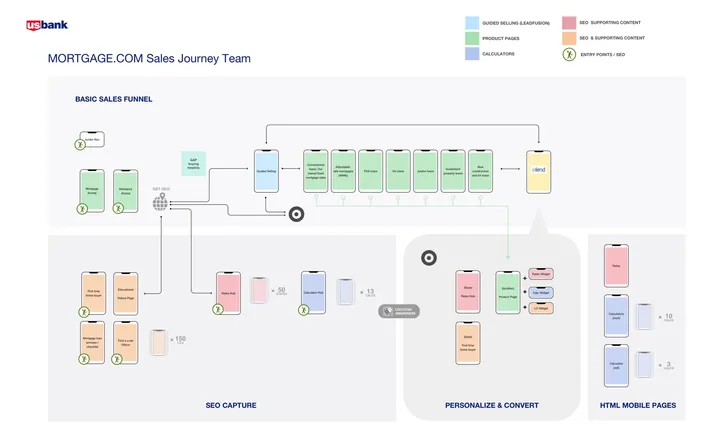
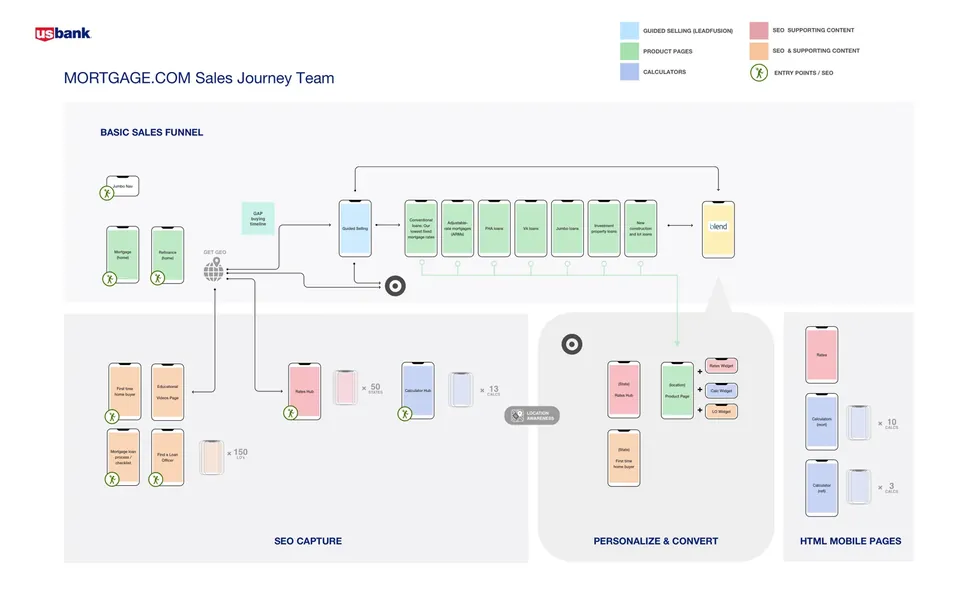
I led a UX team of six to seven on the consumer mortgage business: research, the architecture of the sales funnel, SEO, prototyping, and planning. Much of the work sat before the application, in the pages people read while deciding whether to apply at all. Every tracked metric rose 5% to 45%, including organic search and qualified leads reaching the mortgage desk. The case study has the details.
How can a credit union or community bank use AI?
Start in the back office: drafts of member service replies, searching your own policies and procedures, prepping loan files, and marketing copy. Member data stays out of public AI tools, and your compliance officer decides what is allowed. I am not a banking compliance expert, and I bring your compliance people in early. More in how a credit union can use AI.
Can a community bank compete with the big banks online?
Yes, by making the local advantages easy to use online instead of copying the big banks' apps: a named person to call, fast local decisions, and a branch that knows the customer. Most of the trouble sits in the handoffs between the website, the phone, and the branch. Competing on experience covers how to map and fix them.
What does it cost to start?
A one-hour review of your application is $150. A half-day AI workshop with staff is $1,500, and a full day is $3,500. A service design workshop on one product, like a mortgage or a small business loan, starts at $3,500. A one-page AI policy is $750. Anything over $3,000 can be paid by the month, no interest.