Production AI in a regulated industry
An AI appraisal platform for machinery and equipment, zero to beta in under a year: eighteen microservices, 248 photos a project, sub-second image processing, and inference cost cut sixty percent by caching. Every value traces back to the evidence behind it, so it holds up when someone challenges it.
Result50+ appraisers on the waitlist.
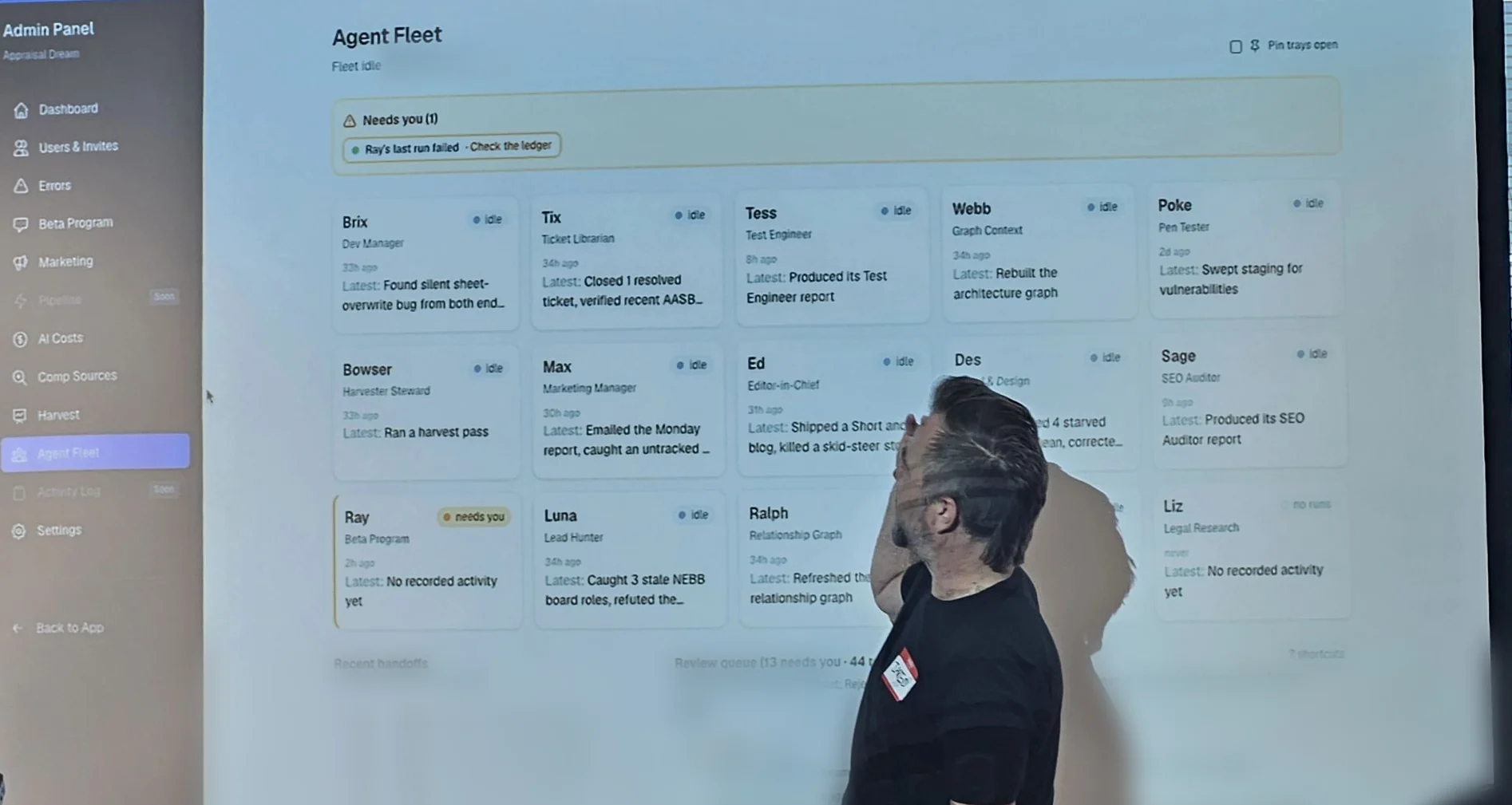
Fifteen named agents, each with a job: tickets, tests, security sweeps, SEO, research. A person signs off on what they find.
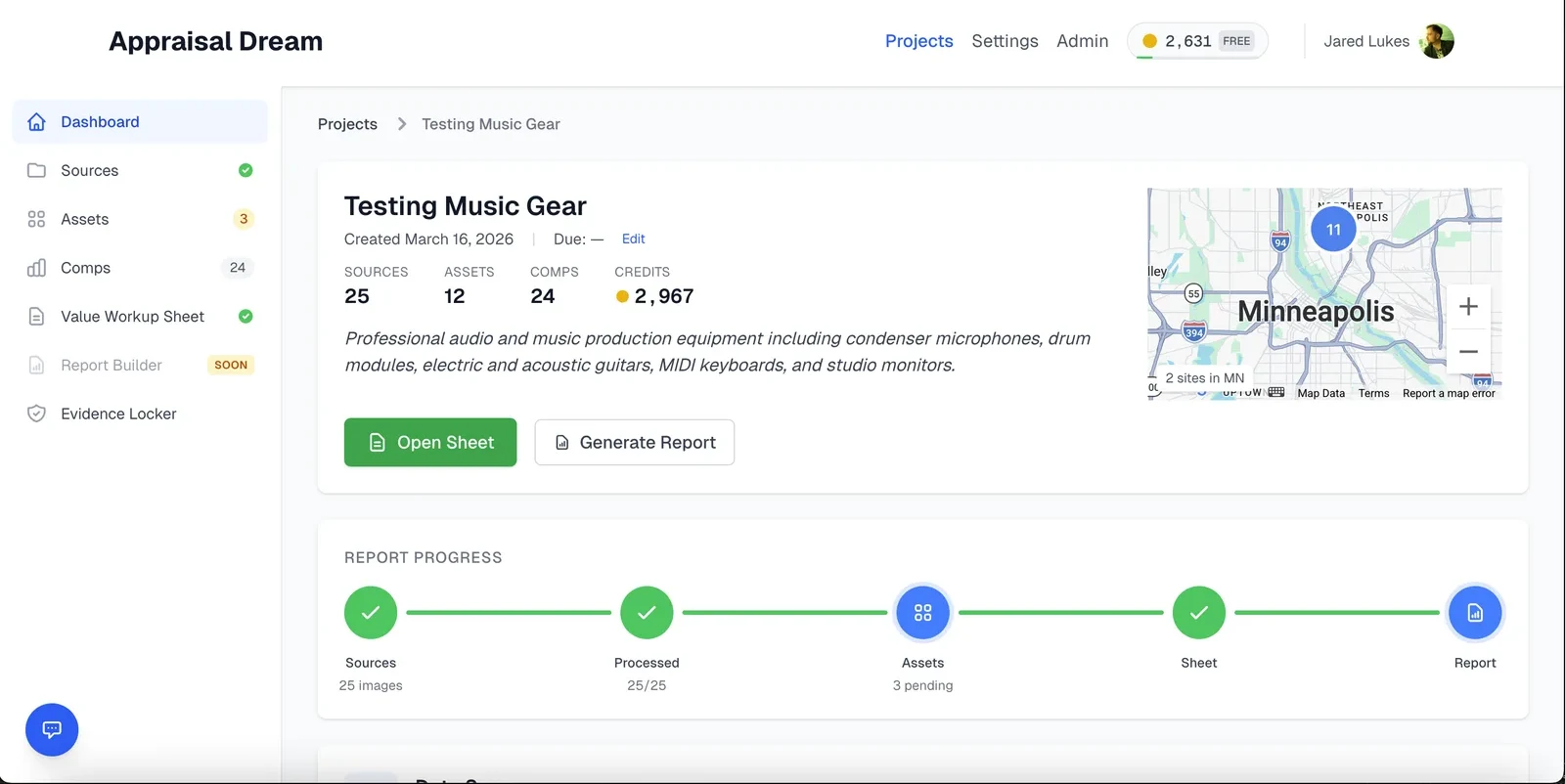
Report progress from source photos to finished report, each AI stage visible in plain language.
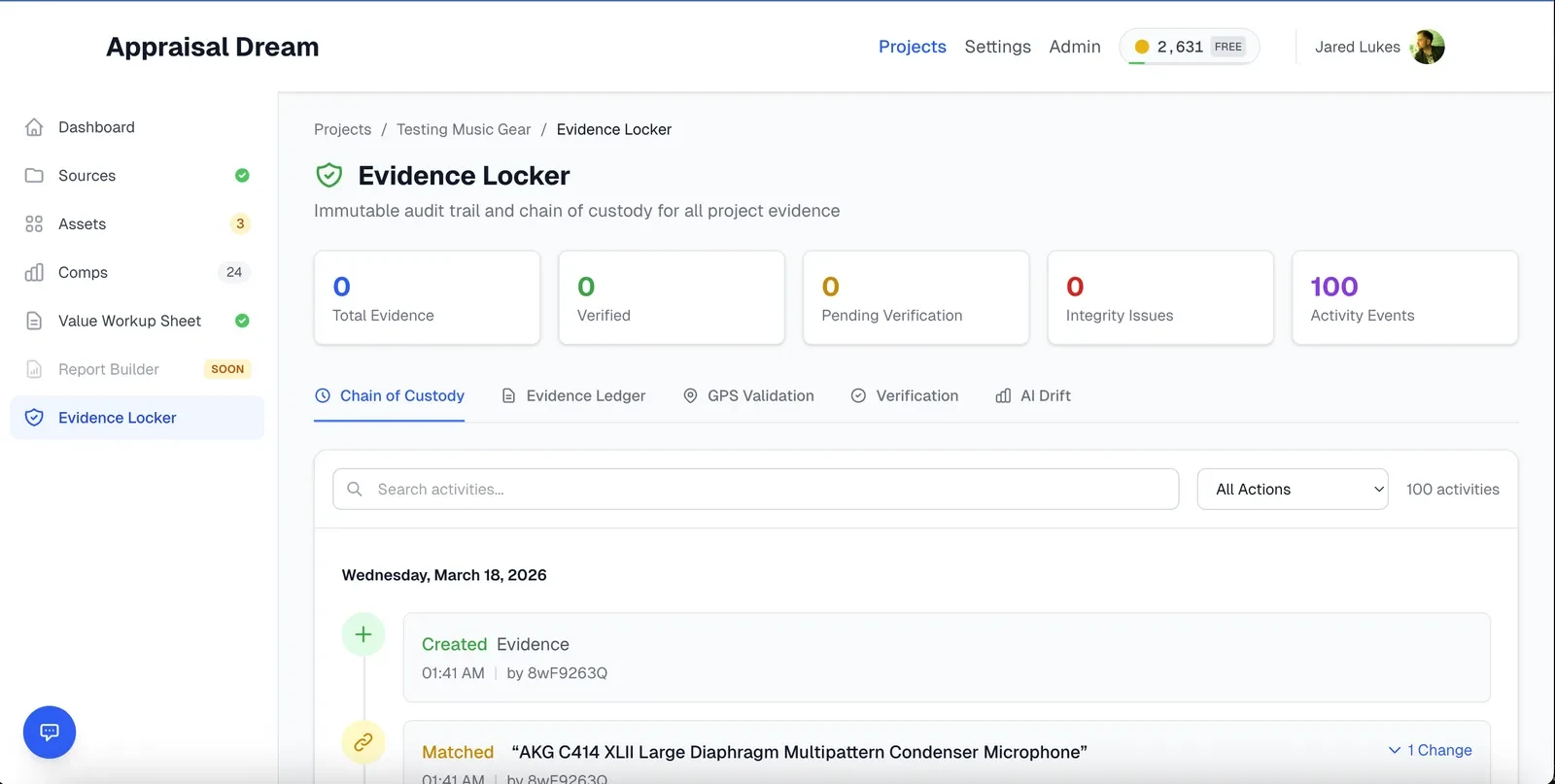
Immutable audit trail and chain of custody, one hundred logged events on screen.
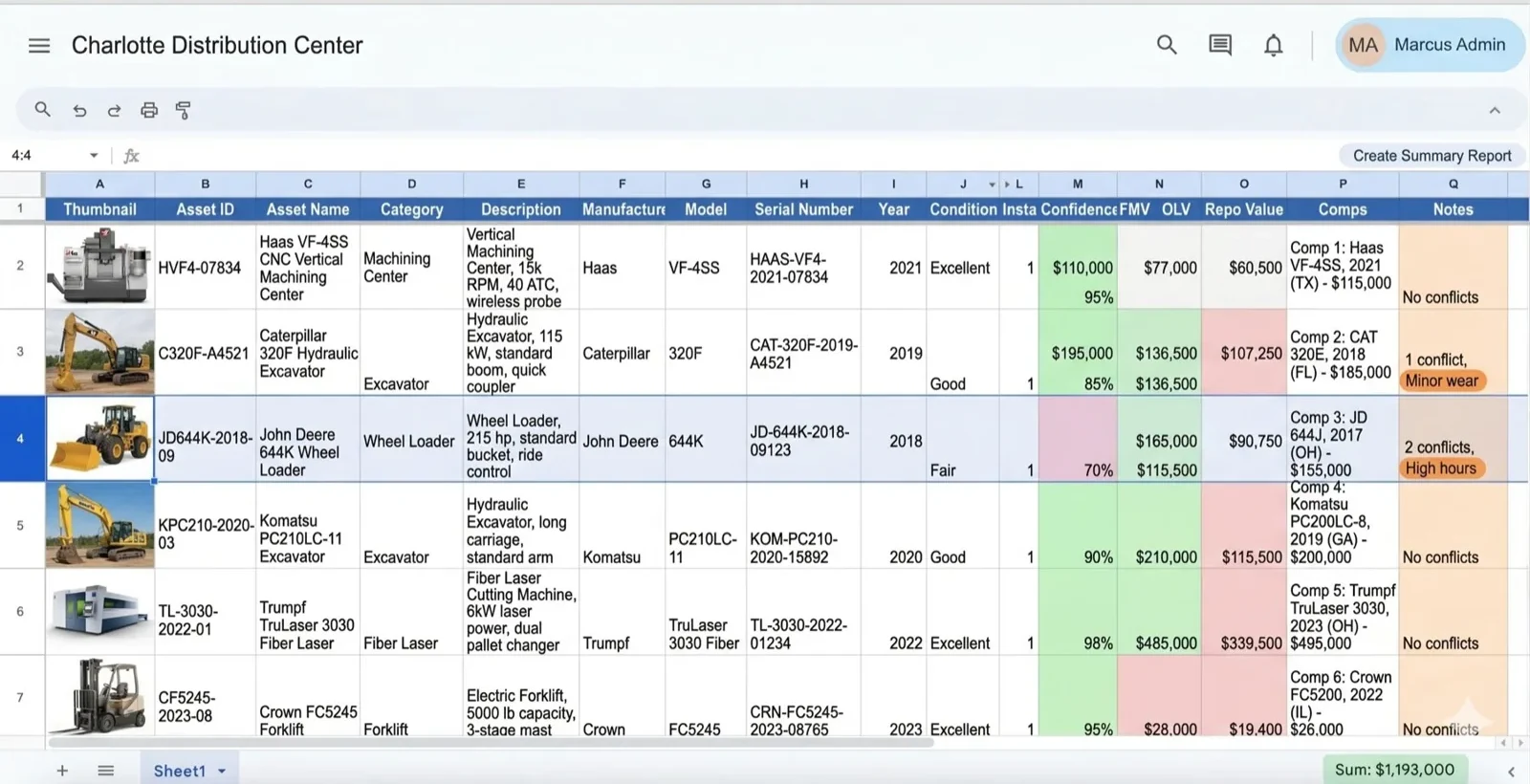
Asset grid with AI confidence, comps, and conflict flags the appraiser can override.
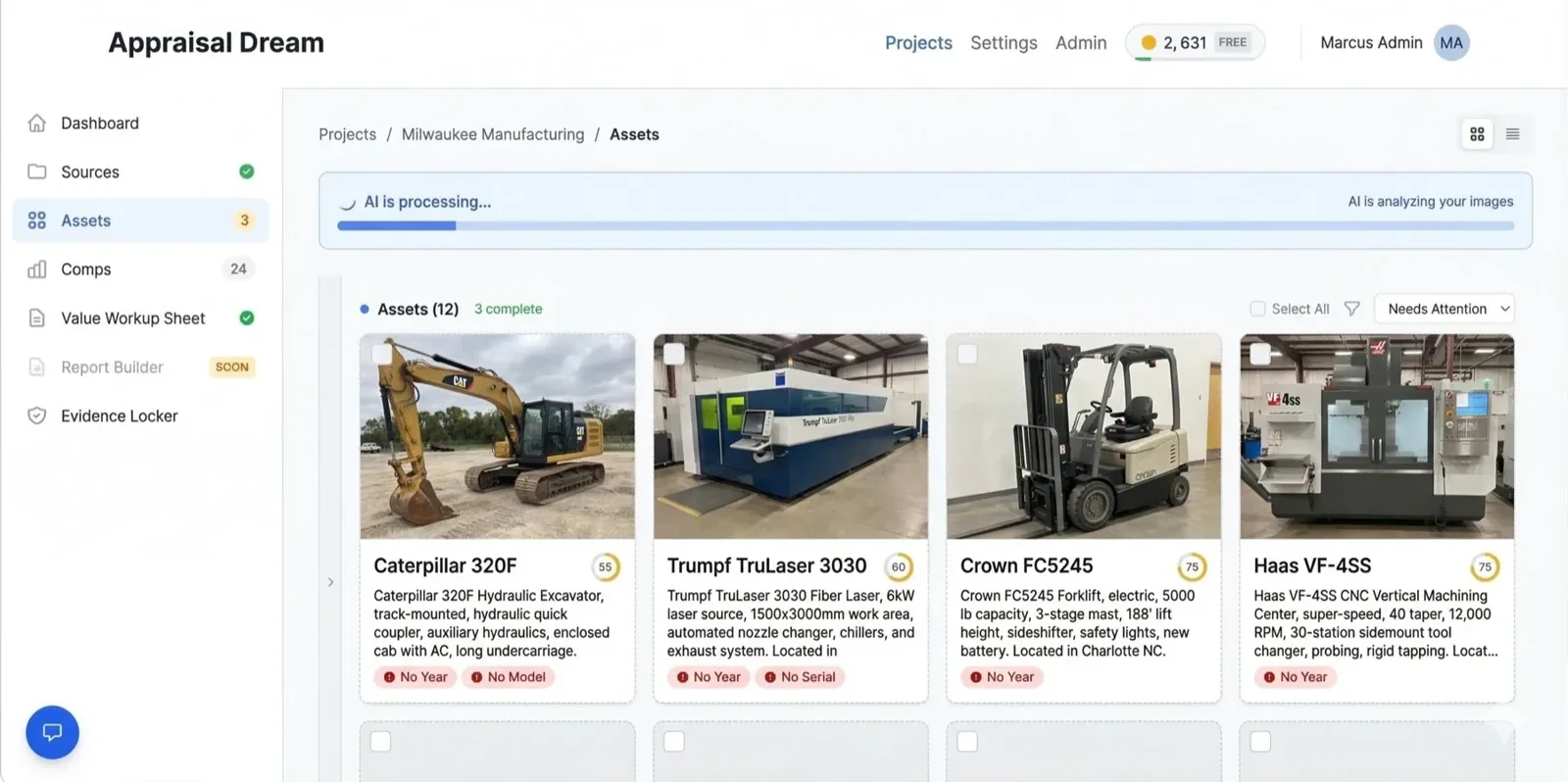
The platform reads machinery from field photos while the work queue fills itself.
A sales team that walks a knowledge graph
Fractional CTO for a stone importer. An agent platform of forty nine workflows: harvest, extract, classify, and a knowledge graph the sales team can walk. It ran 39,645 production executions at a 0.2 percent failure rate.
Result39,645 production runs at a 0.2 percent failure rate.Forty nine workflows doing the work a sales team used to do by hand.
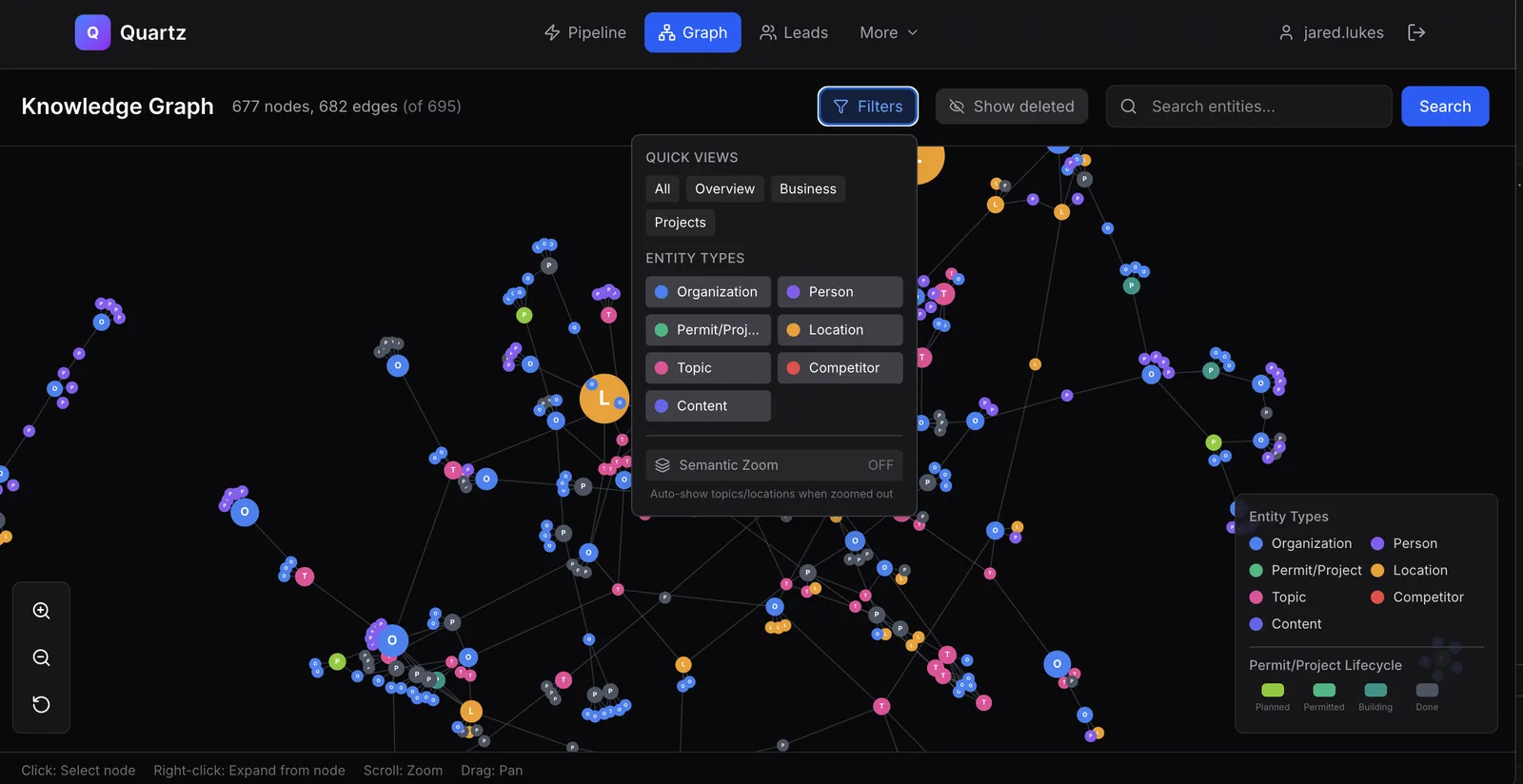
677 nodes live in the product, filters open.
People, firms, and shared projects as one network. Blurred, because the client's pipeline stays the client's.
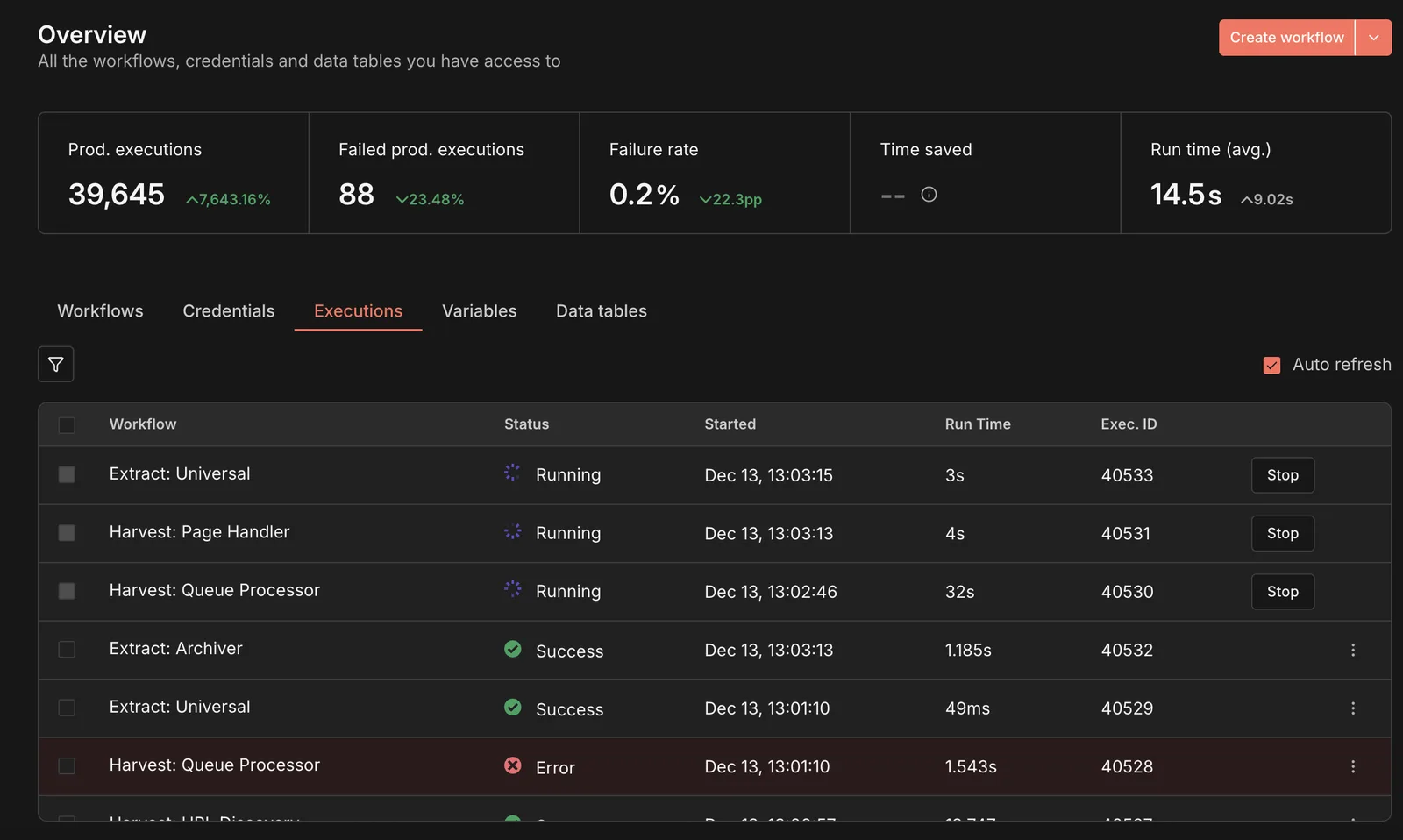
39,645 production executions, 0.2 percent failure, live runs mid flight.
A hand-drawn logo, still on the job
Full identity for a national appraisal firm. The mark is hand drawn and mine alone, and it is still running the site today.

The live site. Logo, hero, and the machinery it appraises.

The hand-drawn mark. Navy and red on cream.

Same letterforms, colder palette.

The same construction on a solid ground.
Taxonomy research that earned its keep
Card sorts, then a Treejack tree test, on the HGTV Home paint taxonomy. Twelve categories went in, seven came out, utility navigation dropped from six to two, and user confidence rose thirteen percent: six percent in the first round and seven in the second.
ResultShopper confidence up 13 percent.Twelve paint categories cut to seven, with zero orphans.
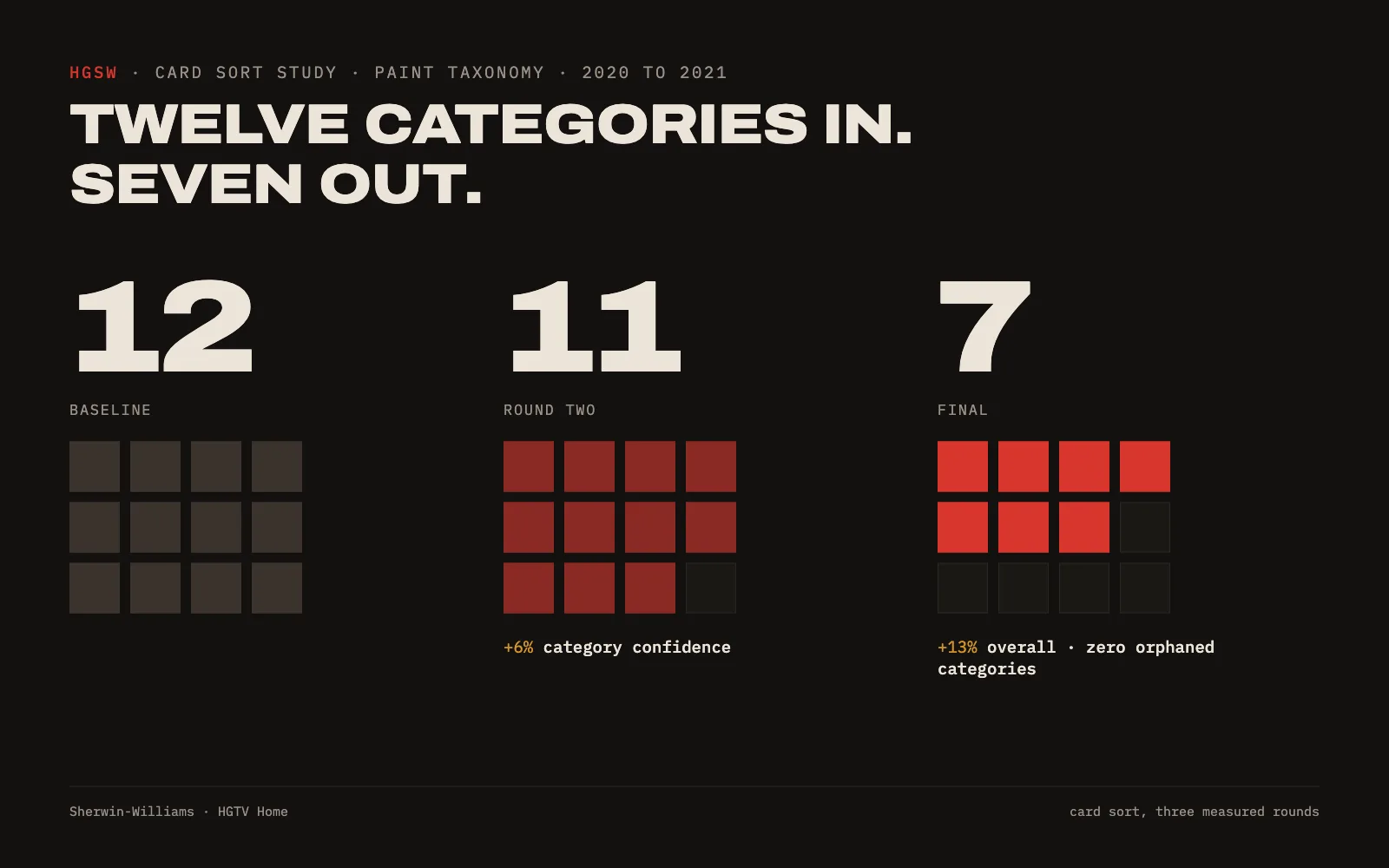
Twelve to eleven to seven, drawn from the study's real numbers.
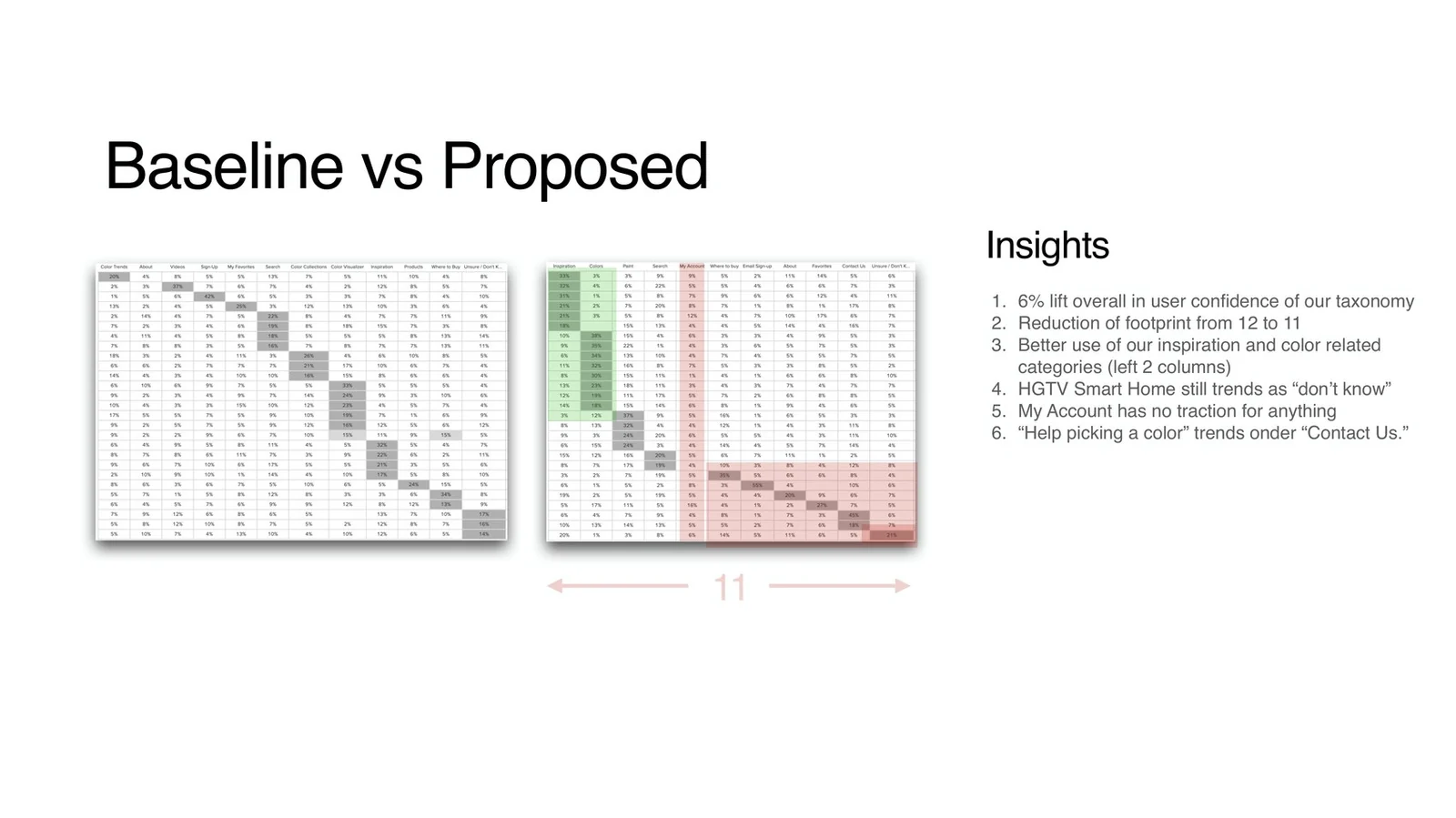
Round one, side by side. Six percent more confidence, footprint down from twelve to eleven, and the categories nobody could place named outright.
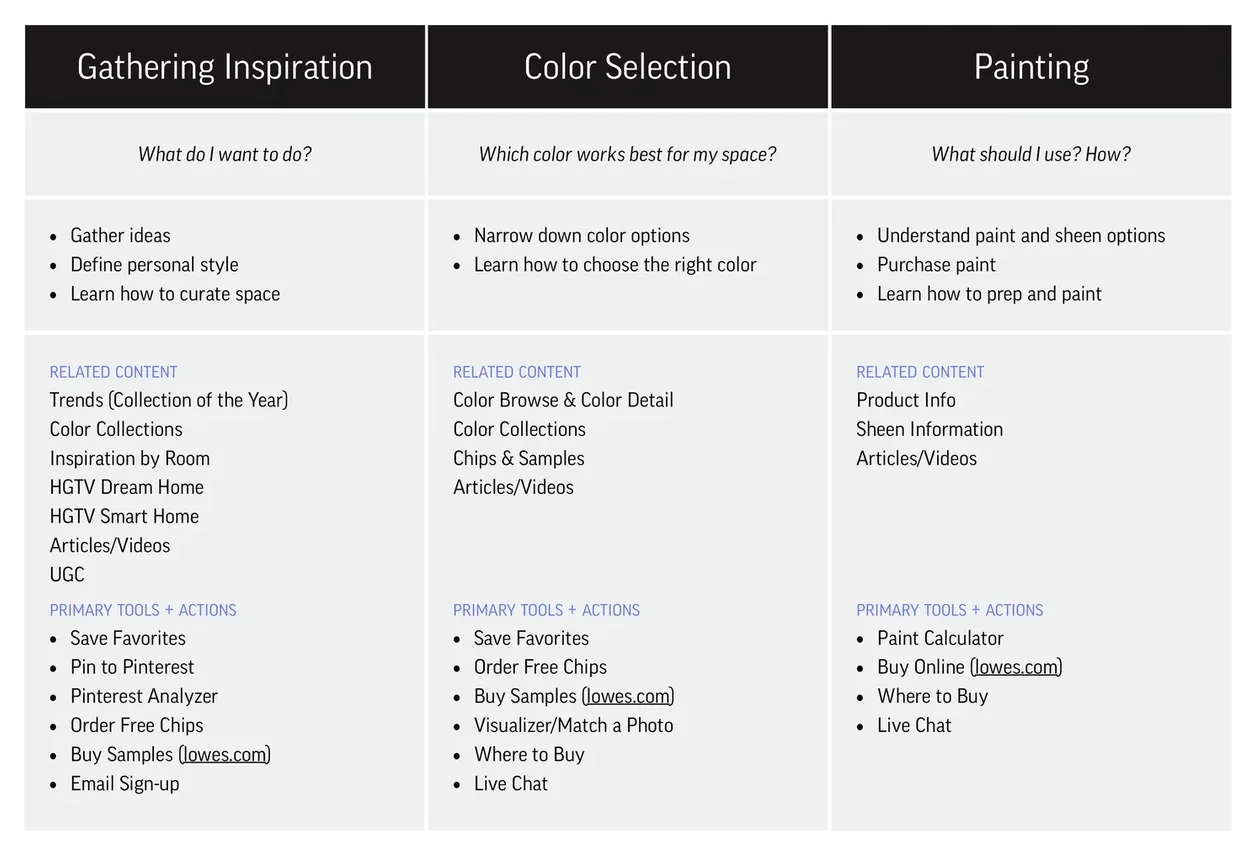
Gathering inspiration, color selection, painting. Every surviving category had to earn a place in one of the three.
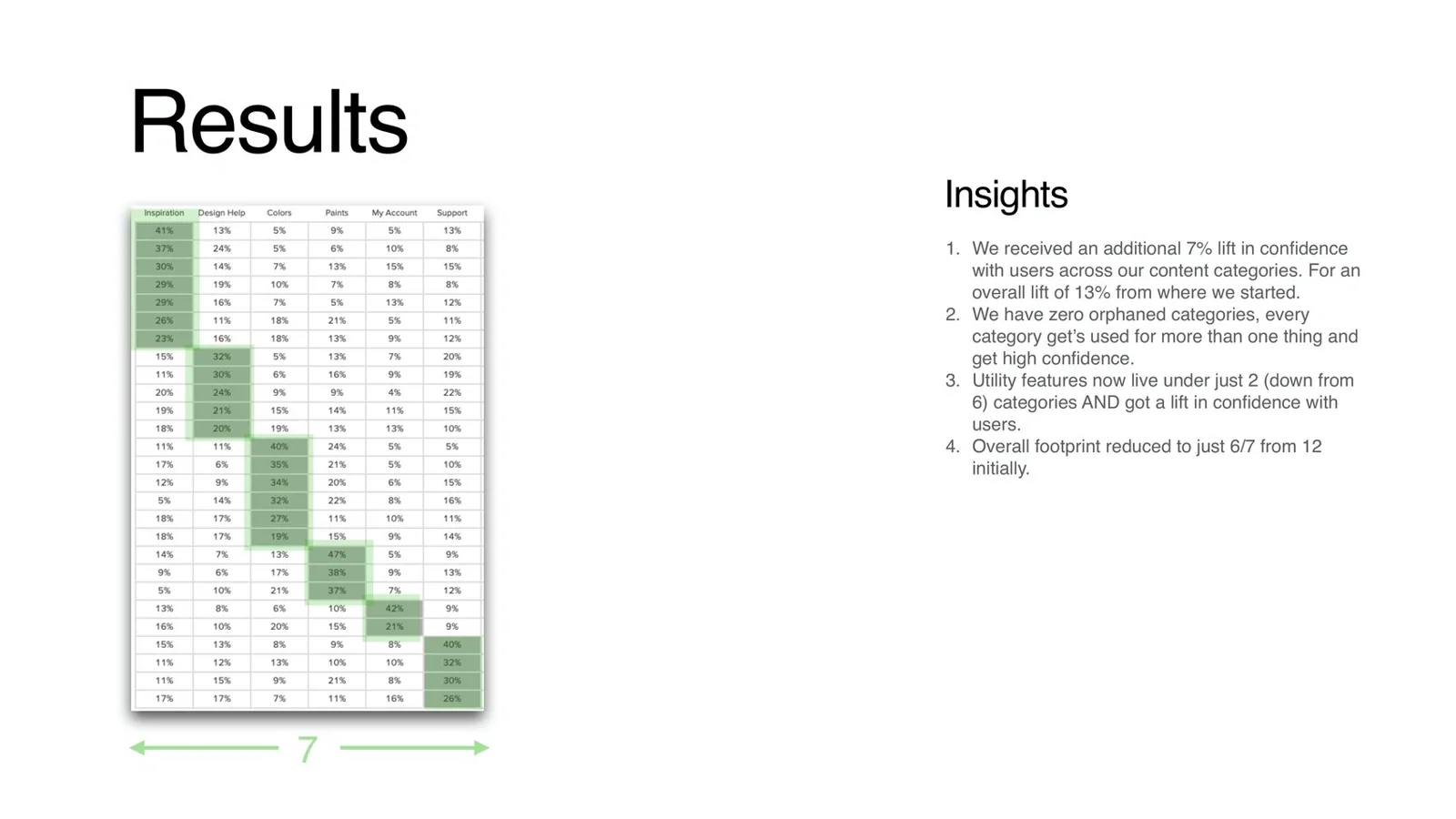
Zero orphaned categories. Utility features down from six categories to two.
The mortgage funnel on one wall
Mortgage.com and the first time homebuyer experience. Funnel architecture, SEO capture, and page level design for the bank's mortgage business.
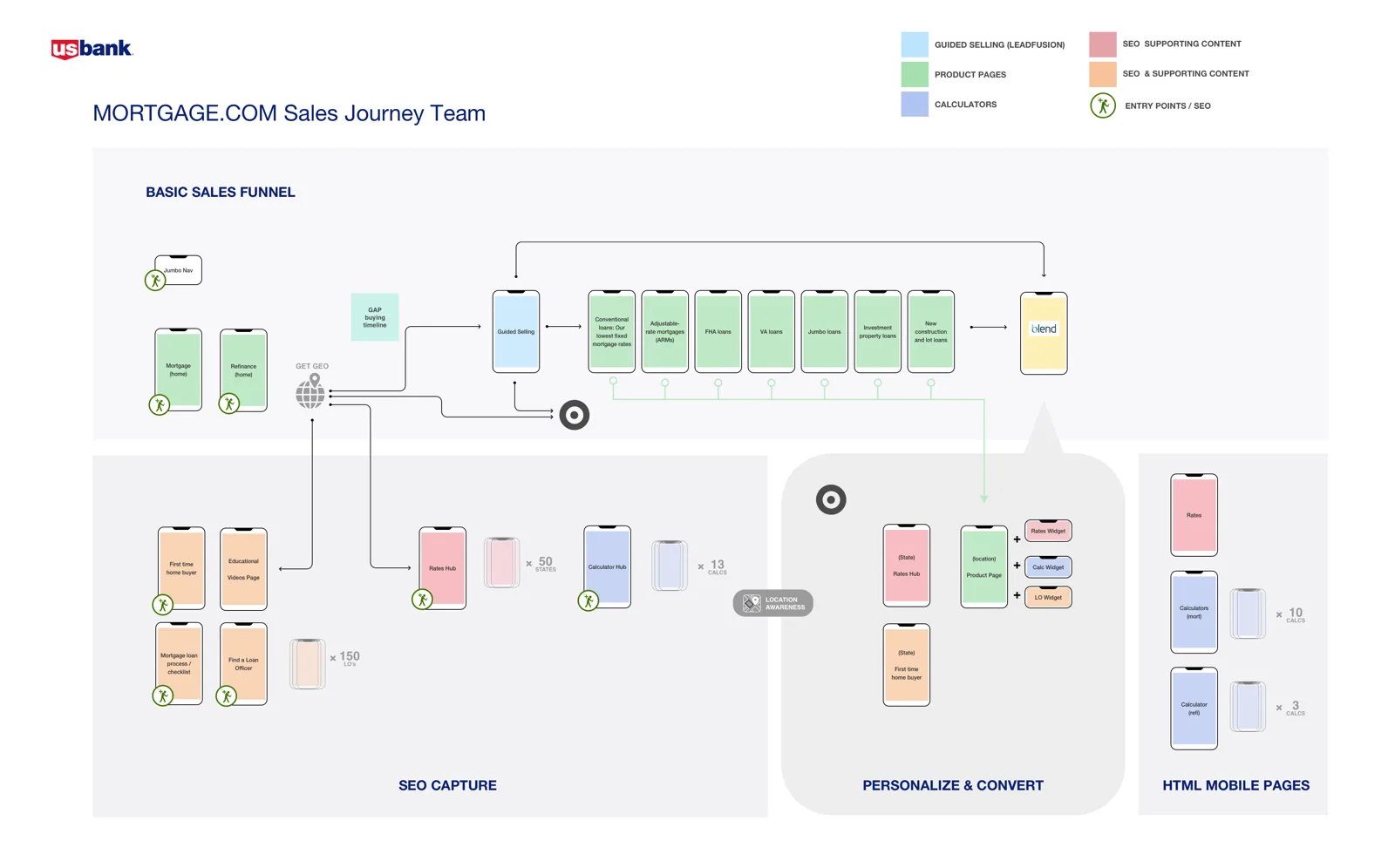
The full funnel on one board: entry points, guided selling, fifty state rates pages, calculators, conversion.
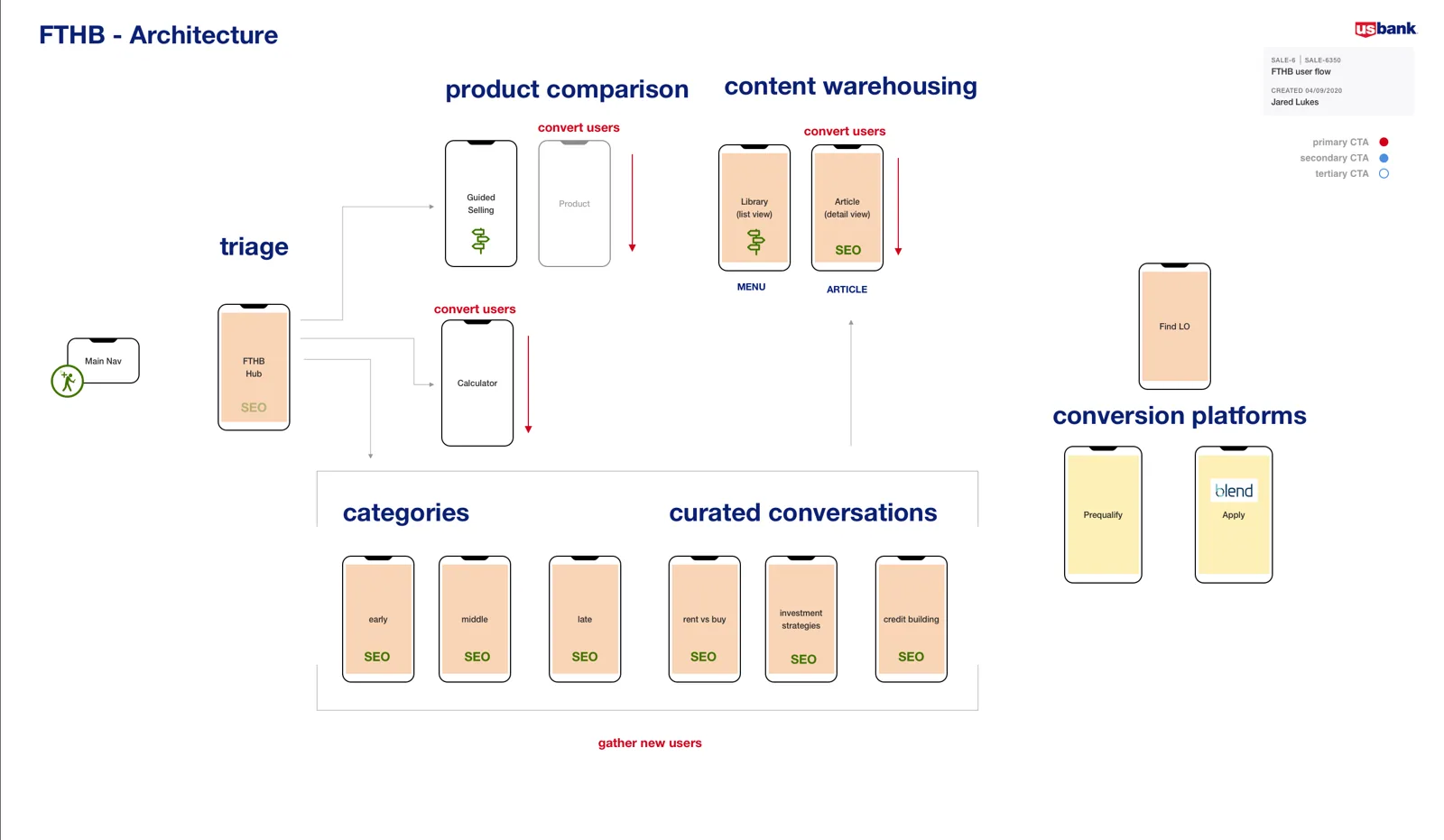
Triage, product comparison, and content warehousing.
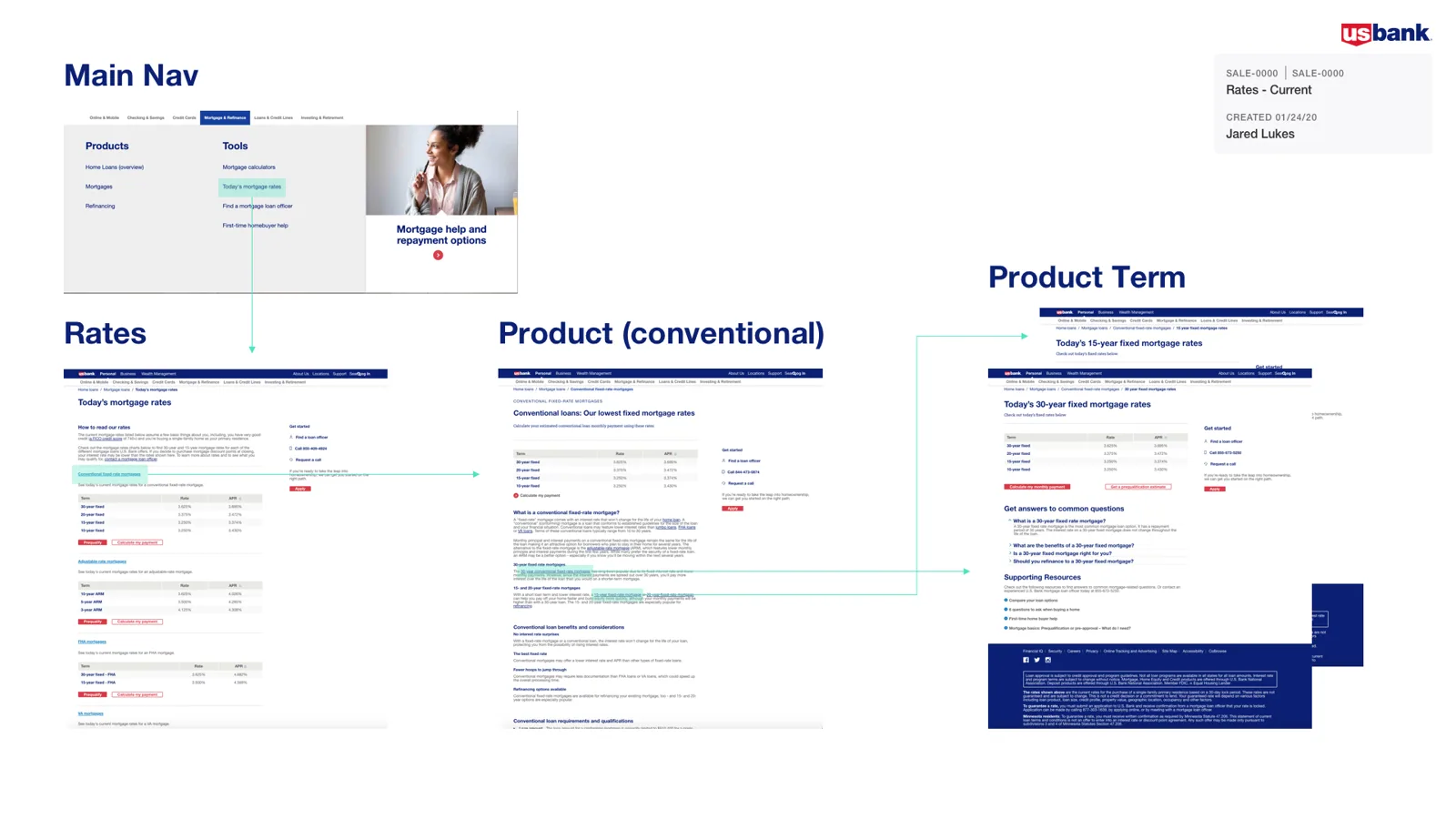
Every rates page and the paths between them, mapped before touching anything.
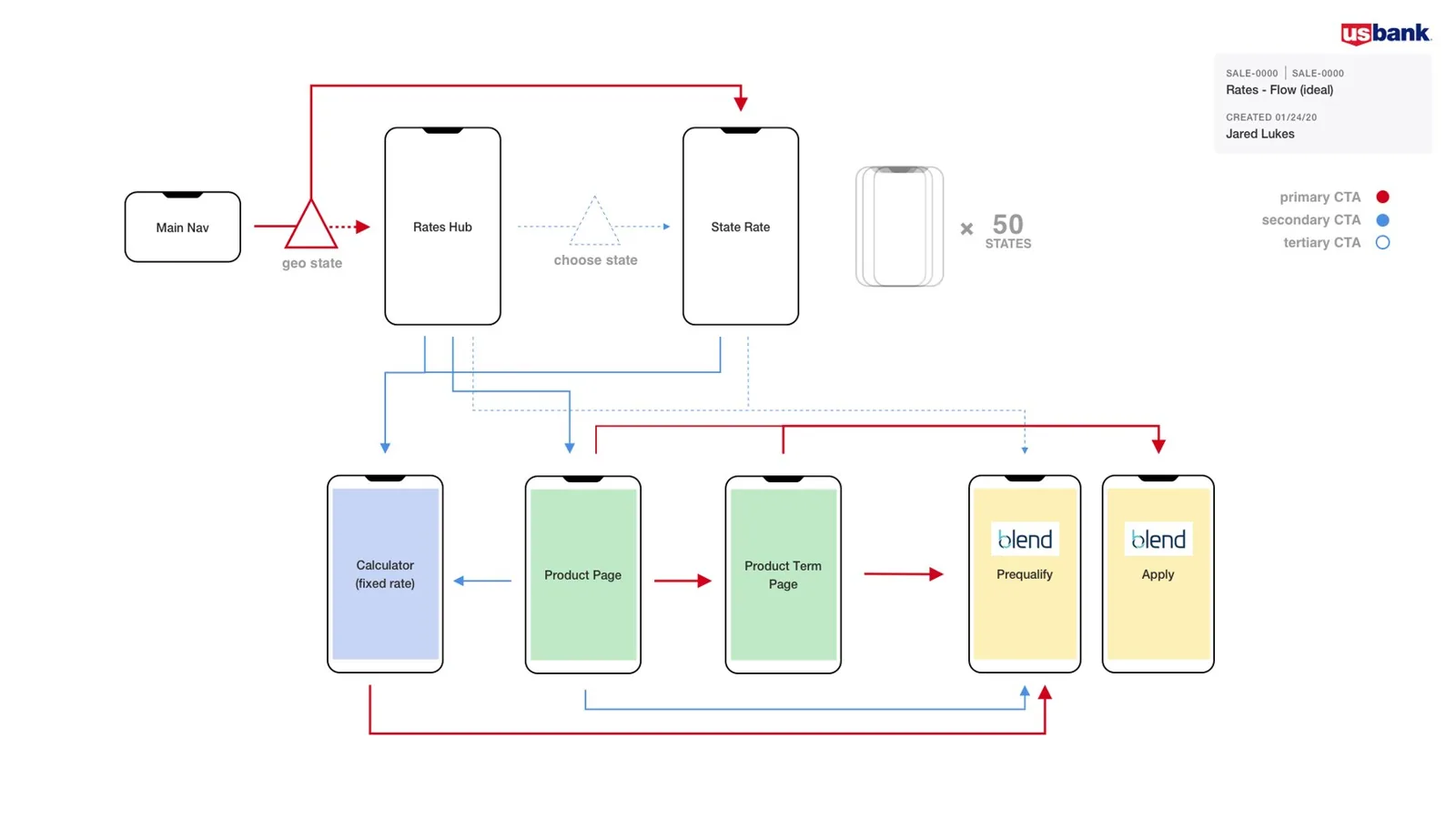
The proposed flow with the CTA hierarchy called out.
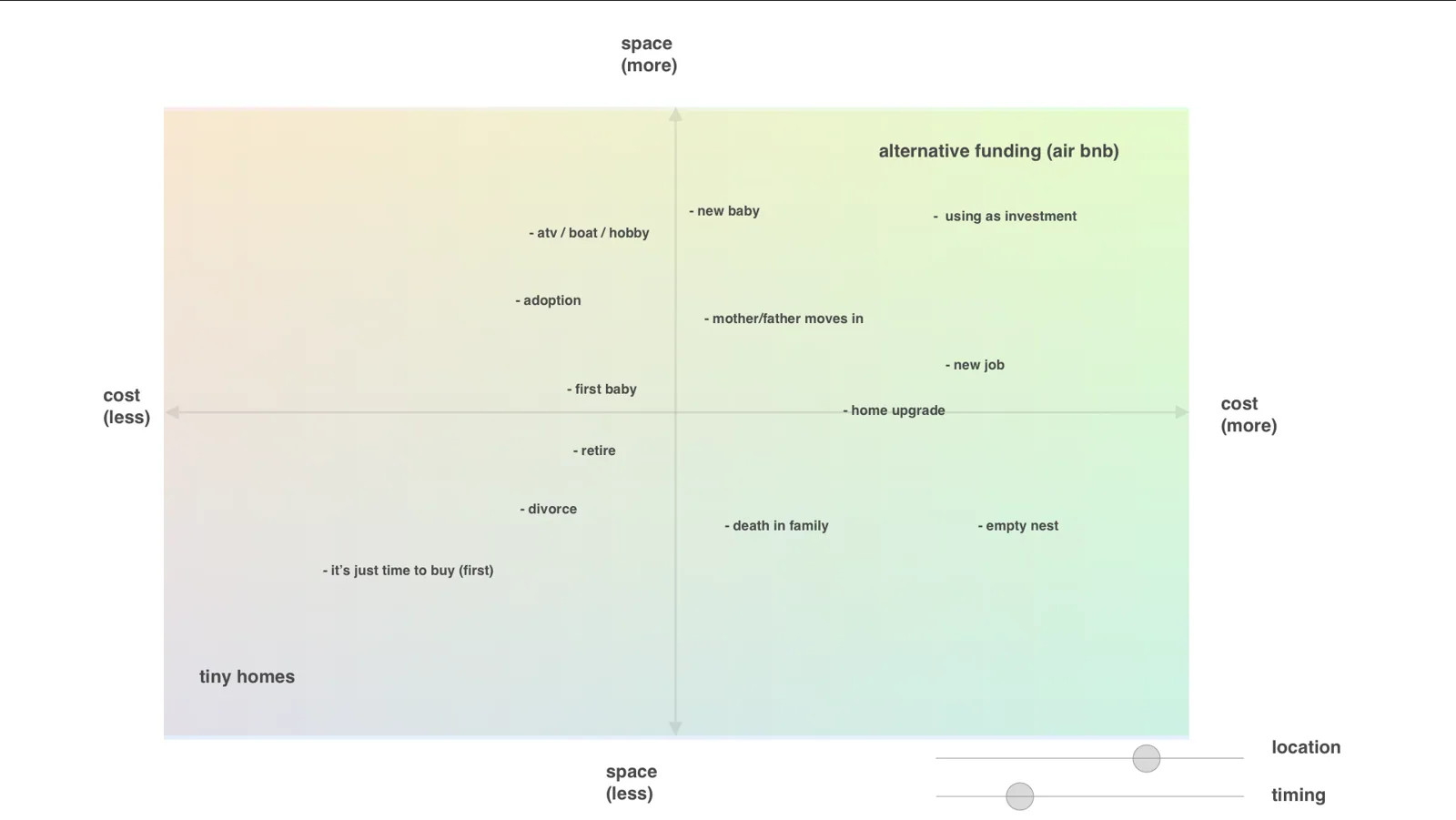
Why people move, plotted on cost and space.
Making range anxiety a design problem
Design sprints for EV charging at BMW's Chicago technology office. Whiteboards, timed sketching, and a concept model that treated range as an experience problem instead of a battery problem.
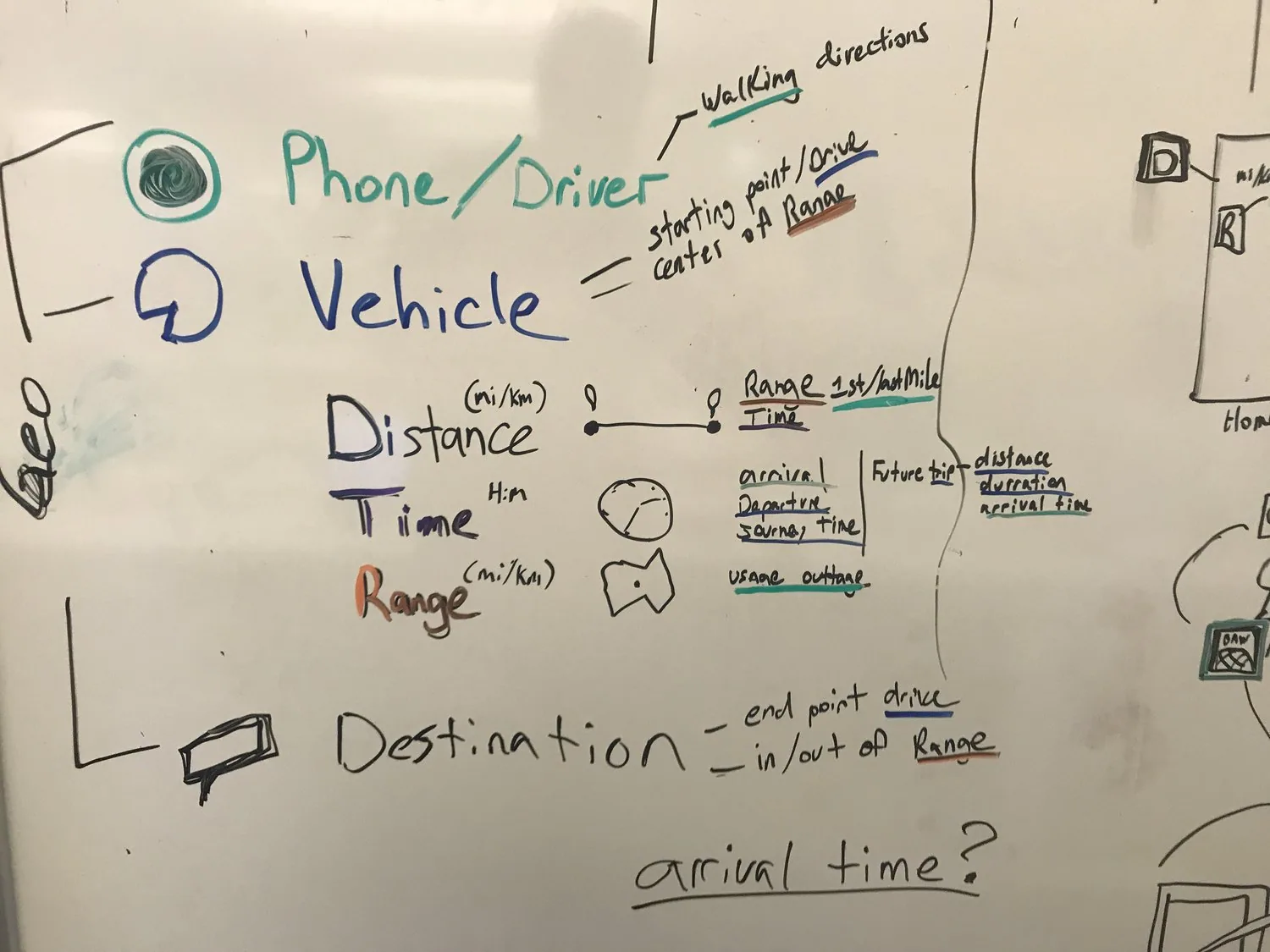
Driver, vehicle, distance, time, range, destination. The whole problem on one whiteboard.
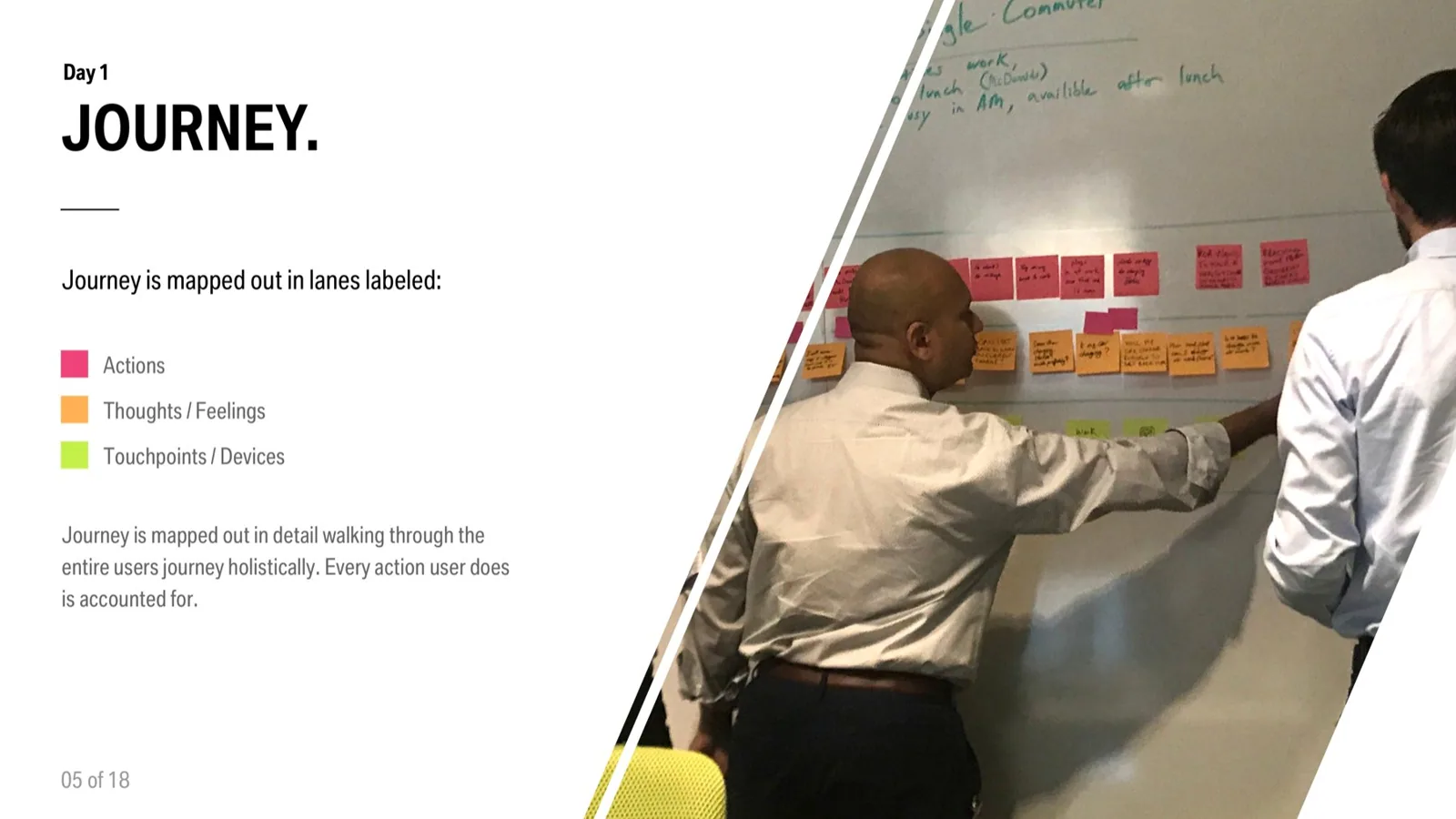
Actions, thoughts, and touchpoints mapped live.
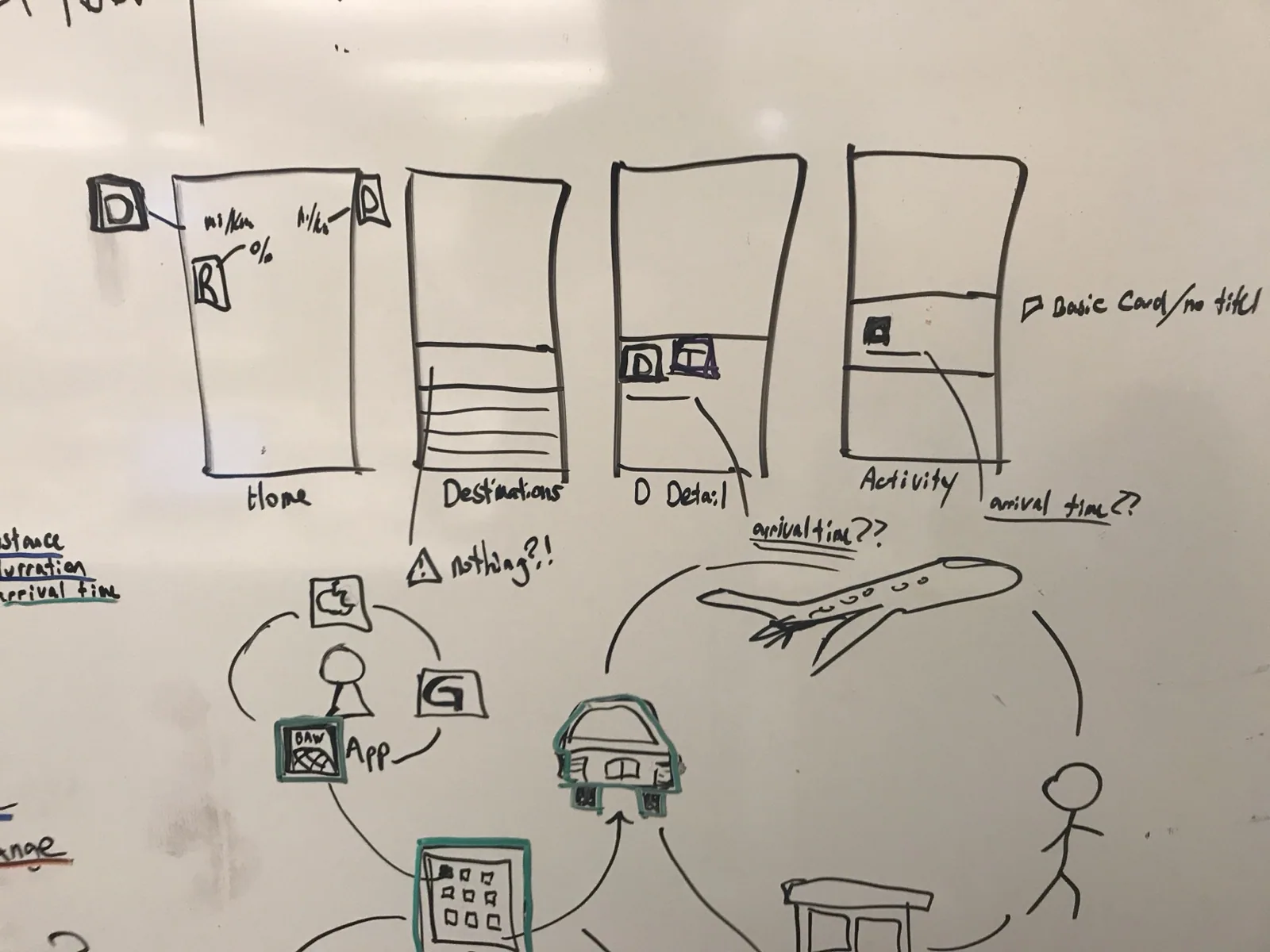
Home, destinations, detail, activity.
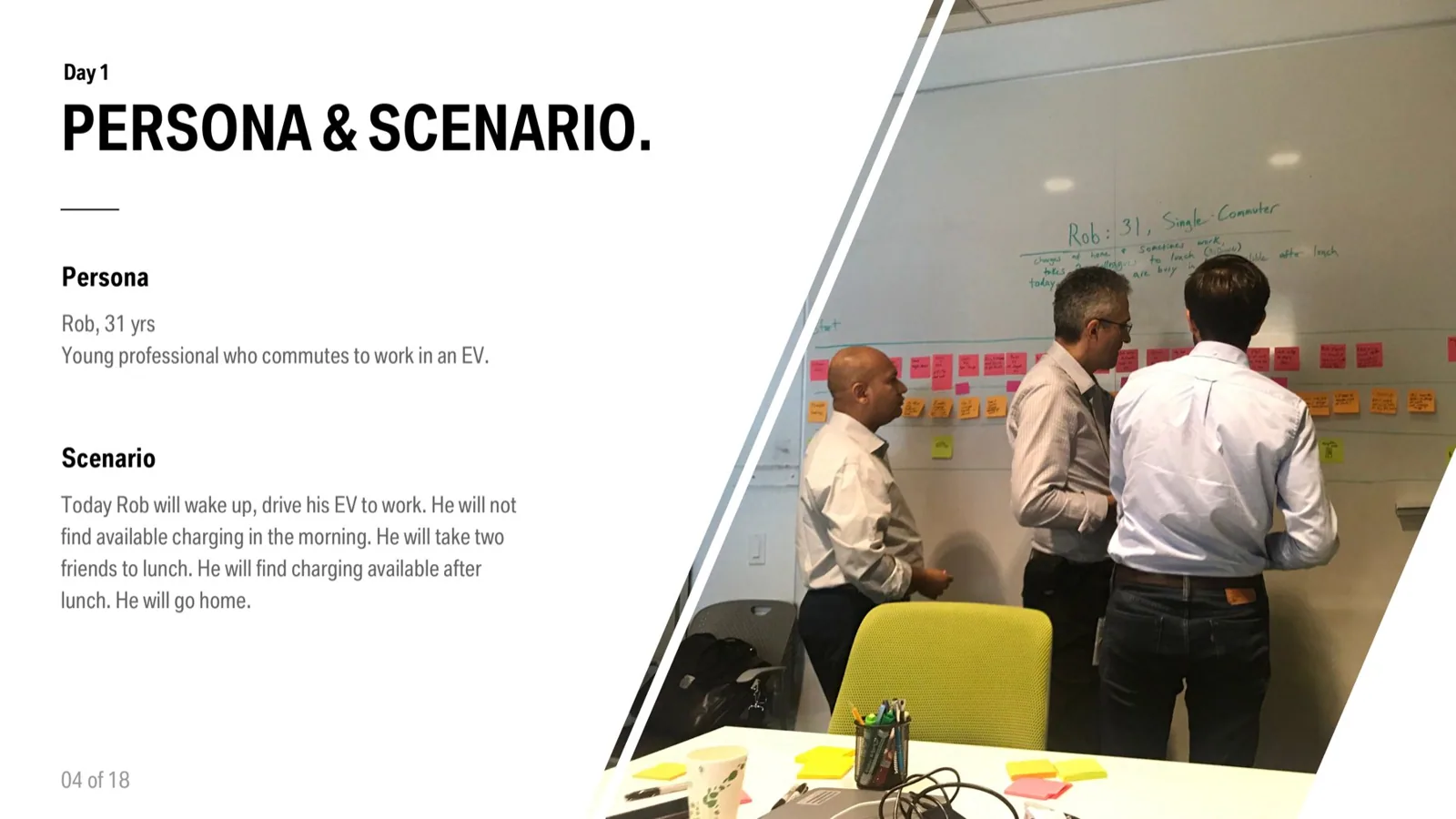
Rob, 31, commutes in an EV and cannot find morning charging.
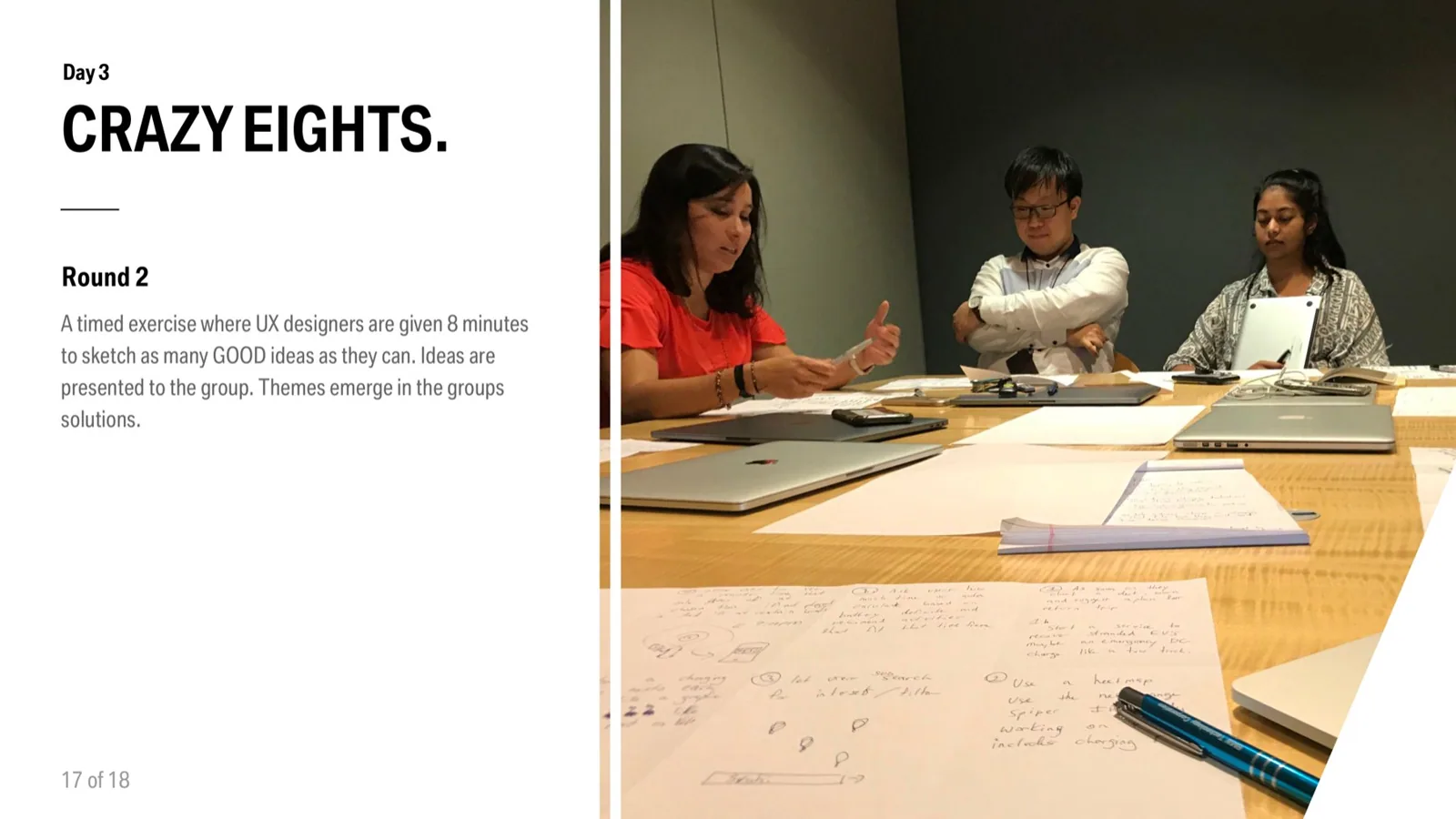
Eight minutes, as many good ideas as fit on the page.
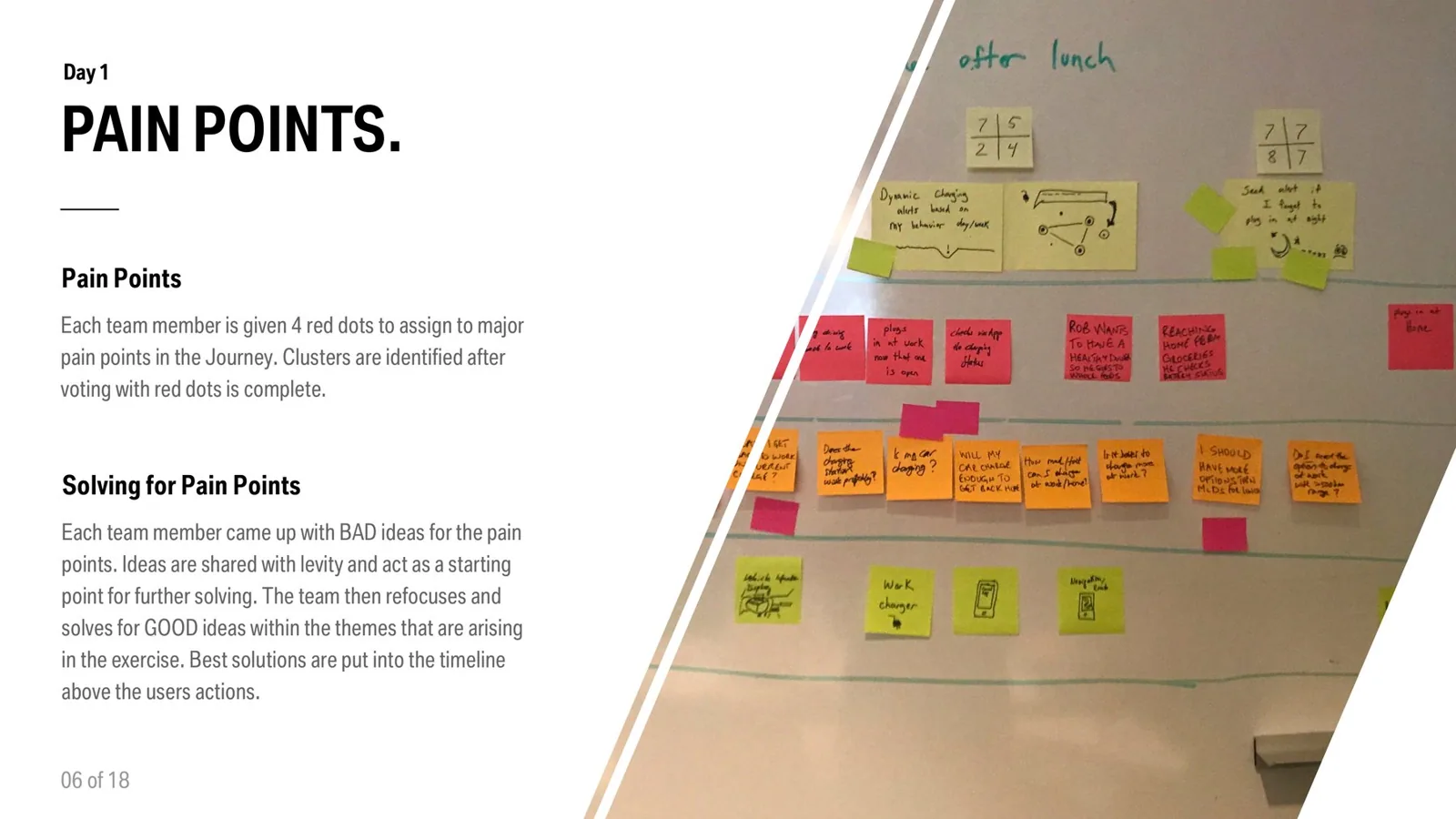
Four red dots per person. Clusters emerge, bad ideas welcome.
Scroll for the rest of the wall →
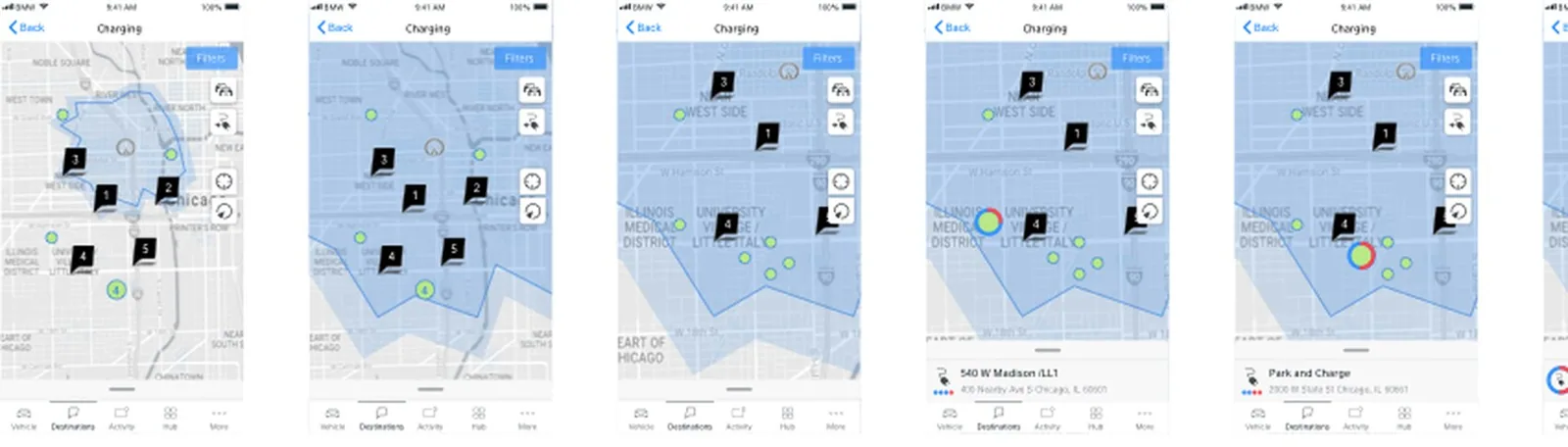
Range polygons on the map, walking directions for the last block.
Fifty people, flipped from print to digital
Go East was a fifty-person litho print shop that had become an agency, 3M on the books. I came in as executive creative director to rebrand, reposition, and re-staff it as a digital and social studio. It became Thread, and was later acquired by Kick. The identity was not drawn once: NowThreading grows the mark from share, like, and comment data, so it changes with every run.
ResultA fifty-person print shop, renamed and rebuilt as a digital studio.Rebranding your own agency means fifty people with fifty opinions and nobody outside the room to break the tie. Thread came out with a new name, a living mark, and a new business.
Ian Davis coded the backend that drove the live logo.
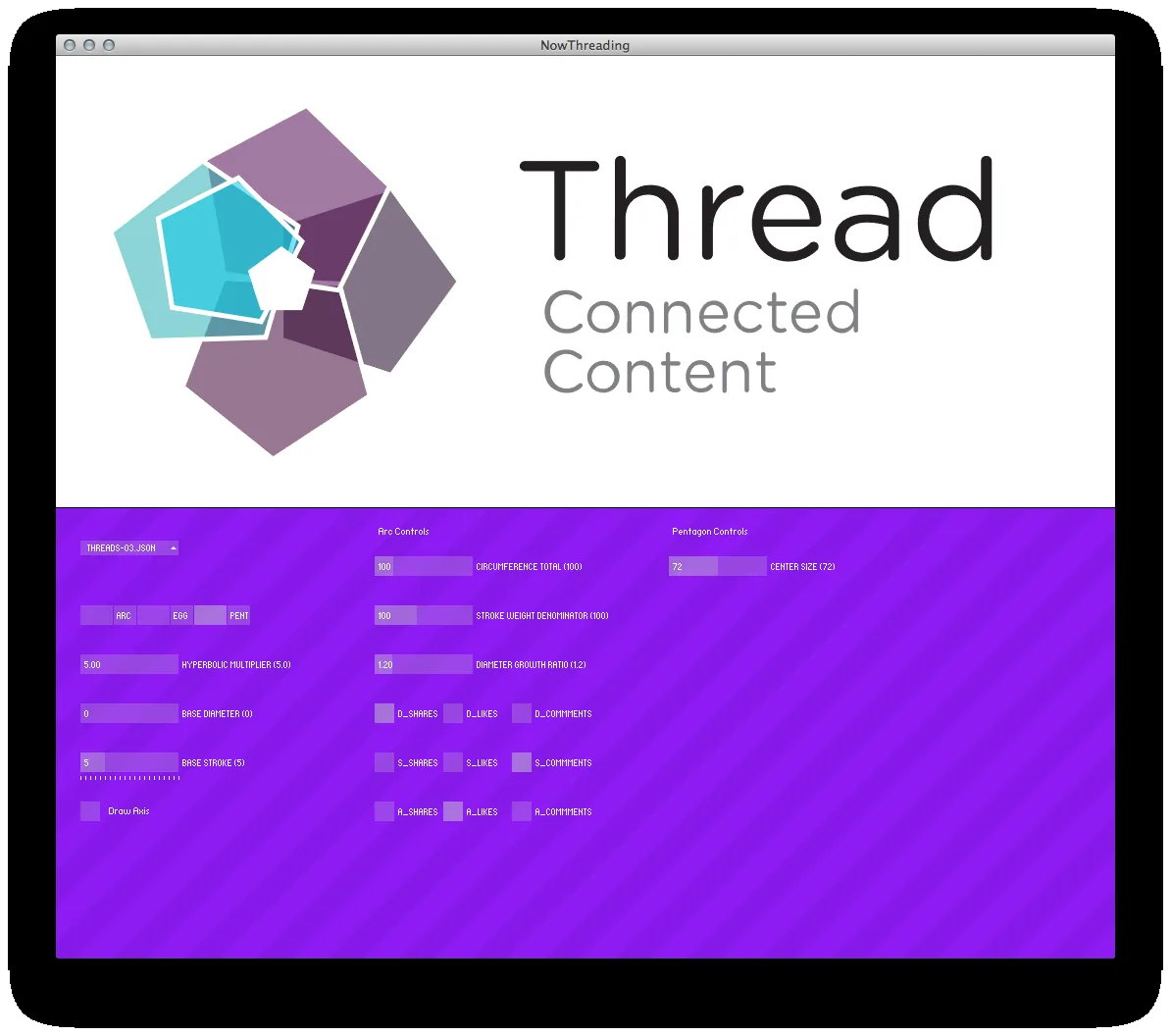
Arc and pentagon controls wired to social data.
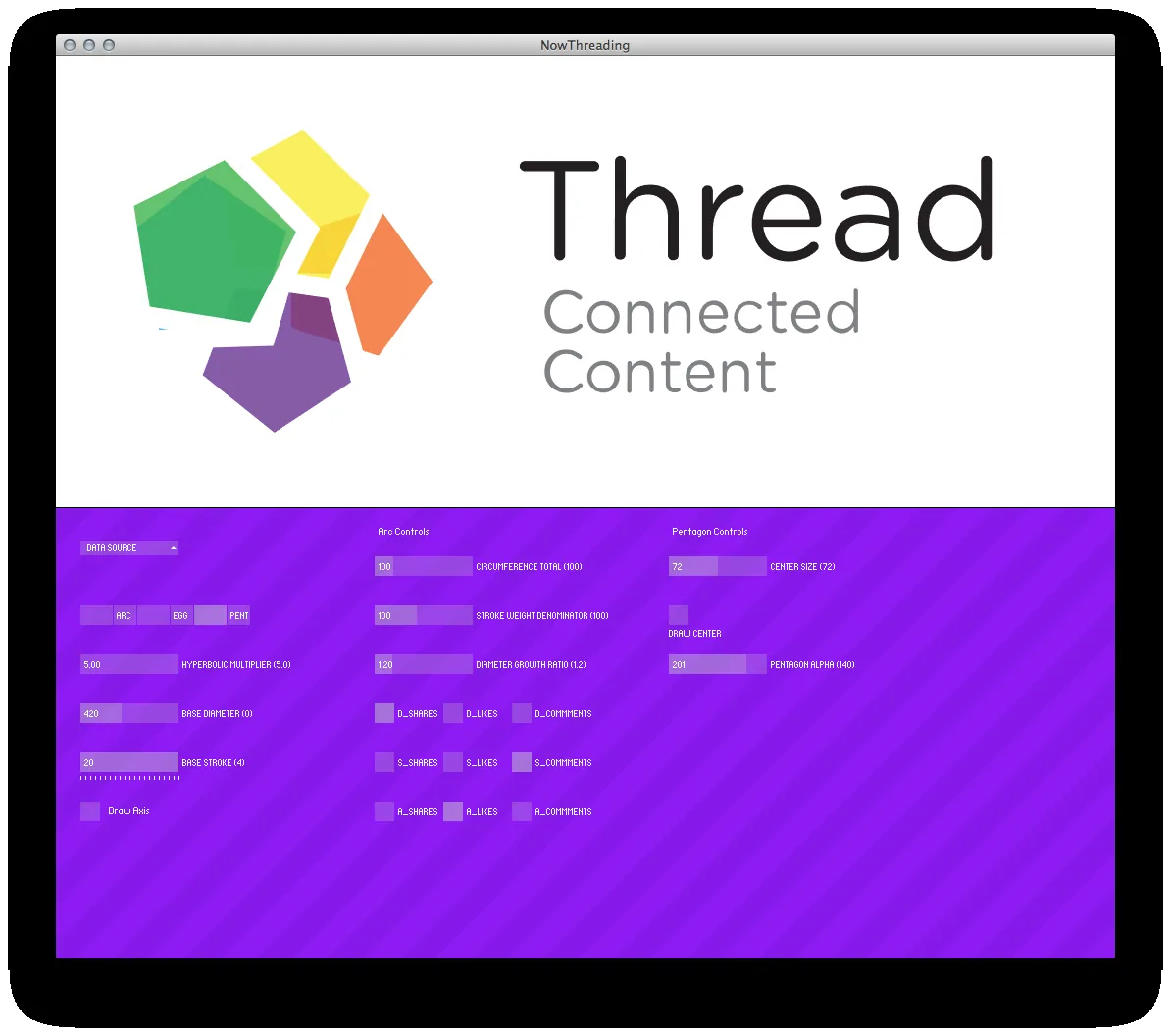
Same tool, different data, different mark.
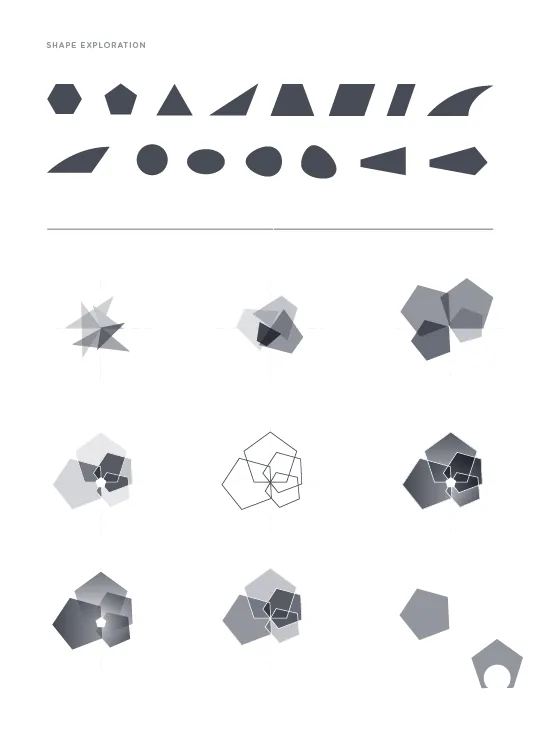
Pentagon studies, from silhouette inventory to overlays.

The mark that landed.
Enterprise tools with money on every row
Marketing Partner Agreements for Target's marketing organization. Dense tables, approval flows, and seven figures committed in the page header.
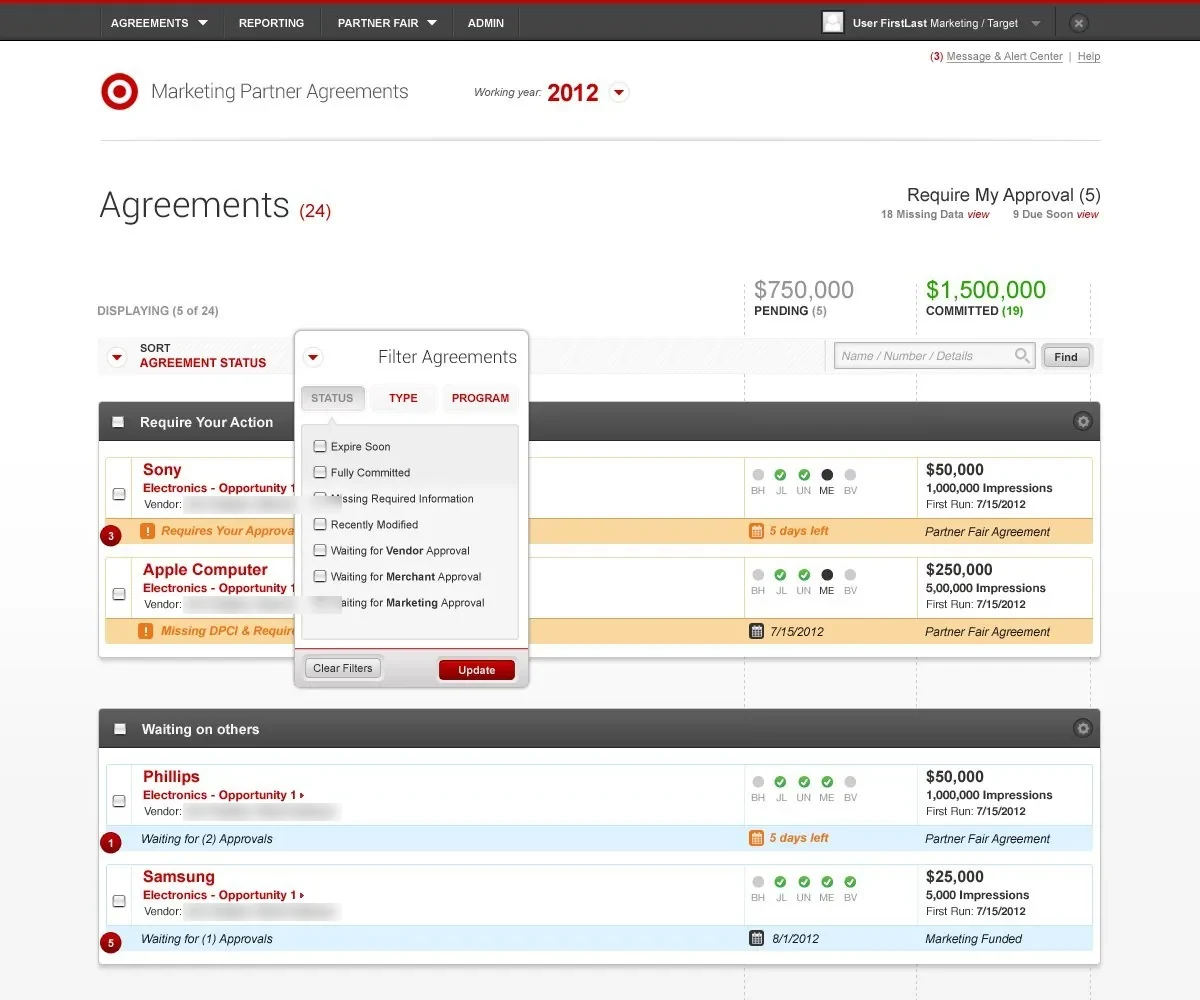
Approvals, filters, and a dollar figure on every row.
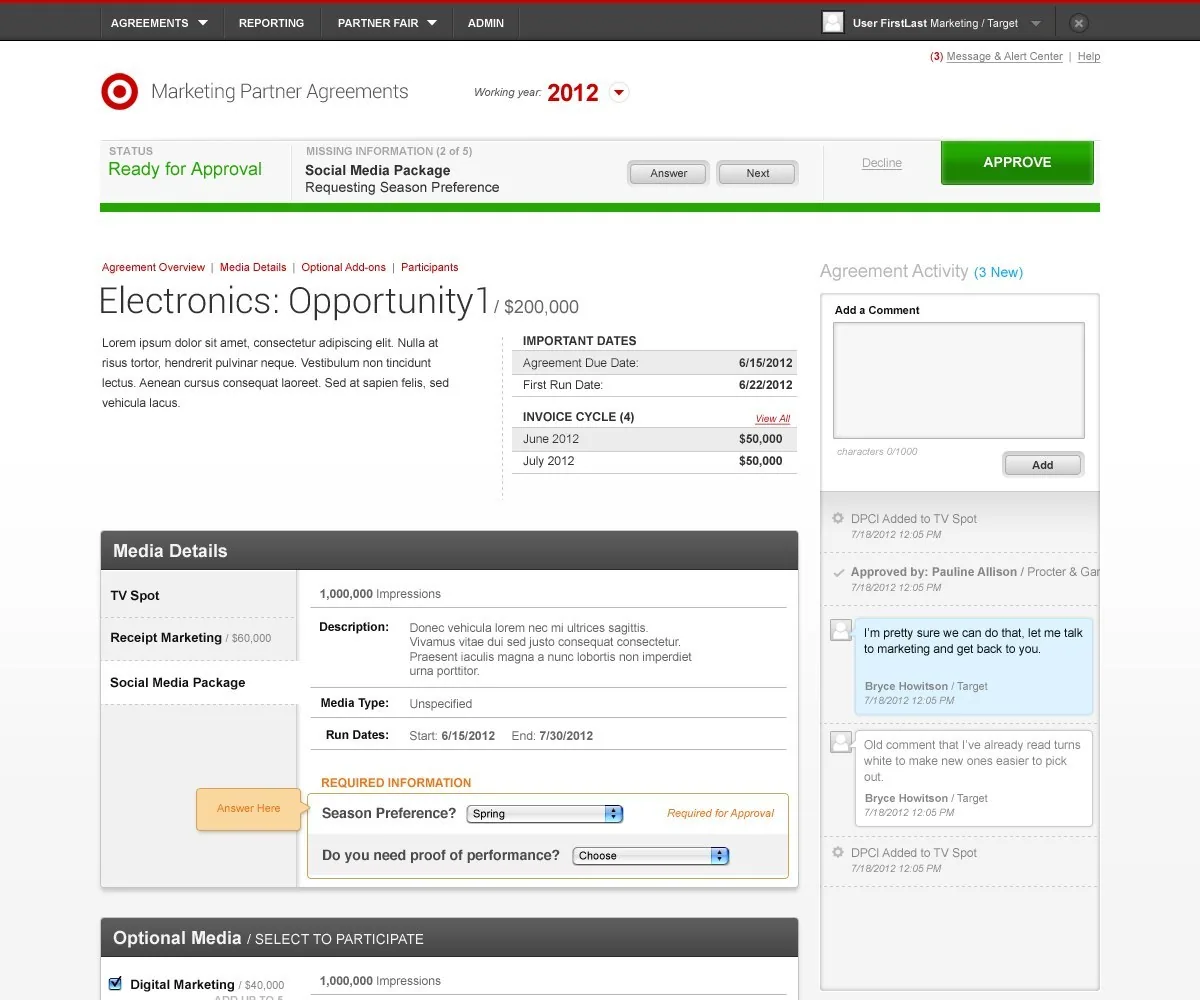
Media details, required information, and the comment trail that gets it approved.
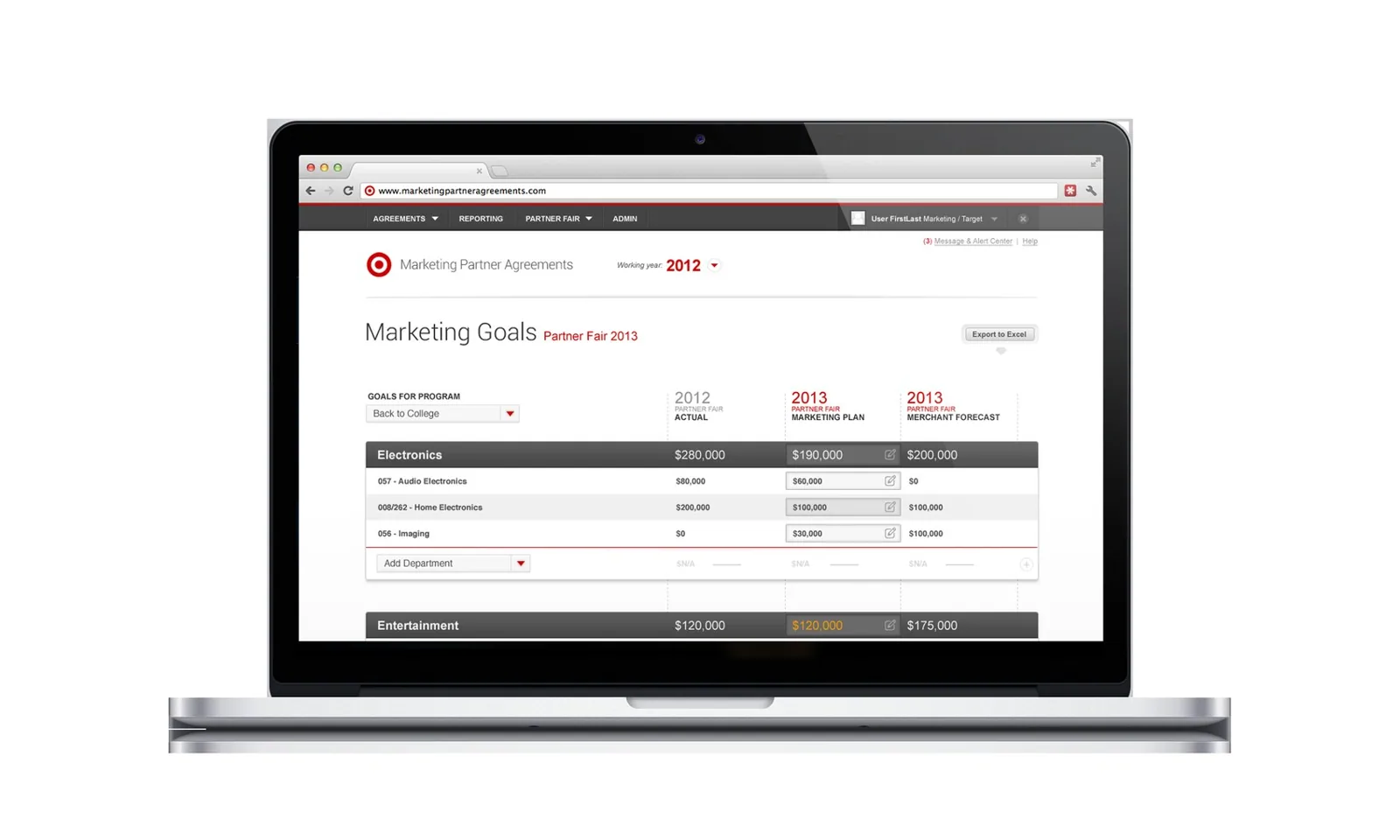
Actuals against plan against forecast, editable in place.
Built the digital side of a design studio
Catalyst was a Minneapolis design studio with no digital department when I came over from Carmichael Lynch. I built one, then ran it as a partner. The team grew from one person to more than twenty, and the work went to Target, Kohl’s, OPI, Best Buy, and Medtronic. Initio3i bought the studio in February 2013.
The Webby AwardsOfficial Honoree2008
The workThe all-Flash site for the Nicole by OPI line.Honored by the Webby Awards in Beauty and Cosmetics, 2008.


Andrew Norell was my first hire; he and I built the Boys and Girls Club content system by hand.
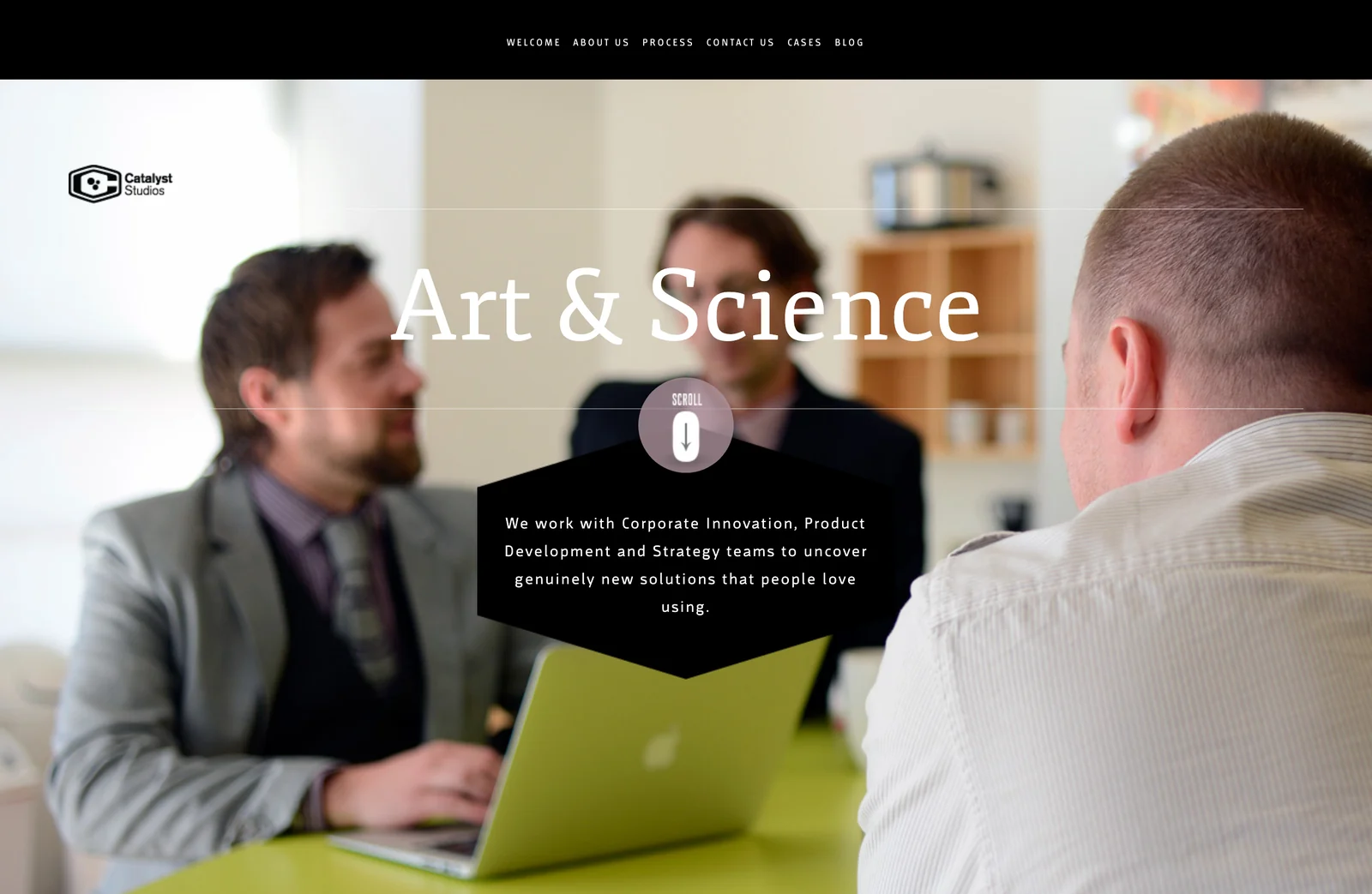
Art and science. By the end the buyers were corporate innovation, product, and strategy teams.
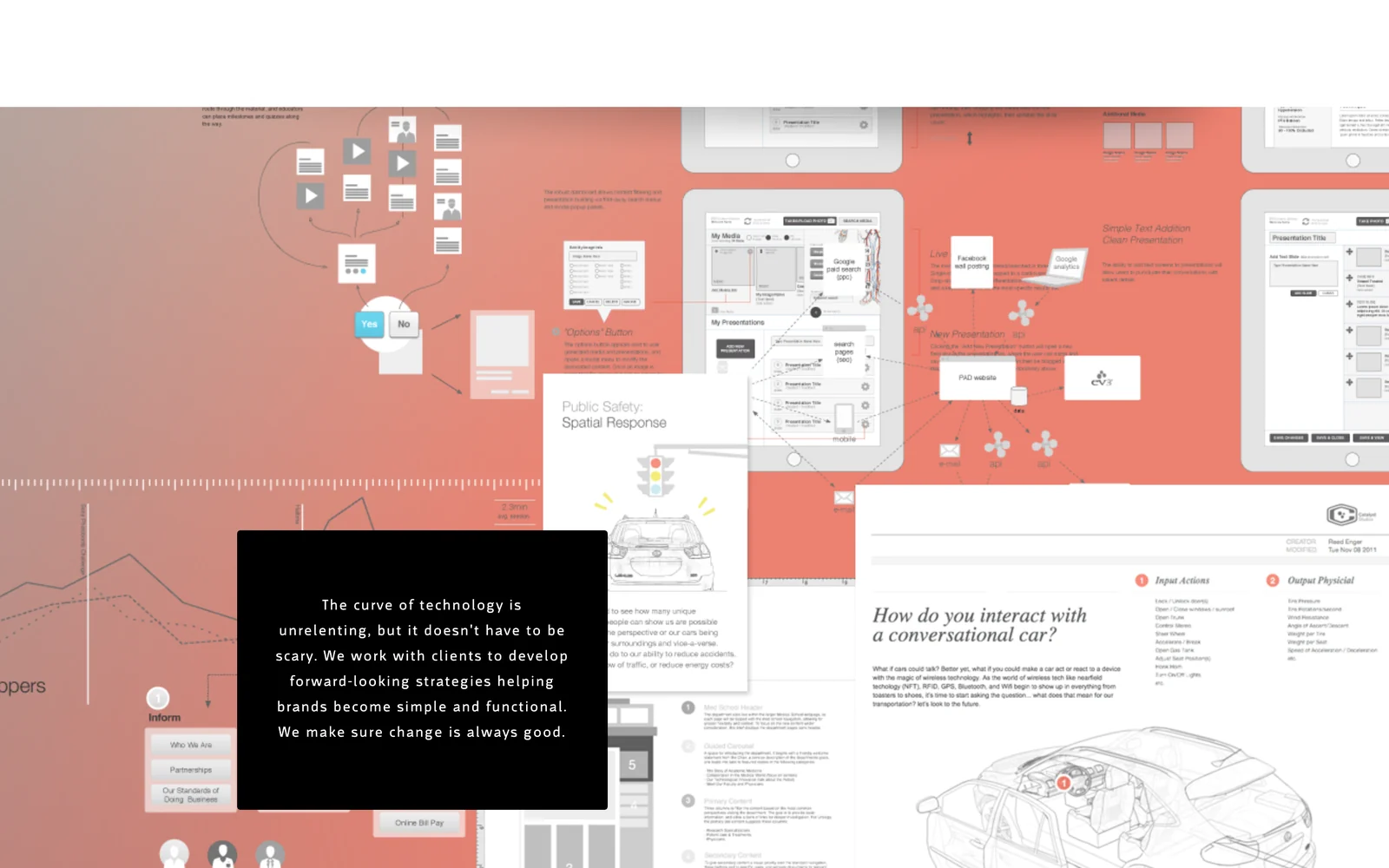
Wireframes, flows, and a conversational car interface. This is how the studio showed its UX.
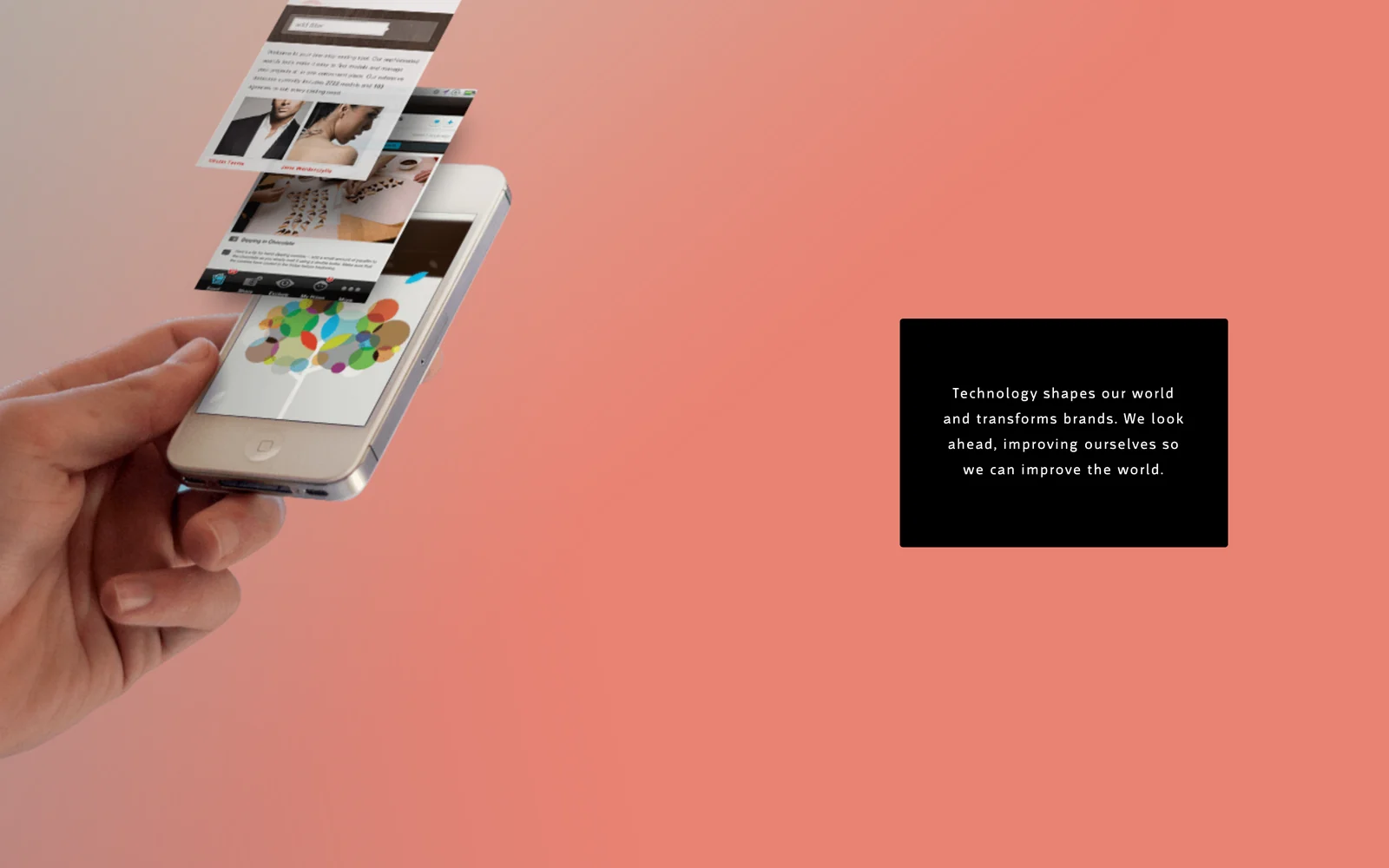
Phone builds, from the same 2012 site.
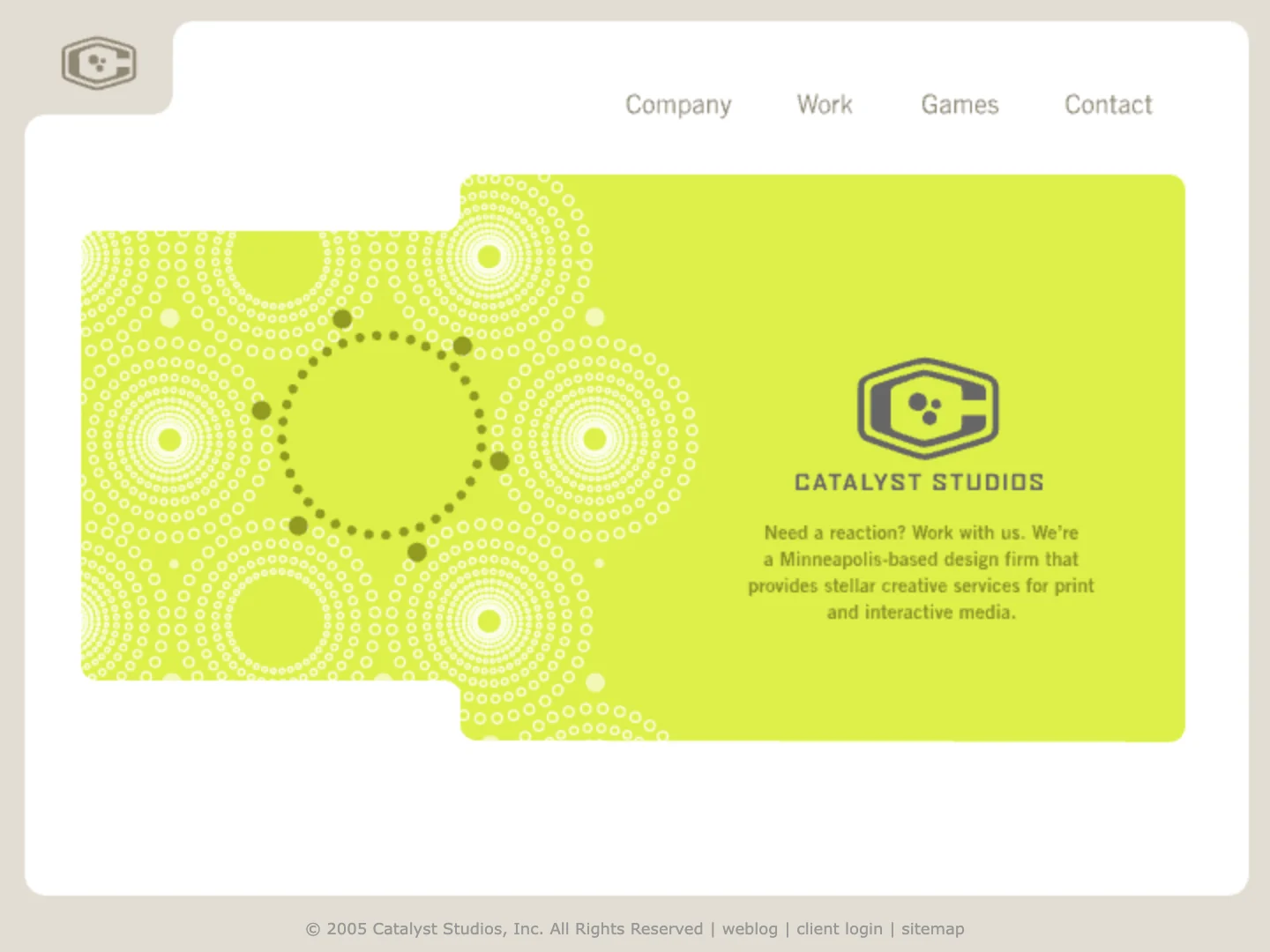
Need a reaction? The Flash site that was up the day I walked in.
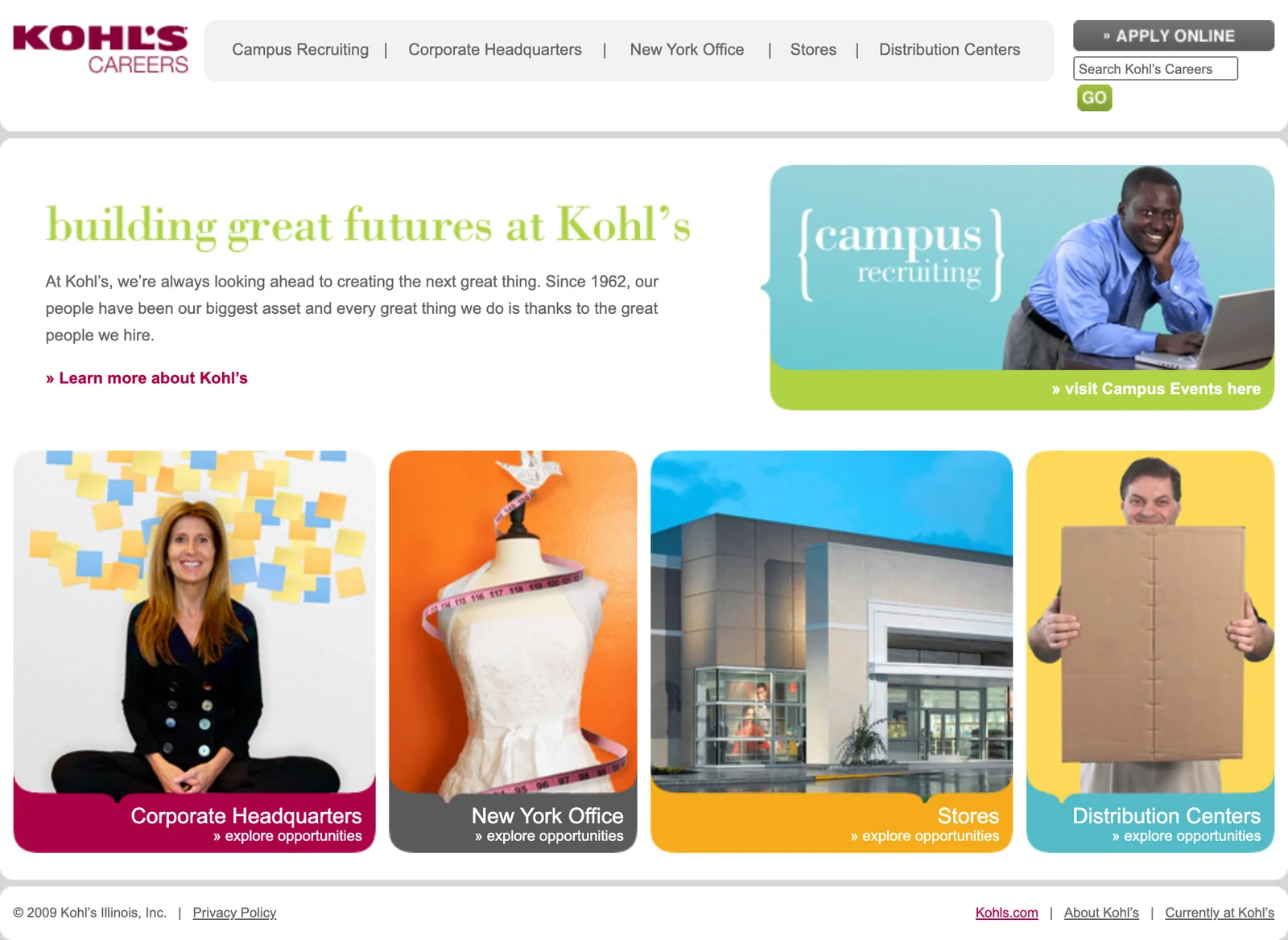
The recruiting site for Kohl’s. Every door into the company, one color each.
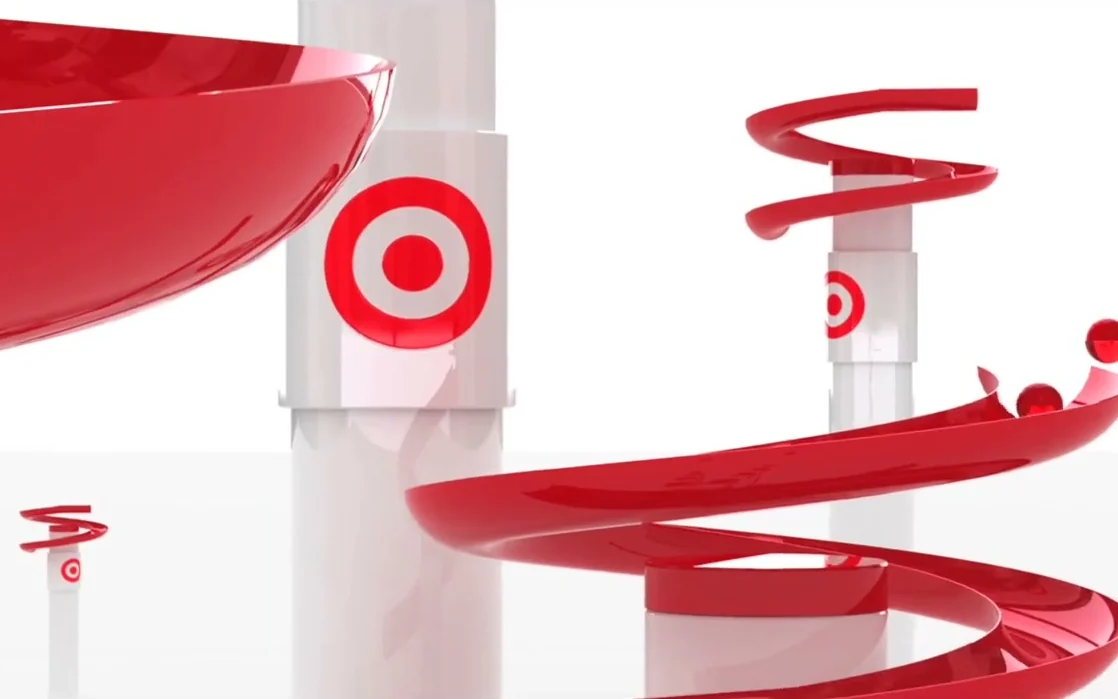
Agency: Catalyst. Production: Superfad. Every frame computer generated.
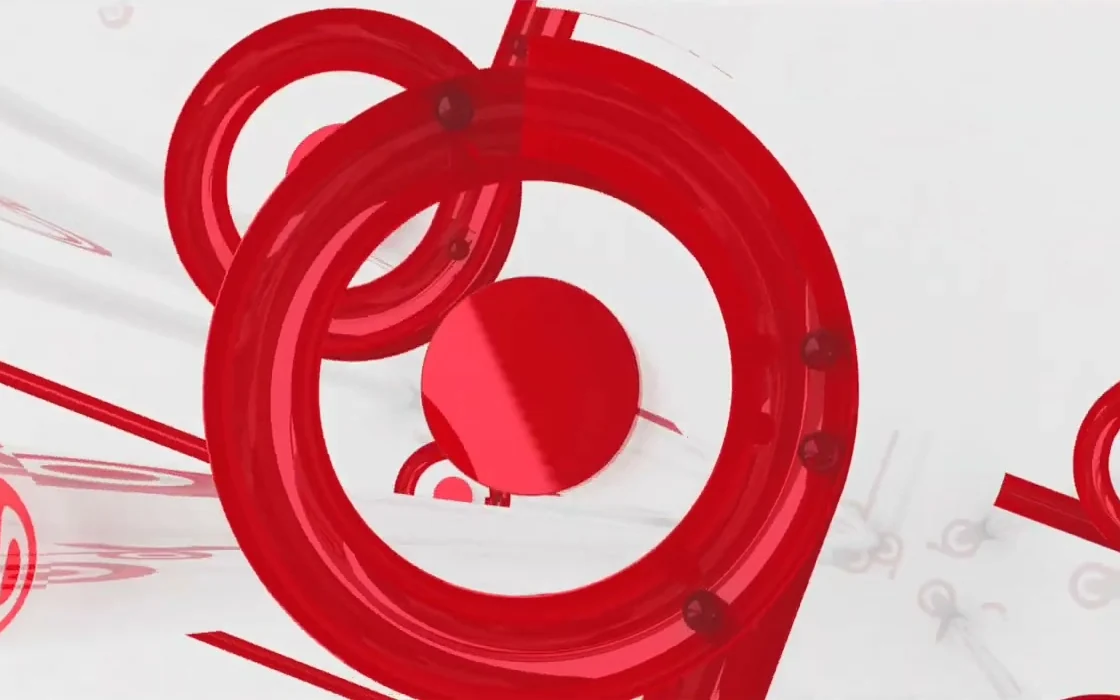
Red marbles, white field, the bullseye hidden in the machine.
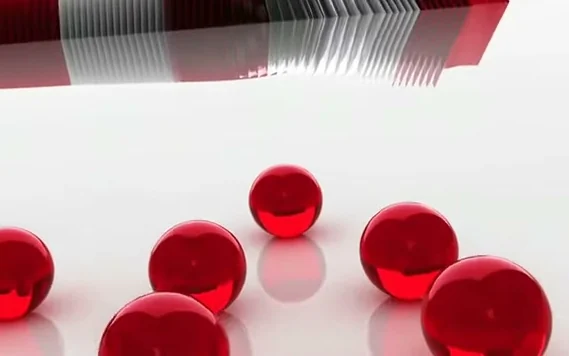
One of the spots from the same campaign.
Putting an agency on the map in digital
Olson's digital offering was two people, Chris Henderson and me, against fifteen at Space150. Twelve or more sites a year. One year Chris and I took nearly every AdFed digital award.
The One ShowInteractive Merit2002
Effie AwardsI Love My Cub
AdFedDigital awards
ResultThe best-selling product in Phillips history, launched with zero TV, print, or billboards.UV Vodka outgrossed every legacy product in the line on the strength of one viral website, inspired by Run Lola Run.
One Show 2002 annual, Interactive Merit, for the Phillips UV site. Credited as programmer, co-credited music and sound.


 Detroit PistonsMinnesota WildCleveland Cavaliers
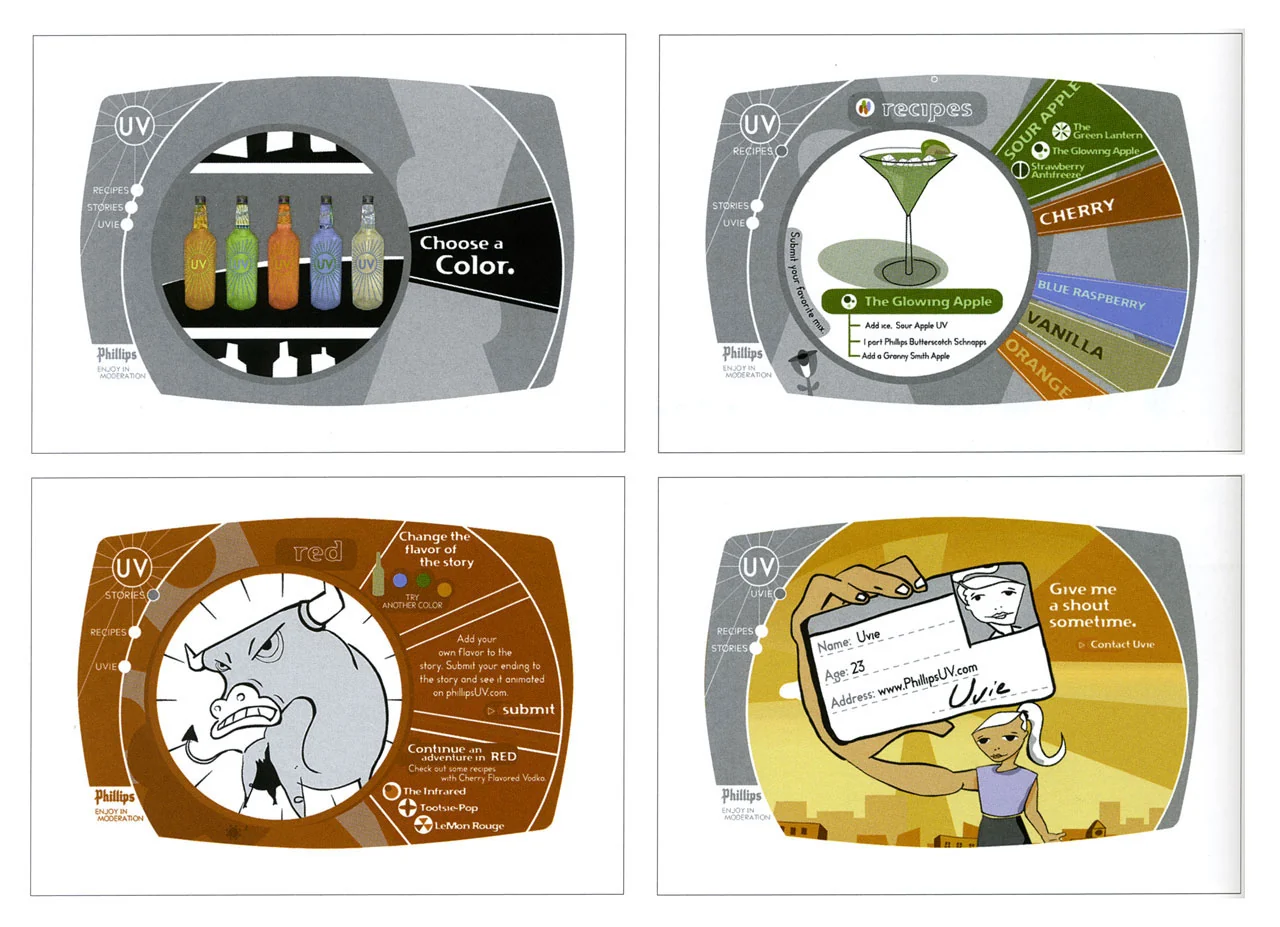
Pick a flavor, mix a drink, change the ending of the story, meet Uvie. Four screens from the 2002 annual.
The age gate from the original files, running again. The badge cycles through the flavors.
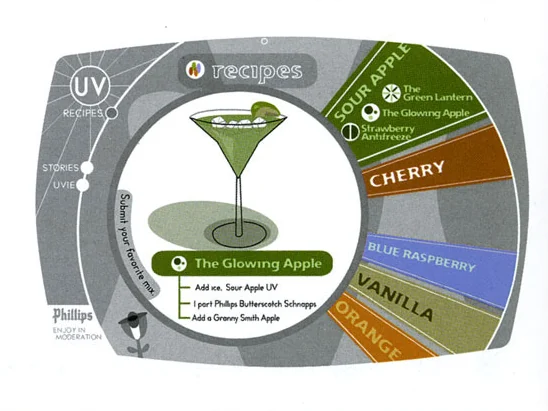
The Glowing Apple: Sour Apple UV, butterscotch schnapps, a slice of Granny Smith.
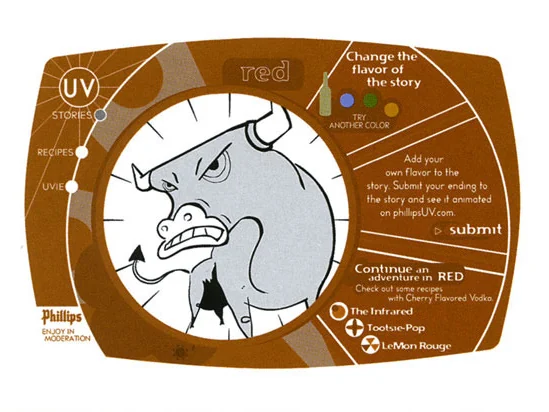
Change the flavor of the story. Submit your own ending and see it animated.
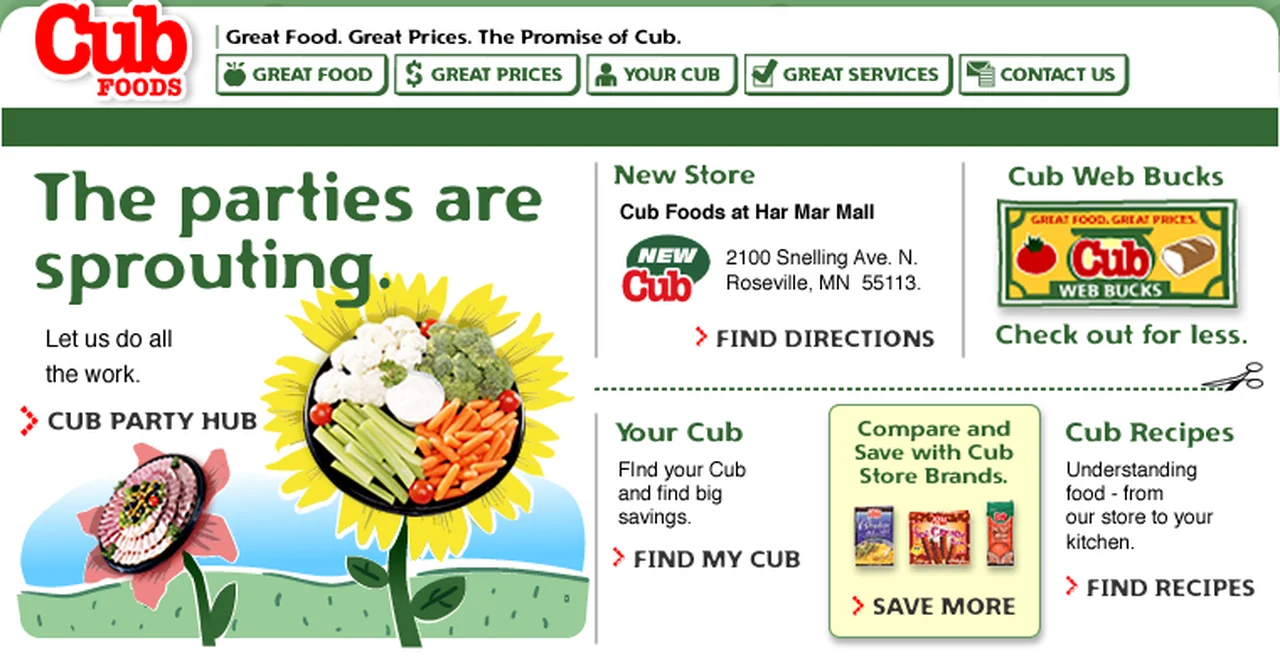
The Cub Foods home page in party season. Deli trays grown on sunflowers.
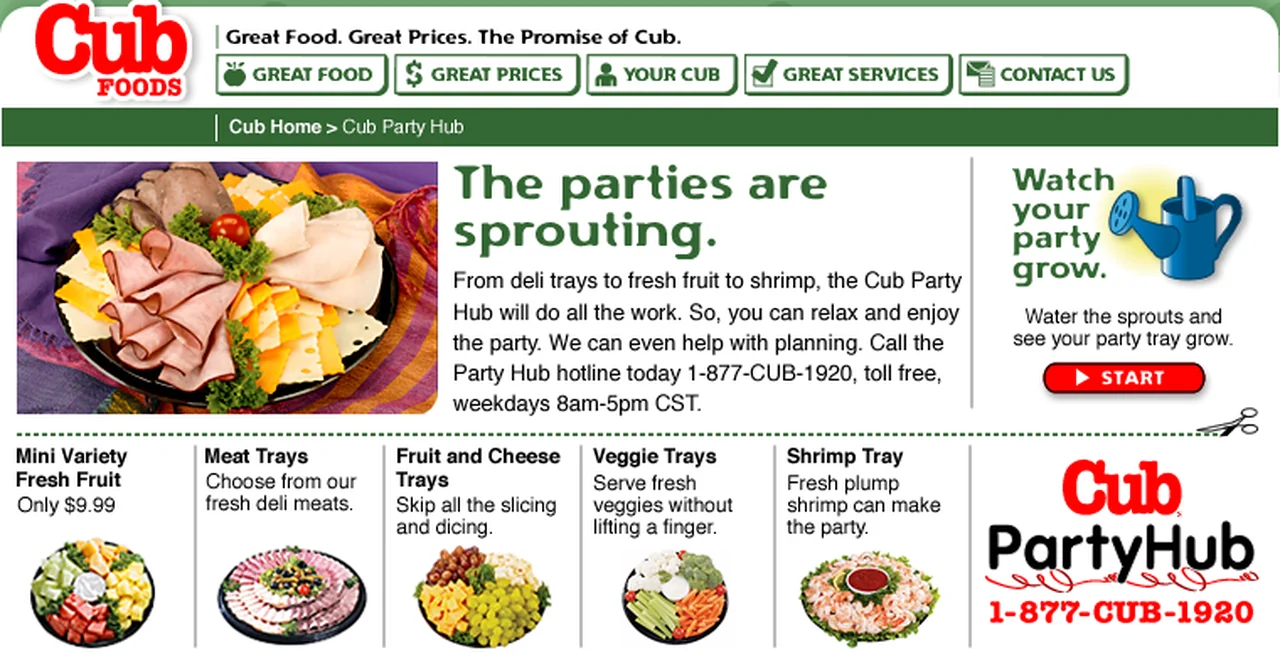
Trays, the hotline, and a watering can that starts a game.
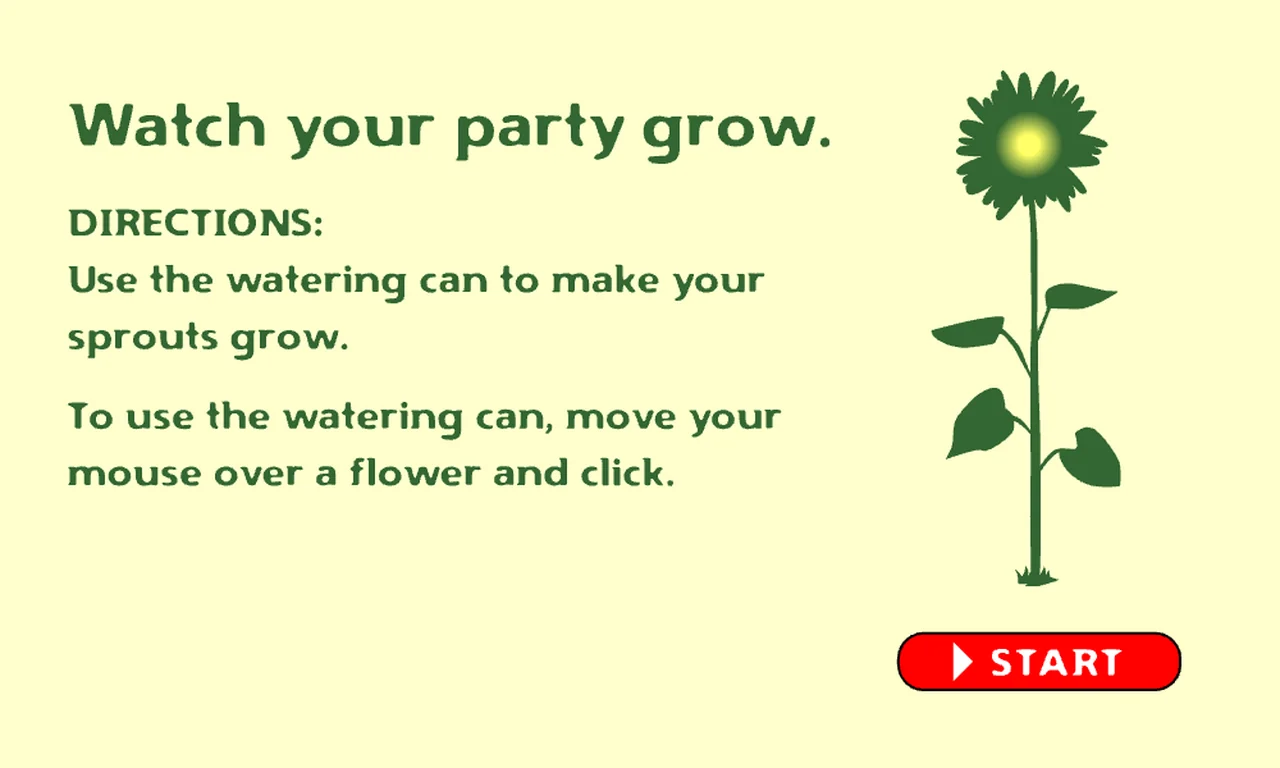
A Flash game: water the sprouts and the party trays grow.
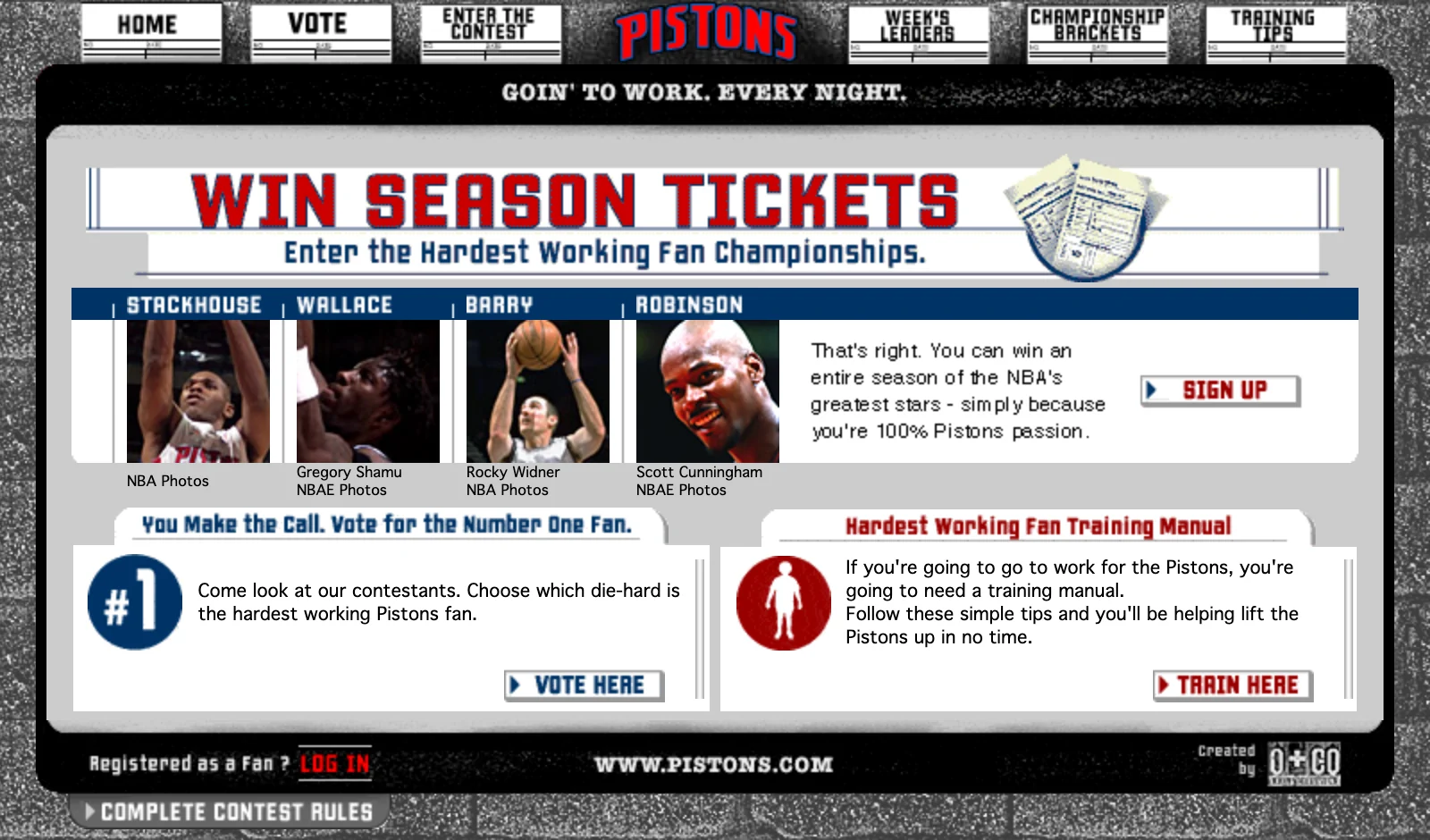
Goin’ to work. Every night. A season-long contest for the hardest-working fan in Detroit.
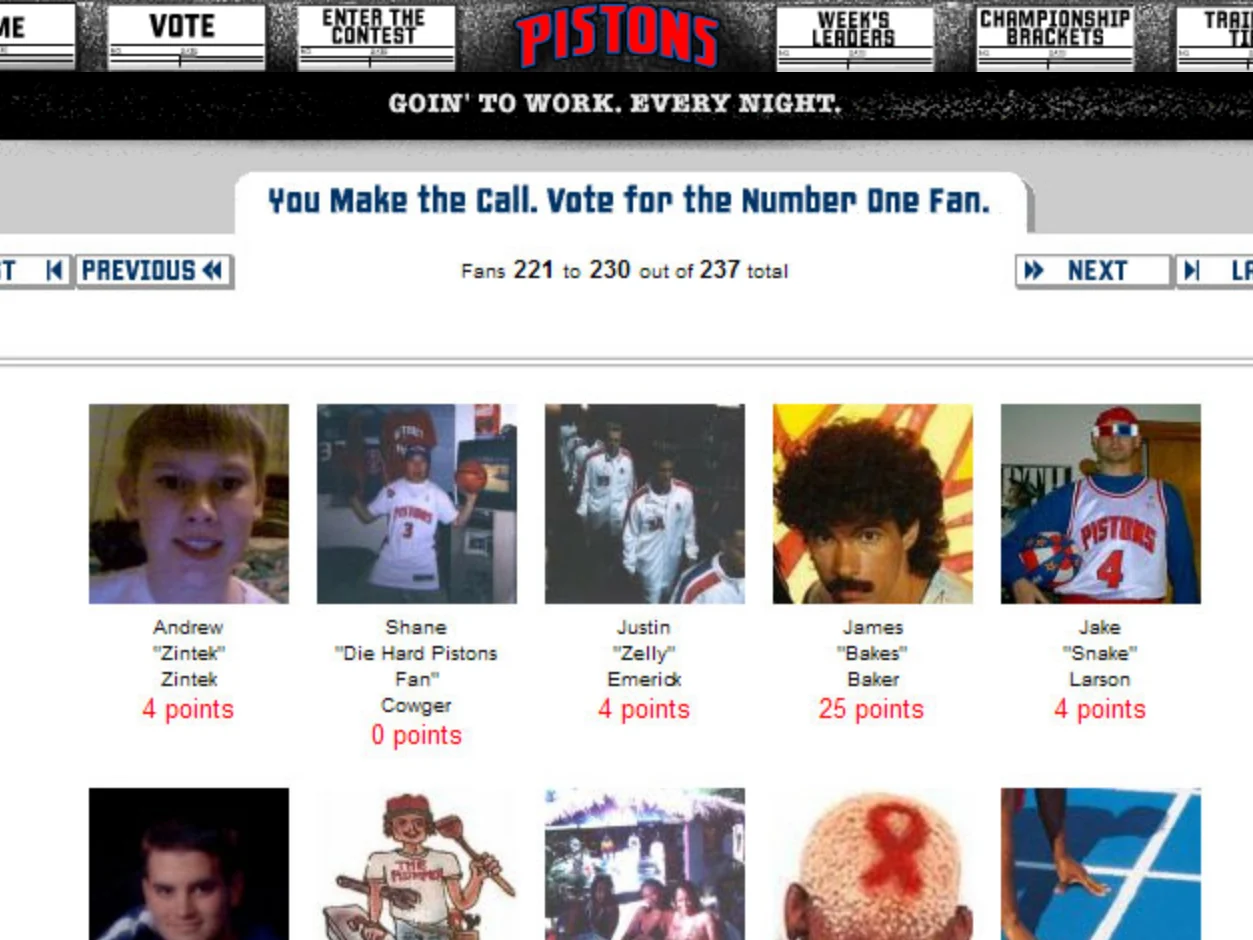
You make the call. Fans voted the bracket down, round by round.
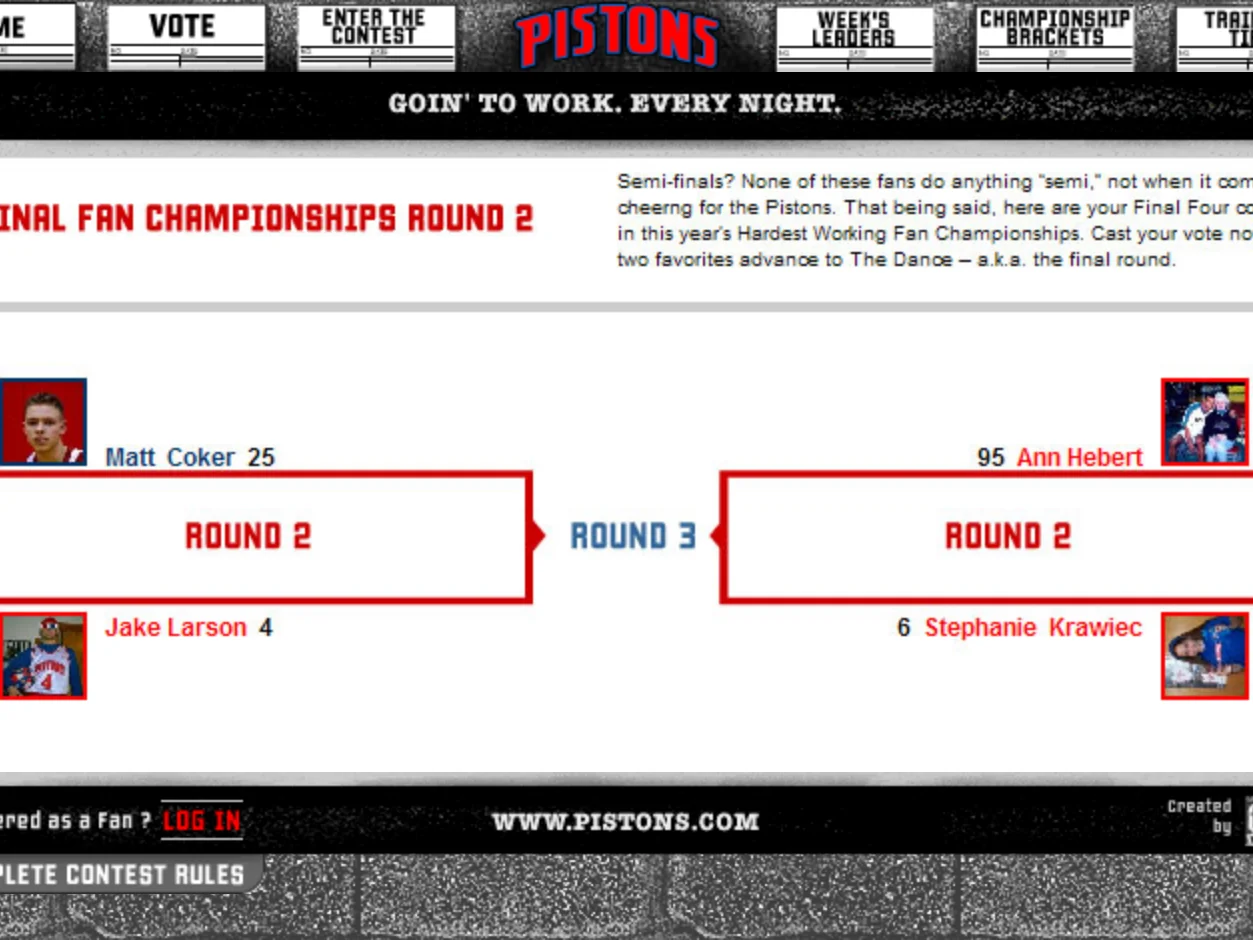
Final Fan Championships, round two.
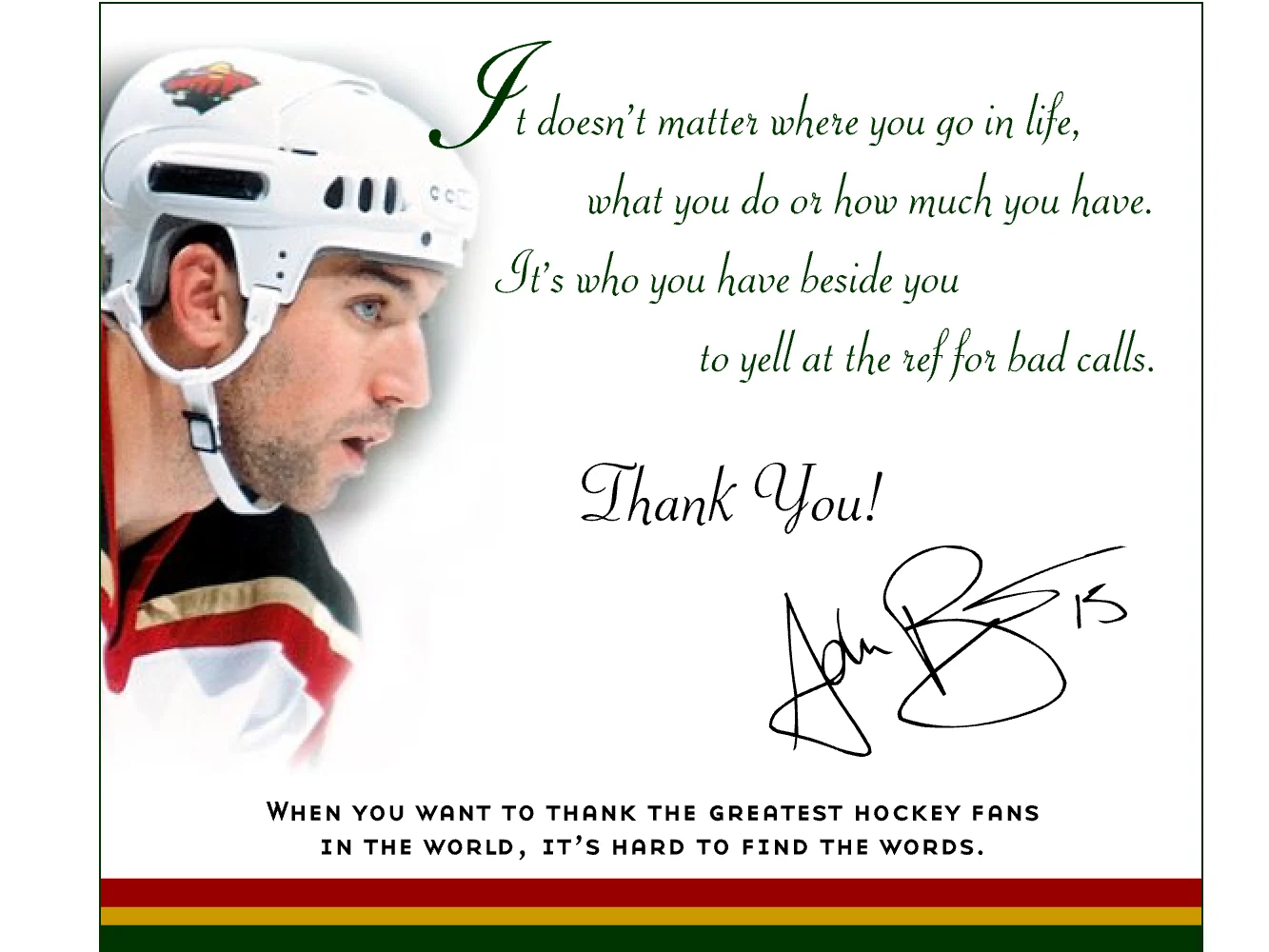
It’s who you have beside you to yell at the ref for bad calls.
Rotary phone, CRT weather forecast, Darius Miles. Nothing else on the internet looked like this.
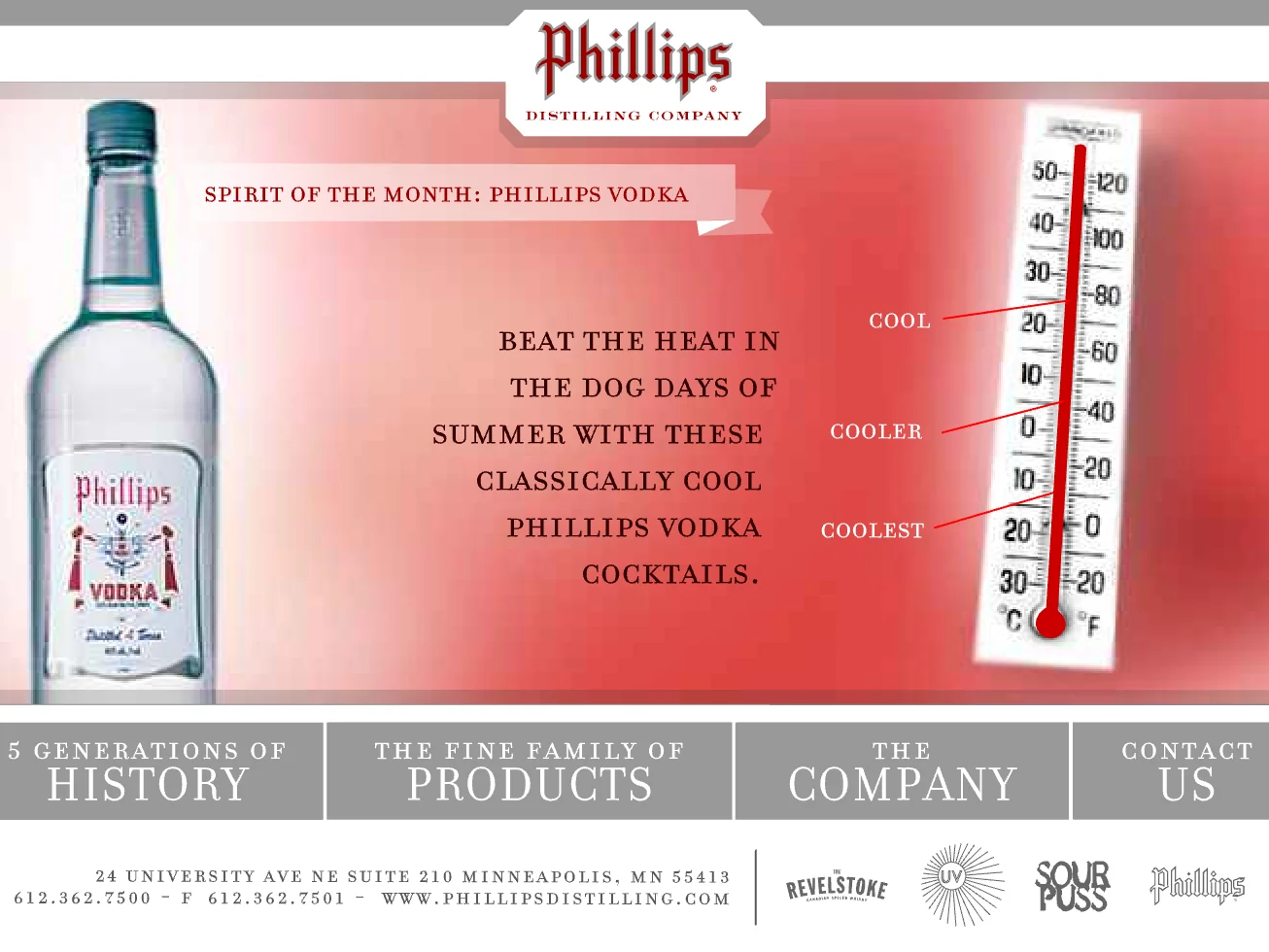
Spirit of the month, with a thermometer that runs from cool to coolest.
The tale of a heroic spirit. Five generations, and the age gate to prove it.
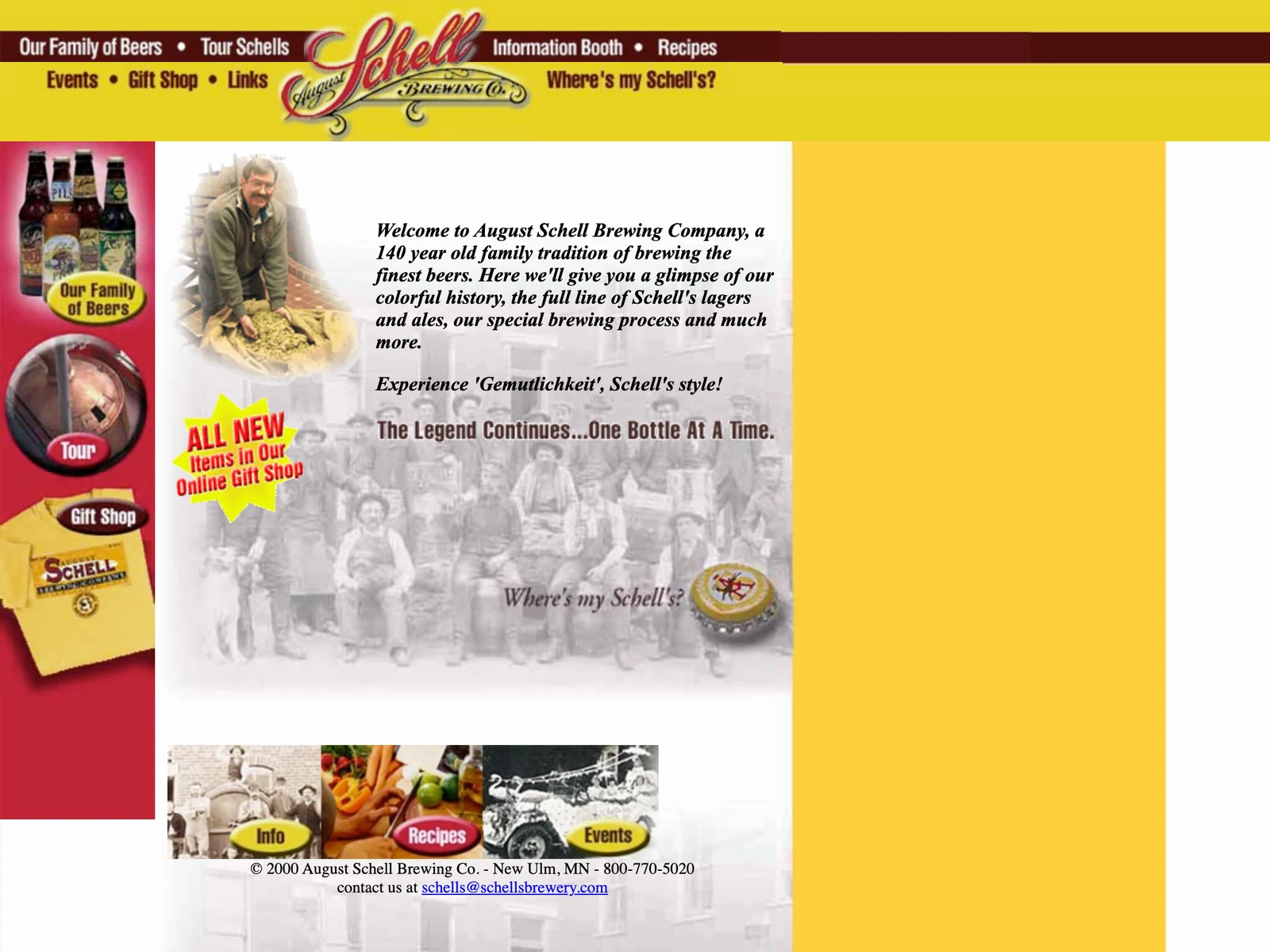
The legend, the beers, the recipes, the gift shop.
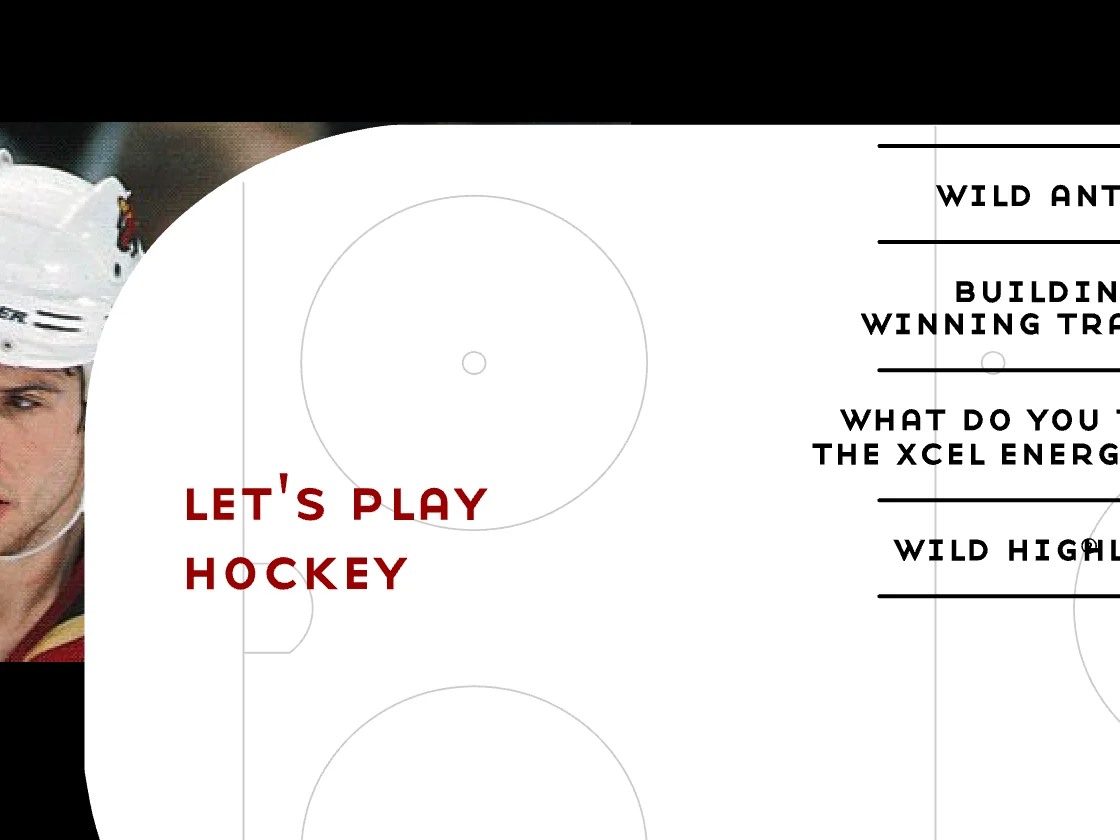
Season tickets, suites, and group sales, pitched in Flash.
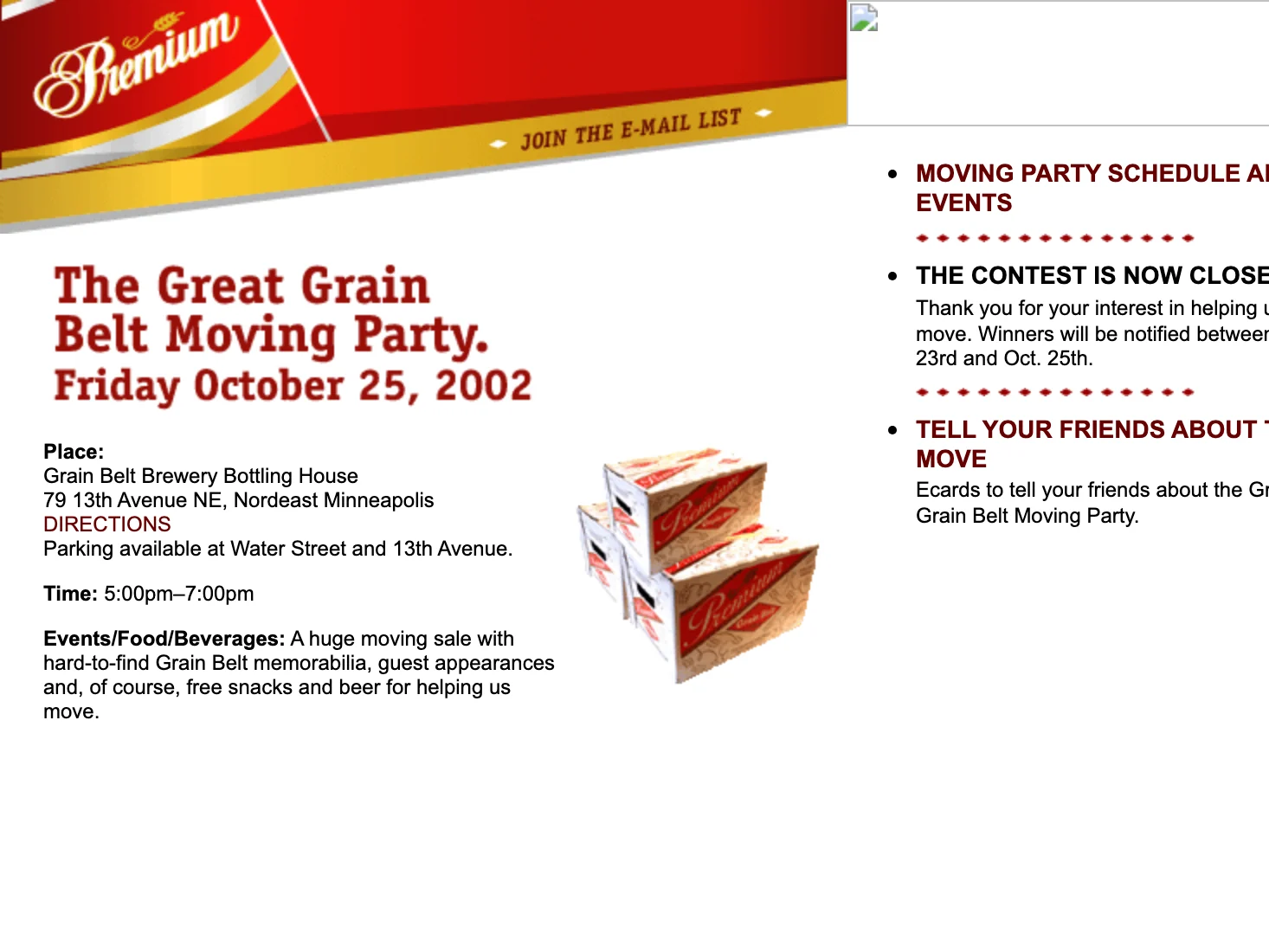
The Great Grain Belt Moving Party. A moving sale for the old brewery, with beer for anyone who helped.
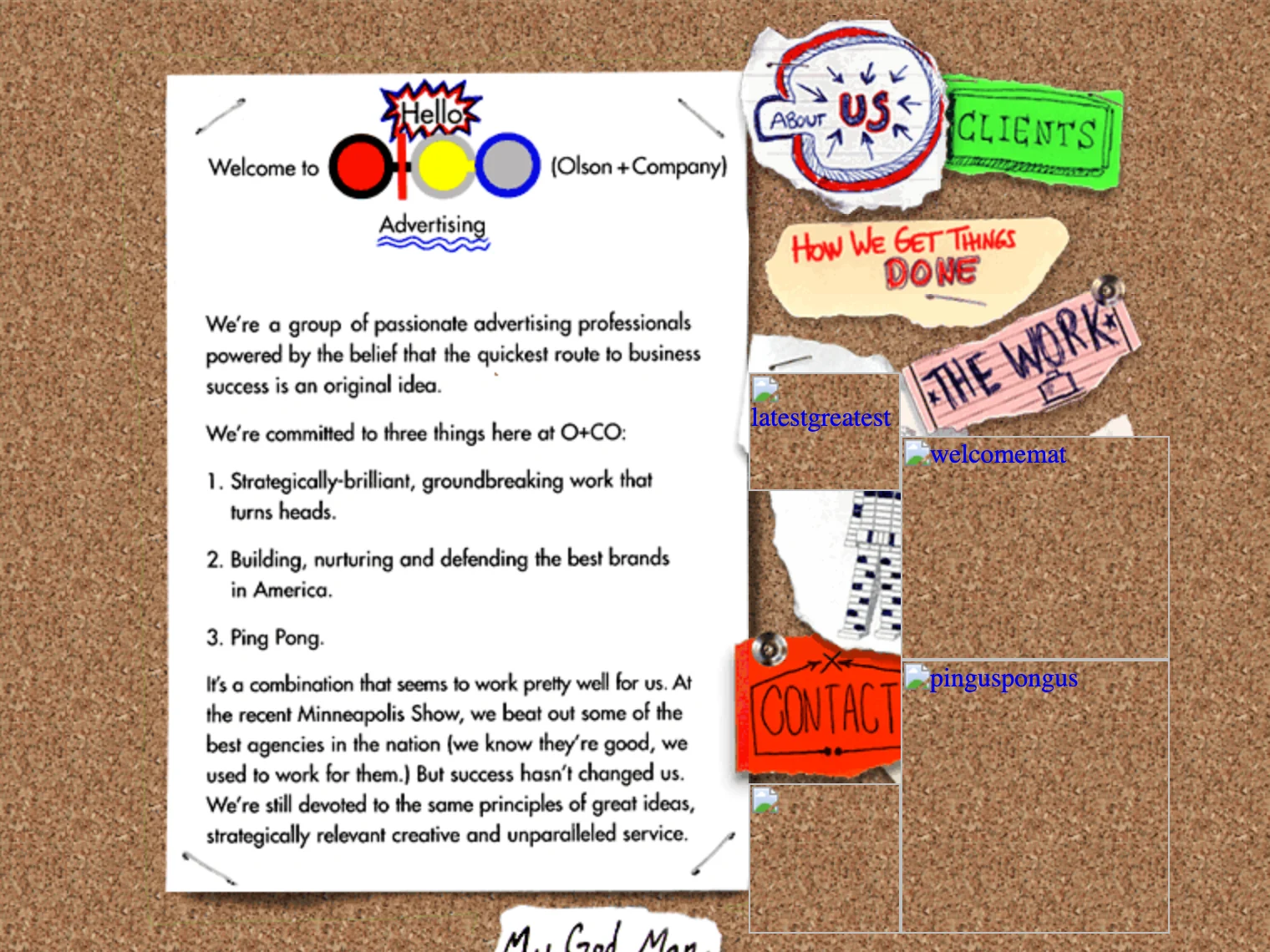
The agency’s own site, pinned to a corkboard. My God, man. What are you trying to do to my browser?

Ten thousand customers would like to speak to you immediately. Now they can.
A tile-based isometric engine written in ActionScript: A* pathfinding, enemy AI, fog of war, leaderboard.
The walls spell VERY EVIL. That was my call, not the engine's.
Face-morph navigation for a census-style campaign.
The agency reel, pixel man and all.
Live local music, broadcast from the bar
An internet radio station for Minneapolis musicians. We broadcast live from venues like the Turf Club off a Windows phone streaming over cell data to our own server, years before the iPhone. City Pages nominated us for Best Music Media, and we presented an award at its Best of the Twin Cities show the same year. Sam and I ran it until about 2008; Pete Wanamacher ran it from there until it signed off around 2012.
City PagesBest Music Media, nominee
At its peak80,000 listeners a month.Live shows streamed to the internet from the Turf Club in St. Paul, House of Mercy Presents and Live from the Clown Lounge among them.
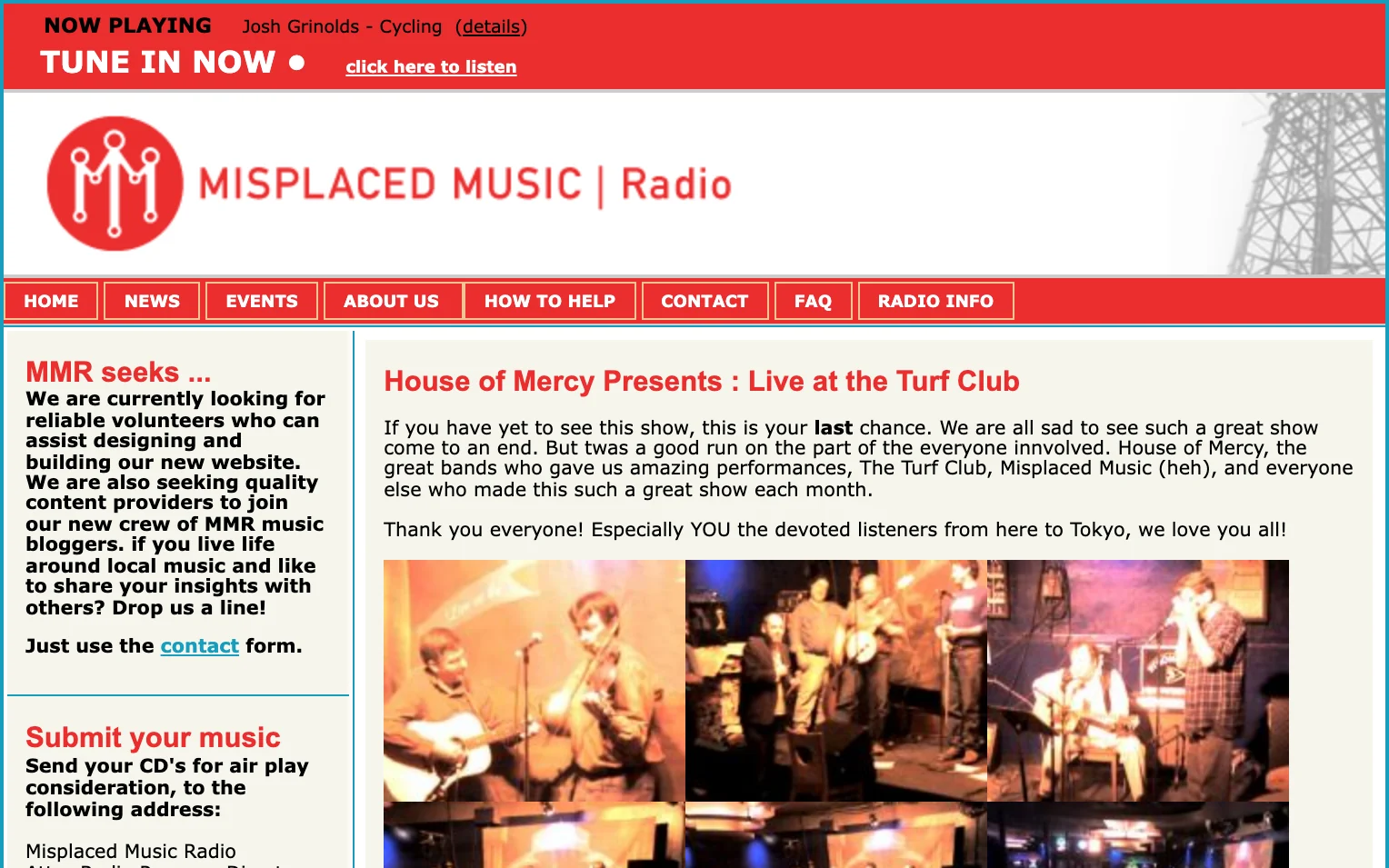
House of Mercy, live at the Turf Club. Tune in now.
Learning the web by building it
Sylvanstreet Productions was my own shop from the late nineties: music production, Flash, and database-driven sites. The Occupation clan site was a Counter-Strike community in classic ASP, with members, schedules, match records, and server stats.
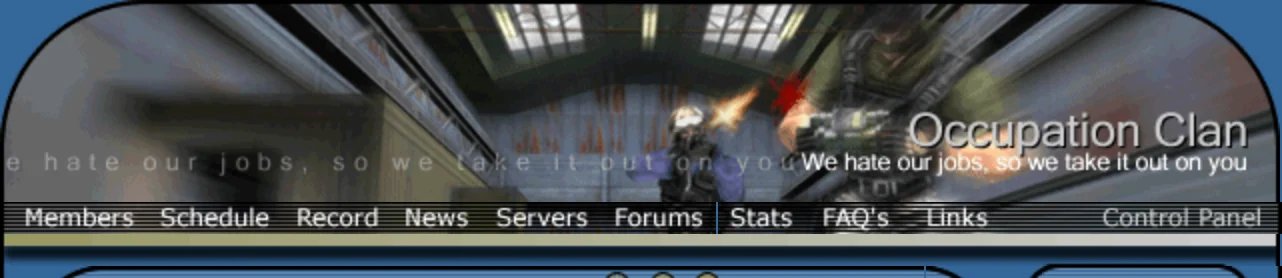
We hate our jobs, so we take it out on you. Members, schedule, record, servers, stats.
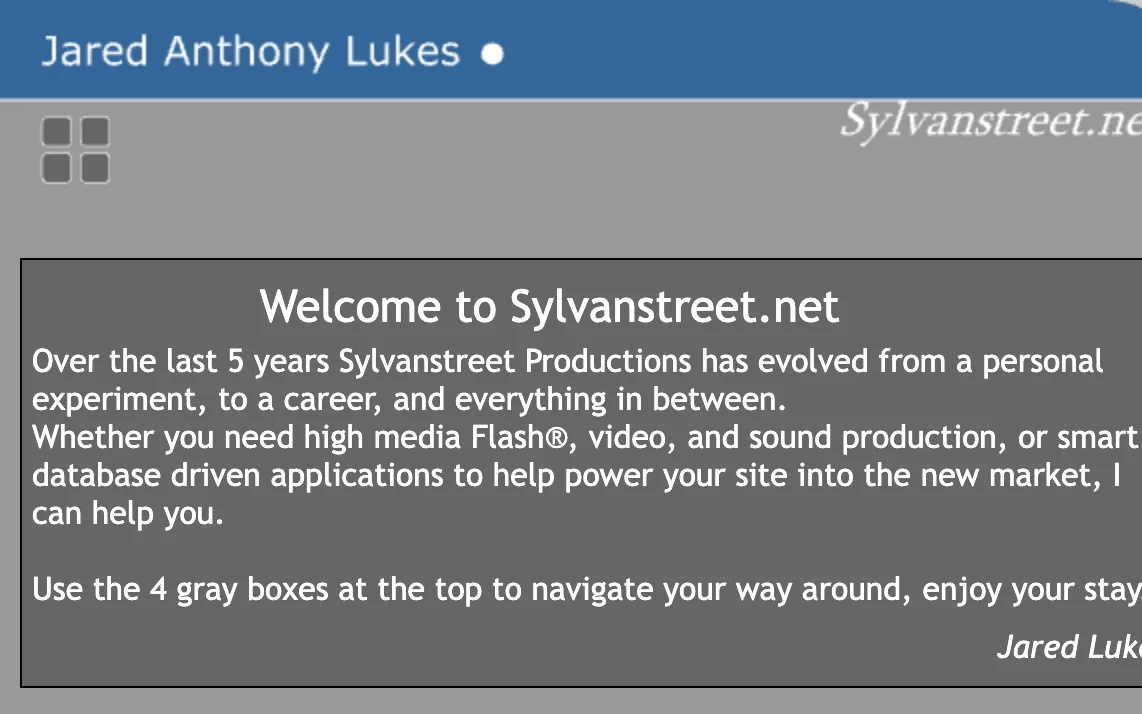
From a personal experiment, to a career, and everything in between.
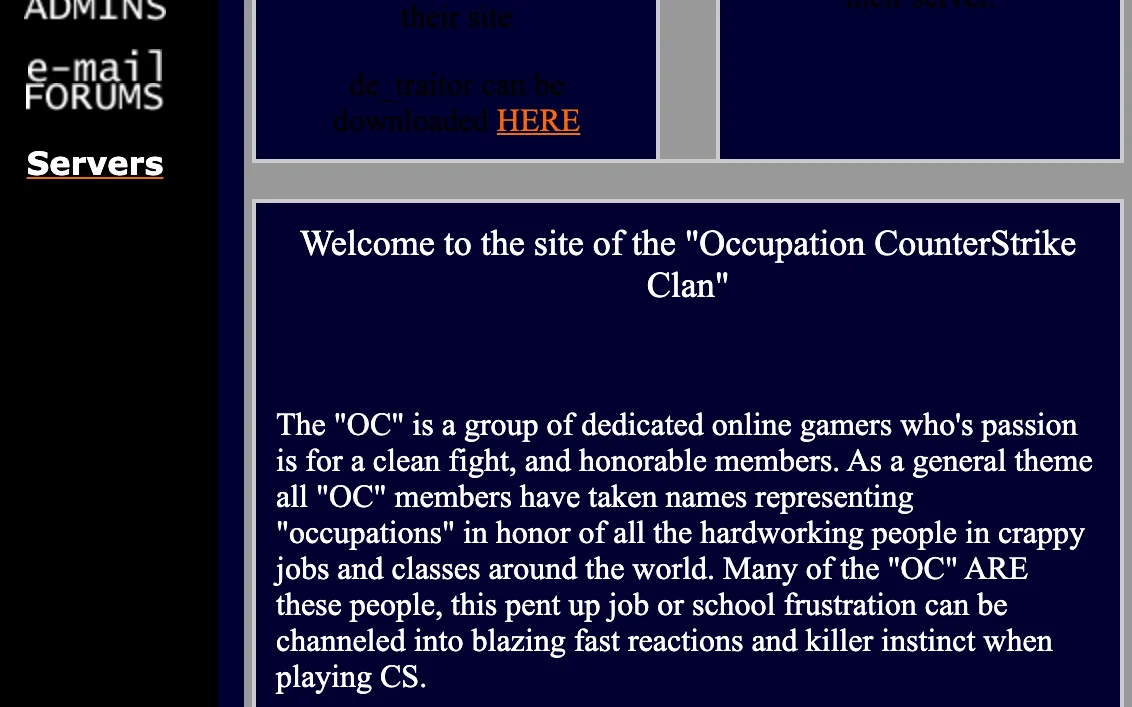
Headlines, calendar, servers. Design by Sylvanstreet Productions.
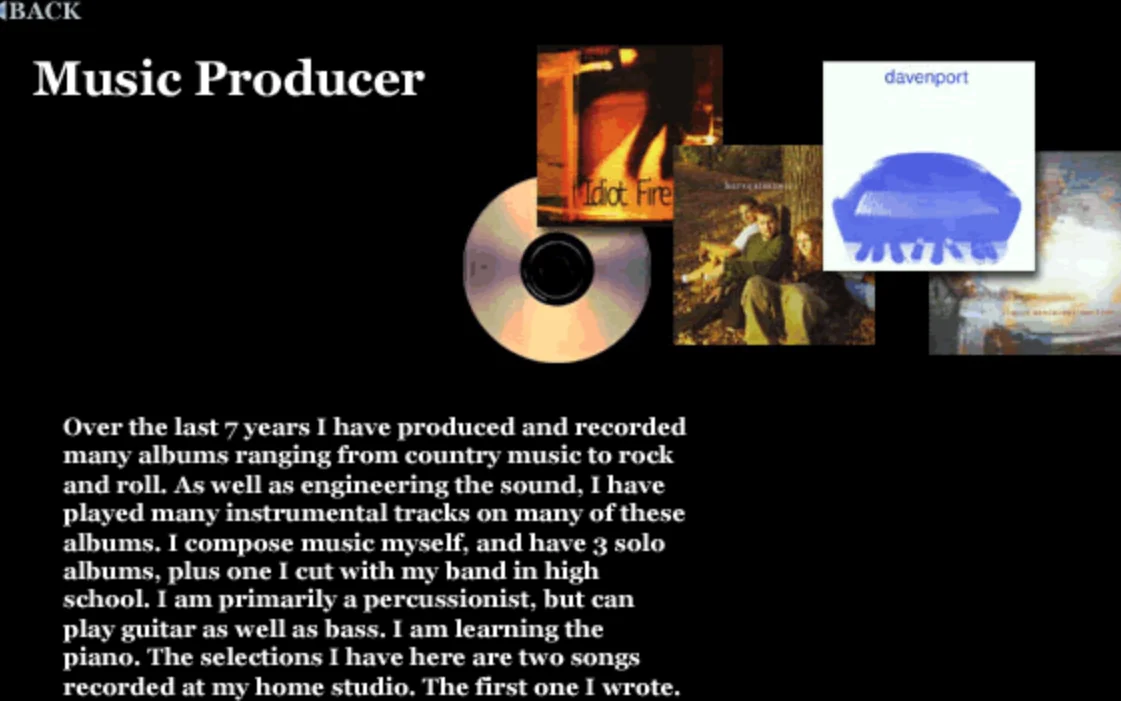
Seven years of producing and recording, from country to rock and roll.