Sounds like you
“We pay a dev shop every month and nobody here can tell if the work is any good.”
“Every software decision lands on my desk and I am not a technology person.”
“A big customer sent a security questionnaire and I do not know how to answer it.”
“We need a CTO, but not a full-time one, and not yet.”
The problem
Your vendors are grading their own homework.
Without a technical lead, the dev shop decides what to build, the software vendor decides what you need, and you find out what it cost at the end. A full-time CTO in Minneapolis runs a median base near $324,000. A fractional seat puts someone on your side of every one of those decisions, for a fraction of that.
Who it is for
What you get
Decisions you can stand behind, and someone who answers for them.
- A technology roadmap. What to build, what to buy, what to stop paying for, in the order that pays back first.
- Vendors who deliver. I pick the dev shop and the software, write down what each one owes you, and check the work.
- The security basics. Access, backups, passwords, and the questionnaire your big customer sent.
- A plan for the first hire. What the role is, how to interview for it, and an architecture they can pick up on day one.
In the seat now
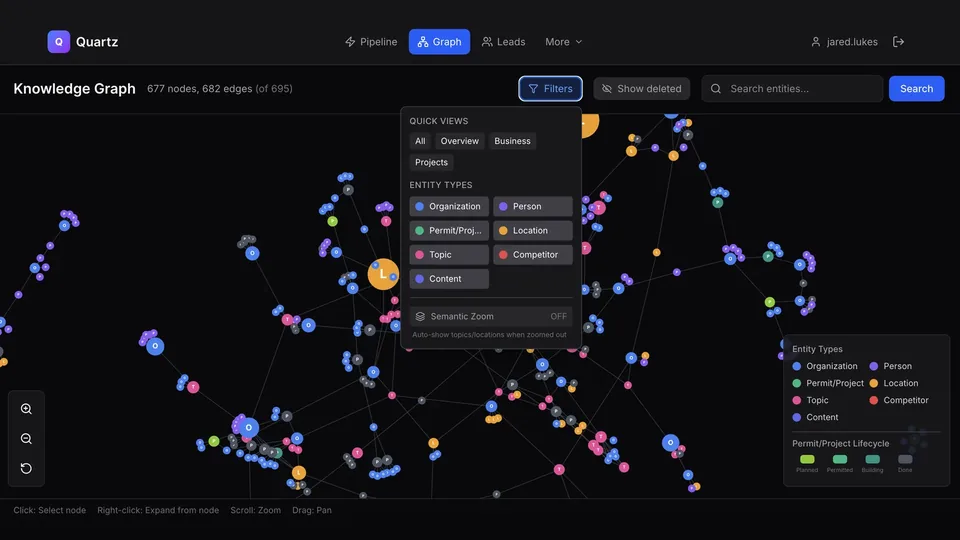
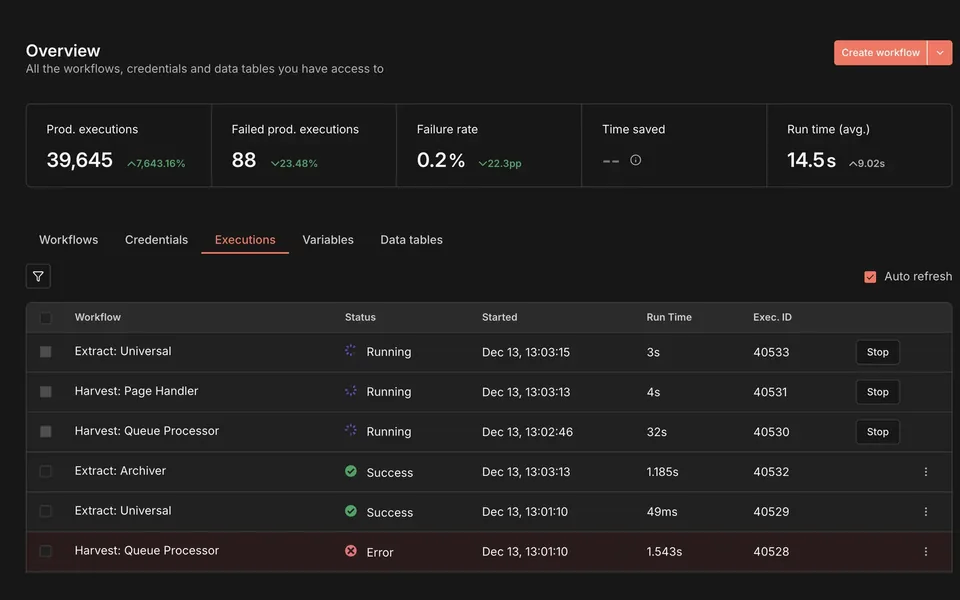
Two CTO seats, running today. At Quartz Importers MN I designed and built a 49-workflow automation platform that has run 39,645 times at a 0.2 percent failure rate, and in about 30 days mapped the whole market the company sells into (case study). At U.S. Asset Appraisals I run the marketing technology and the AI rollout for a firm working in 35+ states. I picked every vendor in both.
How it works
Talk it through
A 30-minute call. What you have, what it costs, and what keeps breaking.
Read what you have
The first month is mostly listening: the code, the contracts, the vendors, the bills.
Run the technology
The roadmap, the vendor calls, the build or buy decisions, the security basics.
Hand it over
By two years at the latest, I help you hire a full-time owner and hand over a system they can run.
Questions
What does a fractional CTO seat cost?
Do you write the code yourself?
Can a fractional CTO replace our IT company?
Is the CTO seat remote or on site?
What do we have when the engagement ends?
Do you also take AI or marketing seats?
How long does a fractional CTO seat last?
Can you save a software project that has run for years?
Before you hire this, people ask
- Do I need a fractional CTO or a dev shop?Usually the CTO first. A dev shop builds what it is told. A fractional CTO decides what to build, picks the shop, and checks the work. A shop with no CTO means nobody is checking; a CTO with no shop means nothing gets built. Most small companies need a little of both.
- How do I turn a strategy into vendor RFPs?Break the strategy into jobs, write each job as a problem with a measurable result instead of a feature list, add your must-haves (data, ownership, security, budget range, timeline), and send it to three to five vendors. Score the answers against the same list. A good RFP fits on a few pages and makes the bad vendors drop out on their own.
- We bought software and nobody uses it. What now?Fix the rollout before you replace the tool. Software gets used when it fits the way people already work, when the people using it helped pick it, and when it is the easiest way to get the job done. Fix those three and the same tool usually works. Buy a new one the same way and it will sit there too.
- What does a fractional CTO cost?Nationally, fractional CTO advisory runs $4,000 to $10,000 a month for ten to fifteen hours, active engagements $10,000 to $25,000, and near full-time $20,000 to $40,000. Mine are $3,500 a month for about two days a month, $6,500 for about a day a week, or $11,000 for about two days a week, and I currently hold two of these seats.
- What does a fractional exec do in 90 days?Month one is listening: reading what exists, meeting the people and the vendors, and finding what is about to break. Month two is the first fixes and the plan. Month three is running the plan and reporting on it. By day 90 you should have a written plan, at least one problem fixed, and a clear answer on whether the seat is worth keeping.
- Interim or fractional executive: what is the difference?An interim executive fills an empty seat close to full time for a set stretch, usually while you hire the permanent person. A fractional executive works part of the week, ongoing, in a seat you may not need full time at all. My fractional seats are $3,500 a month for about two days a month, $6,500 for about a day a week, or $11,000 for about two days a week; interim team leadership is part time at the same three levels.
- Why does a fractional seat end at two years?Two years is enough to take a new initiative from zero to working, and short enough that nobody can hide in analysis. Every fractional seat I hold runs at least three months and at most two years. By the end, the work stands on its own with a full-time owner or the team you have, or we stop it.
- What is a fractional executive?A fractional executive is a senior leader who works for your company part of the week, on an ongoing basis, and is accountable for results like any member of your leadership team. The common seats are CMO, CTO, CFO, and Chief AI Officer. I take CMO, CTO, and Chief AI Officer seats for three months to two years: $3,500 a month for about two days a month, $6,500 for about a day a week, or $11,000 for about two days a week.
Tell me what you pay for and what you get.
Bring the dev shop invoices. We will read them together.