Sounds like you
“The demo was great. Then real customers used it.”
“Our developers built a prototype and nobody knows how to put it into daily use.”
“The owner keeps asking when this thing starts paying for itself.”
“The AI bill is bigger than what it saves us.”
The problem
The demo worked. Production is where it falls apart.
A demo has to work once. A real system has to work every day, prove it is right, stay out of what it should not touch, and cost less than it saves. I take the stuck pilot to a system you can rely on, or tell you straight that it should not be built.
Who it is for
What you get
The engineering that turns a pilot into something you can rely on.
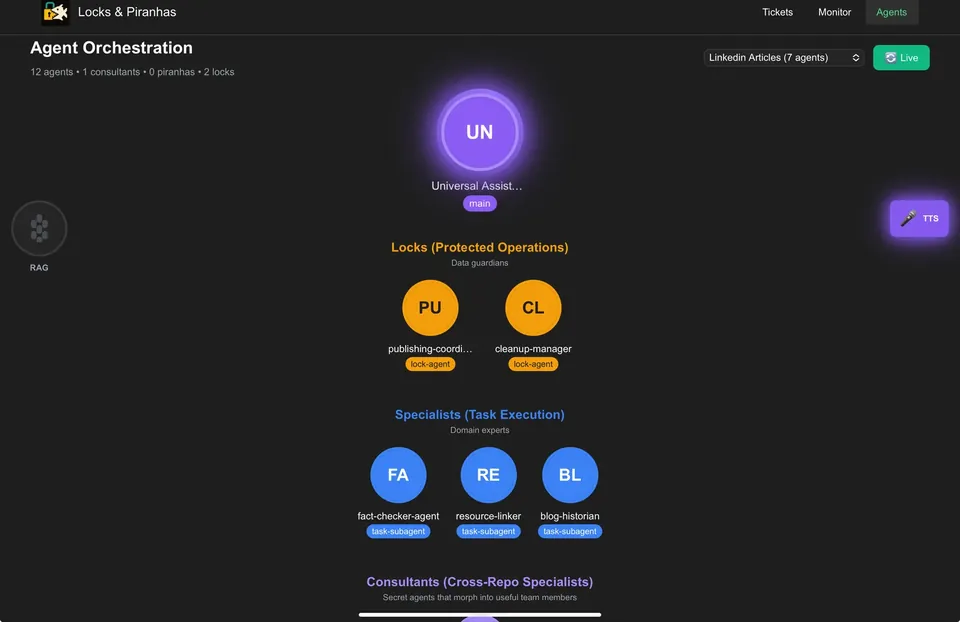
- Agents that do real work. Several small specialists that hand off to each other, instead of one giant prompt holding everything together. They plug into your systems through standard connectors, so nobody inherits a pile of glue code.
- Answers from your own documents. The system reads your files, manuals, and records and answers from them with the source attached. The technical name is RAG.
- Computer vision and automated workflows. Pipelines that read, sort, and act on your documents and images.
- Proof it works. A test set we run every time something changes, so you know it works today and still works next month.
- Rules and records. Who checks what, a log of every action, and records that hold up when an auditor asks.
- Cost work. Caching, and the right model for each step, so the monthly bill makes sense.
Running now, and built before
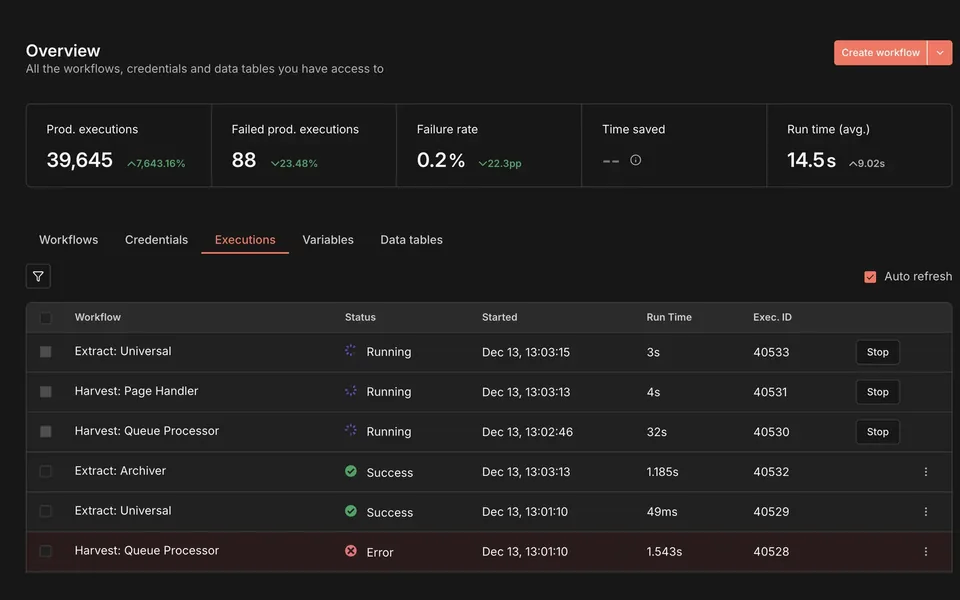
Running now: forty-nine automated workflows running every day for one sales team (case study). Built before my current seats: document sorting at 100,000 a day and 95%+ accuracy, and a vision system whose AI bill I cut by 70%.
How it works
Scope the gap
A 30-minute call. What does the pilot do today, and what keeps it from daily use?
Make it sturdy
The plumbing, the document reading, and the everyday reliability the demo skipped.
Prove it
A standing test set plus tracking of accuracy, cost, and speed, so you can defend it to a board or a bank.
Go live and hand off
It goes live with the documentation and drawings your team needs to run it without me.
Questions
What does an AI build cost?
Do you only do agents, or broader AI builds?
Will my team be able to run it after you leave?
How soon can an AI build start?
Who owns the code and the accounts?
What will it cost to run each month?
Before you hire this, people ask
- Should I build custom AI or buy a tool?Use off-the-shelf tools until they cannot do the job, which most businesses never hit. Build custom only when the work is the thing you sell, when no tool handles your data or your rules, or when the monthly tool bill has grown past what a build would cost. A one-hour second opinion on the choice is $150.
- How much does an AI automation project cost?I build automations at a fixed price agreed before the work starts, or at $150 an hour. The cheapest useful step is $450 to switch on the AI inside tools you already pay for. Running costs are the software and the AI usage, and I estimate those alongside the build price so you know the monthly bill before you say yes.
- n8n, Zapier, or custom AI agents?Zapier if the people running it are not technical and the volume is low. n8n if you want control, more volume for the money, and someone on hand who is comfortable with a little code. Custom agents only when the work involves judgment on messy documents or images at a volume the platforms cannot handle. Most businesses start on a platform and never need custom.
- How can my agency add AI services without hiring an AI team?Start by using AI inside your own work, train the team on real client jobs, and bring in a senior AI lead part time for the client work you cannot do yet. Sell one small, clear AI offer first, like an AI audit or a workflow automation, and grow from what clients buy. Hire full time only when the work is steady.
- Why hire a consultant who does the work, not just advises?Because a consultant who has to carry out their own plan writes a plan that can be carried out. Advice-only consultants can recommend anything, since someone else pays for the doing. Ask any consultant to show you something they built that is still running. If all they can show you is a deck, you are buying a deck.
- Do I need a fractional CTO or a dev shop?Usually the CTO first. A dev shop builds what it is told. A fractional CTO decides what to build, picks the shop, and checks the work. A shop with no CTO means nobody is checking; a CTO with no shop means nothing gets built. Most small companies need a little of both.
- How do I find new customers without hiring a sales team?Pick one or two channels, run each one like an experiment for a month, and keep the one that works. The usual options are asking current customers for referrals, being findable on Google and in AI assistants, partnering with a business that already has your customers, and using automated research to find and qualify leads so the few hours you have go to the best ones.
- What does a fractional CTO cost?Nationally, fractional CTO advisory runs $4,000 to $10,000 a month for ten to fifteen hours, active engagements $10,000 to $25,000, and near full-time $20,000 to $40,000. Mine are $3,500 a month for about two days a month, $6,500 for about a day a week, or $11,000 for about two days a week, and I currently hold two of these seats.
Tell me where the pilot is stuck.
Bring what it does and where it breaks. If it should be shut off instead, I will say so.