The situation
BMW sent its whole UX organization through Cooper's service design training. The course teaches on an airline example. Back at their desks, the teams found it hard to apply the method to BMW's own products. I was on the eMobility team in Chicago, working on EV charging and range.
What I did
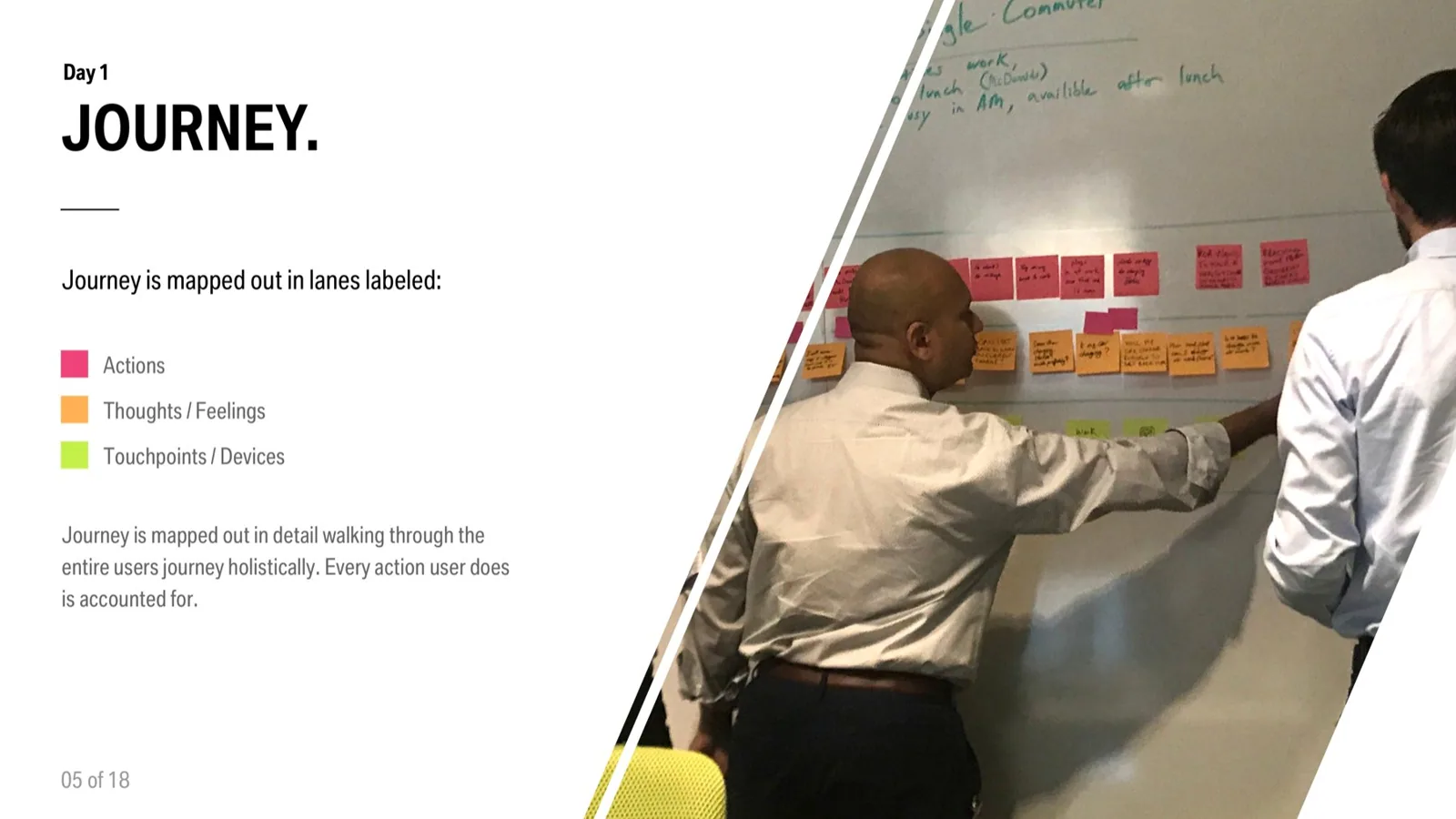
- Worked a three-day service design sprint at BMW's Chicago office with Cooper, July 25 to 27, 2018.
- Mapped two EV journeys in lanes for touchpoints, thoughts and feelings, and actions: a young professional commuting in an EV, and a mother of two planning a night out.
- Clustered pain points with dot voting, scored the openings on a value matrix (customer value, business value, gut feeling, capability), and ran Crazy Eights with the 10-person UX team.
- Led service design sessions with UX leaders across the other BMW workstreams, so the training turned into their daily work.
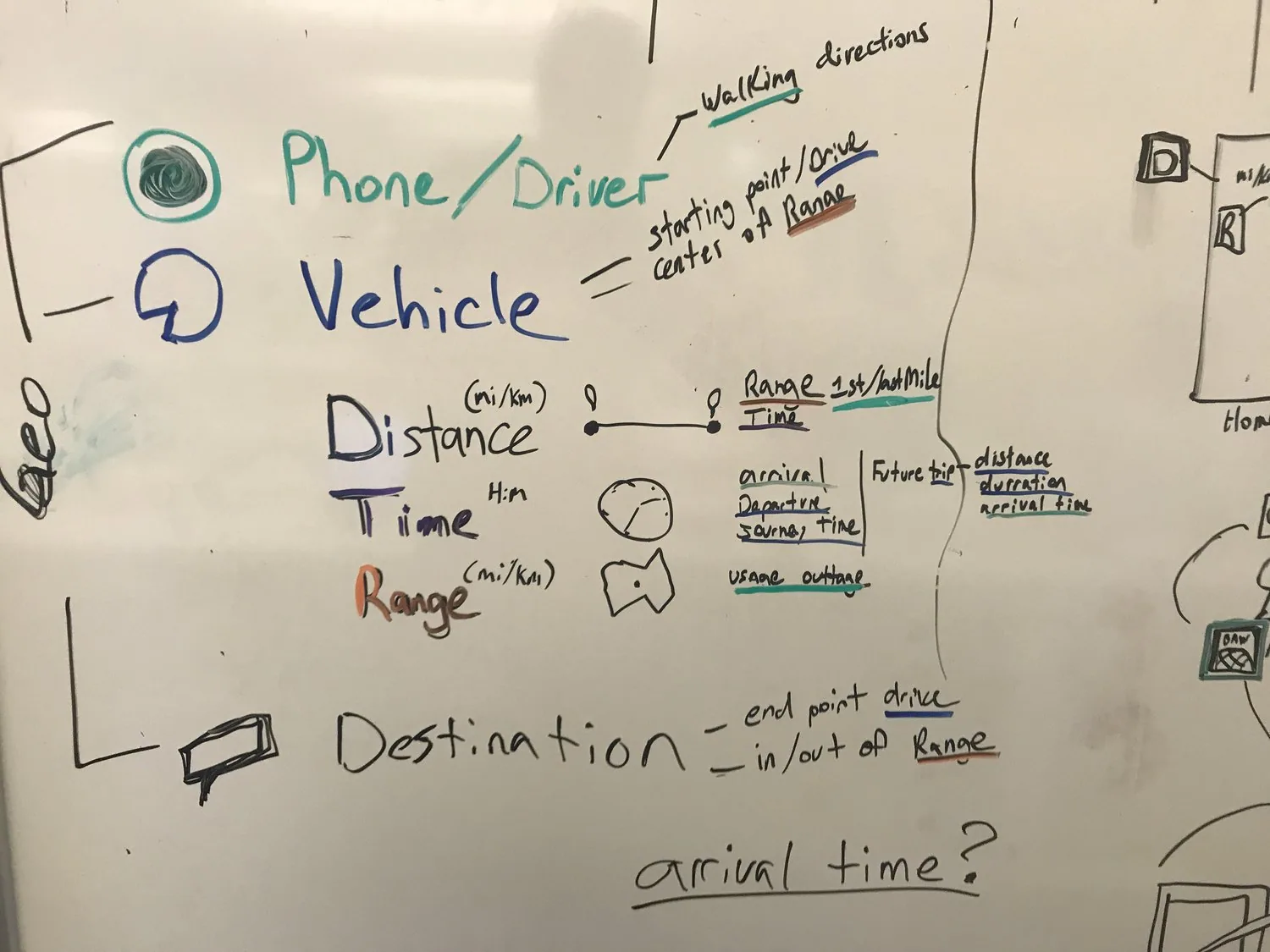
- Built clickable prototypes for charging and range, and added to BMW's core brand design system.
- Worked with the machine learning group on vehicle telemetry and helped them stub in tests.
What changed
The sprint ended with two problem statements the team chose to pursue: "How might we help EV drivers make a return trip from a planned destination?" and "How might we help EV drivers remember to plug in at home, at work, or where availability is unknown?"
Two features came out of the session as low-hanging fruit. Neither was in the plan. They were compelling enough that the product owners in Munich changed course to build them.
What it says about working with me
I take a method your team learned in a classroom and make it work on your own product.